
Silver has been valued for centuries because of its beauty, usefulness, and role as a precious metal. Today, people buy silver for different reasons. Some purchase silver rings, chains, bracelets, and decorative items, while others prefer silver bars or coins as a way to own physical precious metals.
But not all silver products are the same. Sterling silver and investment silver serve different purposes, and understanding the difference can help you make a more informed buying decision.
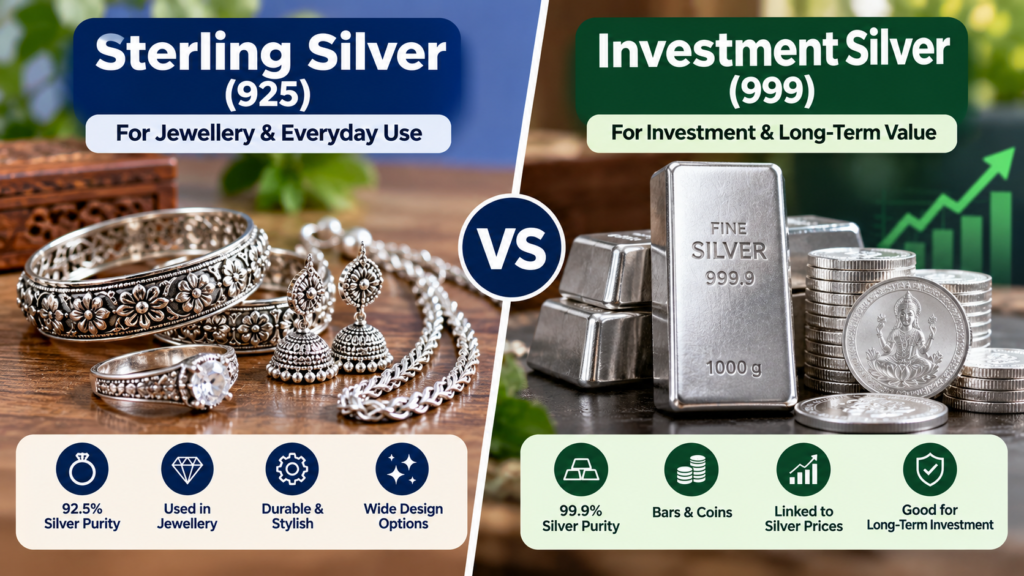
Sterling silver is commonly used for jewellery because it offers a balance of purity, durability, and workability. Investment silver usually refers to high-purity silver bullion, such as bars and coins, purchased primarily for its metal value.
In this guide, we will explain the difference between sterling silver and investment silver, compare 925 and 999 purity, discuss pricing and resale value, and help you decide which option may suit your needs.
What Is Sterling Silver?
Sterling silver is a silver alloy that contains 92.5% pure silver and 7.5% other metals. Copper is commonly used in the alloy to improve strength and durability.
Pure silver is relatively soft, which can make it less suitable for certain jewellery designs. Adding a small amount of another metal makes sterling silver more practical for everyday items such as rings, chains, bracelets, earrings, and decorative objects.
You will often see sterling silver marked with 925, indicating 925 parts of silver per 1,000 parts of the alloy.
Common uses of sterling silver
Sterling silver is widely used for:
- Rings, necklaces, bracelets, and earrings
- Silver chains and pendants
- Decorative household articles
- Gift items and accessories
- Some cutlery and ornamental products
Advantages of sterling silver
Good balance of purity and durability: Sterling silver contains a high proportion of silver while being more durable than fine silver for many jewellery applications.
Suitable for detailed designs: The alloy is useful for creating intricate jewellery and decorative products.
Versatile appearance: Sterling silver can be polished to achieve a bright finish and works well with different jewellery styles.
Recognised purity grade: The 925 mark can help buyers identify the intended silver fineness, although a stamp alone should not be treated as conclusive proof of authenticity.
Disadvantages of sterling silver
Sterling silver can tarnish when exposed to air, moisture, sulphur-containing compounds, cosmetics, and certain chemicals. It may require occasional cleaning and proper storage.
Its value also depends on the silver content, weight, condition, workmanship, and the buyer’s resale policy. A high retail price does not necessarily mean that the item will retain the same value when sold.
What Is Investment Silver?
Investment silver is physical silver purchased mainly for its precious-metal value rather than for its design or decorative appeal.
It commonly takes the form of silver bullion bars, investment coins, and certain silver rounds. These products are often made from high-purity silver, including 999 fine silver. Some recognised bullion products may use other specified purities, depending on the product and issuing institution.
In India, buyers should distinguish between a product’s stated purity and the credibility of its manufacturer, refiner, or seller. Product specifications and available verification methods matter when buying physical silver.
The Bureau of Indian Standards (BIS) has expanded its silver standards to cover specified high-purity silver bullion and coins. For current details, see the official BIS information.
Common forms of investment silver
Investment silver may include:
- Silver bullion bars
- Silver coins produced by recognised mints
- Eligible fine-silver coins and bars with documented purity
- Other physical silver products purchased primarily for metal value
Advantages of investment silver
High silver content: Many bullion products contain 99.9% silver or another clearly specified high-purity grade.
Direct exposure to silver prices: The value of physical bullion is generally more closely linked to the market price of silver than the value of a designed jewellery item.
Easier weight-based comparison: Standard weights and stated purity can make it easier to compare similar bullion products.
Potential portfolio diversification: Some investors use precious metals as one part of a diversified portfolio. Silver prices can nevertheless be volatile, and physical silver does not guarantee a profit.
Disadvantages of investment silver
Investment silver may involve a premium above the underlying metal price, as well as taxes, dealer margins, storage expenses, insurance, and a difference between the buying and selling prices.
It does not generate interest or dividends merely because you own it. Your return depends largely on changes in the metal price and the costs involved in buying, storing, and selling it.
Sterling Silver vs Investment Silver: Key Differences
The most important distinction is the purpose of the product. Sterling silver is commonly chosen for jewellery and decorative use, whereas investment silver is generally purchased for exposure to silver’s metal value.
| Feature | Sterling Silver | Investment Silver |
|---|---|---|
| Typical purity | 92.5% silver (925) | Often 99.9% silver (999), but varies |
| Main purpose | Jewellery and decorative products | Precious-metal ownership |
| Composition | Silver alloyed with other metals | Usually high-purity silver |
| Common forms | Rings, chains, bracelets, ornaments | Bars, bullion coins, some rounds |
| Design value | May contribute significantly to retail price | Usually less important than metal content |
| Price factors | Metal content, design, labour, brand, retailer margins | Silver market price, purity, weight, premium, taxes |
| Tarnishing | Can tarnish | Fine silver can also tarnish, though often differently |
| Resale value | Depends on purity, weight, condition, and buyer | Depends on purity, weight, product recognition, and buyer |
| Investment risk | Retail and resale costs may reduce returns | Silver-price volatility and transaction costs affect returns |
| Best suited for | Jewellery and decorative use | Buyers seeking physical silver exposure |
The table describes common market practice, not a guarantee about every product. Some jewellery is made from higher-purity silver, and not every coin or bar qualifies as an investment-grade product.
925 Silver vs 999 Silver: What Is the Difference?
The numbers 925 and 999 refer to the fineness of silver, expressed in parts per thousand.
925 silver
925 silver contains 925 parts of silver per 1,000 parts of the alloy, equal to 92.5% silver.
The remaining 7.5% consists of other metals. Sterling silver is commonly used in jewellery because it combines substantial silver content with improved workability and durability.
999 silver
999 silver contains 999 parts of silver per 1,000 parts of the material, equal to 99.9% silver.
This is commonly called fine silver and is frequently used in bullion bars and coins. Because it is generally softer than sterling silver, it may be less suitable for some jewellery designs that need additional strength.
Quick comparison
| Purity mark | Silver content | Common application |
|---|---|---|
| 925 | 92.5% | Sterling silver jewellery |
| 999 | 99.9% | Fine-silver bullion and some coins |
| 999.5 | 99.95% | Certain high-purity bullion products |
| 999.9 | 99.99% | Certain high-purity bullion products |
Always check the actual product specification. A purity mark should be supported by reliable documentation and appropriate verification, especially when buying high-value bullion.
Which Is More Expensive: Sterling Silver or Investment Silver?
There is no single answer because the final price depends on weight, purity, product type, retail margins, taxes, and other charges.
If you compare equal weights of 925 sterling silver and 999 fine silver, the fine-silver product contains more silver by weight. However, the retail price of a jewellery item may be higher than the price of a bullion product because of design, labour, finishing, brand value, and retailer margins.
Investment silver also has costs. A bullion bar or coin may sell above the market value of the silver it contains. The premium varies with product size, demand, availability, manufacturer, and dealer pricing.
Example: Comparing the silver content
Imagine two items that each weigh 100 grams.
- A 100-gram sterling silver item contains approximately 92.5 grams of silver.
- A 100-gram 999 fine-silver bar contains approximately 99.9 grams of silver.
The difference is 7.4 grams of silver before accounting for any product-specific details.
This example compares metal content only. It does not tell you which item is cheaper or which will deliver the better resale outcome.
How to compare prices properly
Before buying, check:
- The net weight of the silver, excluding packaging.
- The stated purity and product specification.
- The current silver price used by the seller.
- Any premium, making charge, or dealer margin.
- Applicable taxes and other charges.
- The seller’s buyback or resale terms.
- The likely difference between the purchase price and the price offered when you sell.
Comparing the total cost with the amount you may realistically receive on resale is more useful than comparing the displayed prices alone.
Which Has Better Resale Value?
Resale value depends on what you buy, how much silver it contains, its authenticity, its condition, and the buyer’s policies.
Investment silver can be simpler to evaluate when it comes in a recognised bullion format with clear weight and purity information. However, the seller may still deduct a spread, apply testing requirements, or offer a price below the current market value.
Sterling silver jewellery is often valued largely by its recoverable silver content when sold as scrap. Some branded or collectible pieces may receive additional value, but this should not be assumed for ordinary jewellery.
Resale considerations for sterling silver
When selling sterling silver, buyers may consider:
- Actual silver content and weight
- Purity verification
- Condition and damage
- Whether stones, clasps, or other non-silver parts affect the net weight
- The buyer’s refining, testing, or processing costs
The original jewellery price may include design and labour costs that are not recovered at resale.
Resale considerations for investment silver
For bullion, buyers may consider:
- Purity and weight
- Manufacturer or mint recognition
- Product documentation and packaging, where relevant
- Authenticity testing
- Current market prices
- The dealer’s buyback policy and spread
Before purchasing, ask the seller how resale pricing works and whether there are specific requirements for buyback.
Is Sterling Silver Good for Investment?
Sterling silver has real silver value, but jewellery is not necessarily the most cost-efficient way to invest in silver.
If your main goal is to wear jewellery or give a meaningful gift, sterling silver can be a practical choice. If your main goal is to gain exposure to silver prices through physical metal, bullion may be easier to evaluate because the purity and weight are usually specified more directly.
That does not mean sterling silver can never retain value or that bullion will always produce a better return. The outcome depends on the price paid, the silver market, the product’s resale terms, and the period for which you hold it.
When sterling silver may make sense
Sterling silver may suit you if:
- You want attractive jewellery for regular use.
- You value design and craftsmanship.
- You want a gift that combines appearance with some precious-metal content.
- You understand that making charges may not be recovered when selling.
When investment silver may make sense
Physical investment silver may suit you if:
- You want to own silver mainly for its metal value.
- You prefer clearly specified weights and purity.
- You understand that silver prices can rise or fall.
- You can store the metal securely and account for transaction costs.
Neither option is automatically right for everyone. Consider your purpose, budget, holding period, and ability to tolerate price changes.
How to Buy Sterling Silver Safely in India
When buying sterling silver jewellery or decorative articles, focus on authenticity, purity, and the total cost.
1. Check the purity grade
Look for the stated fineness, such as 925, and ask the seller to explain the product’s composition.
2. Ask about hallmarking
BIS provides a silver hallmarking framework. Since September 2025, HUID-based hallmarking for silver jewellery and articles has been available on a voluntary basis, and the HUID is required for articles that are hallmarked under the applicable system. The mark and verification process can help consumers check the purity information associated with a hallmarked item.
See the official PIB explanation of silver HUID hallmarking.
3. Request a proper invoice
Keep the invoice showing the article description, weight, stated purity, price, and applicable charges. This can be useful if you later need to make a complaint or seek resale.
4. Understand making charges
Ask how much of the final price represents silver and how much represents workmanship, design, brand, or other costs.
5. Check care instructions
Sterling silver may need periodic cleaning and dry storage to reduce tarnishing. Avoid exposing it unnecessarily to harsh chemicals.
How to Buy Investment Silver Safely in India
If you are buying silver mainly for investment purposes, product verification and price transparency are particularly important.
1. Choose a reputable seller
Buy from a recognised dealer, mint, refinery, or established retailer that provides clear product details and a proper invoice.
2. Verify purity and weight
Check the stated fineness, such as 999, 999.5, or 999.9 where applicable. Confirm the net weight and the product’s specifications.
3. Check the relevant certification
BIS has published information on silver standards and high-purity bullion. For relevant bullion and coin products, check whether the product is covered by the applicable BIS refinery or mint certification framework.
You can begin with the BIS hallmarking overview and the BIS official website.
4. Compare the premium over the metal price
Do not compare products only by their total retail price. Consider how much silver you receive, the price per gram, and the premium above the underlying metal value.
5. Ask about buyback terms before purchasing
Find out whether the dealer will buy back the product, how the price will be calculated, and whether the packaging or original invoice is needed.
6. Plan for safe storage
Physical silver can be lost or stolen. Consider secure storage and any associated costs before purchasing a large quantity.
7. Remember that silver prices fluctuate
Silver can experience substantial price movements. Buying at a high price and selling during a downturn can result in a loss, even when the silver is genuine and high-purity.
Sterling Silver vs Investment Silver: Which Is Better?
The better option depends on your goal.
| Your goal | Option worth considering | Main reason |
|---|---|---|
| Everyday jewellery | Sterling silver | Balance of silver content and durability |
| Fashion accessories | Sterling silver | Suitable for many designs |
| Gifts and decorative items | Sterling silver | Appearance and craftsmanship |
| Physical silver ownership | Investment silver | Weight and purity are central to valuation |
| Comparing silver content | High-purity bullion | Usually more silver per gram |
| Potential investment returns | Neither guarantees a profit | Costs and market prices determine results |
If you want something to wear, sterling silver may be more appropriate. If you want physical silver mainly for its metal value, bullion may be easier to compare and price.
Before deciding, think about whether you are paying for the metal alone or also paying for design, craftsmanship, packaging, and retail services.
Frequently Asked Questions (FAQs)
1. Is sterling silver real silver?
Yes. Sterling silver is a silver alloy containing 92.5% silver and 7.5% other metals. It is a recognised silver grade commonly used in jewellery and decorative items.
2. Is 925 silver the same as 999 silver?
No. 925 silver contains 92.5% silver, while 999 silver contains 99.9% silver. They differ in purity and are commonly used for different types of products.
3. Is 999 silver better than sterling silver?
Neither is universally better. 999 fine silver contains more silver by weight and is commonly used for bullion. Sterling silver is often more practical for jewellery because the alloy improves its workability and durability.
4. Is sterling silver good for long-term investment?
Sterling silver has metal value, but jewellery prices may include making charges, design costs, and retail margins. If your main goal is investment exposure to silver, compare these costs with the premiums and resale terms of bullion products.
5. Does investment silver always increase in value?
No. Silver prices fluctuate, and physical silver does not guarantee a profit. Returns depend on market prices, the purchase premium, taxes, storage, and the price available when you sell.
6. Why can silver jewellery cost more than bullion?
Jewellery may include labour, design, finishing, brand value, and retail margins. Bullion pricing is generally more closely tied to the underlying silver value, plus premiums and other costs.
7. Can sterling silver turn black?
Sterling silver can tarnish and become darker due to reactions with substances in the environment. Proper storage and suitable silver-cleaning methods can help manage tarnishing.
8. Can investment silver tarnish?
Yes. Fine silver can tarnish under some conditions, although the rate and appearance may differ from sterling silver. Store silver in a dry, appropriate environment and follow the seller’s care guidance.
9. How can I check whether silver jewellery is genuine in India?
Check the stated purity, buy from a reputable seller, keep the invoice, and look for applicable hallmarking details. For silver articles hallmarked under the HUID-based system, the code can be checked through the relevant BIS verification facilities.
10. What does the 925 mark mean?
The 925 mark indicates a fineness of 925 parts per thousand, equivalent to 92.5% silver. A stamp by itself should not be treated as conclusive proof that the item is genuine.
11. What should I check before buying silver bars or coins?
Check the seller, stated purity, net weight, product specifications, premium, invoice, applicable certification, storage needs, and buyback terms.
12. Is physical silver risk-free?
No. Physical silver has market-price risk, authenticity risk, storage and security considerations, and transaction costs. Its price can fall, and resale offers may be below the price you paid.
Conclusion
Sterling silver and investment silver both have their place, but they are designed for different purposes.
Sterling silver, usually marked 925, is commonly used for jewellery and decorative products because it combines high silver content with useful durability. Investment silver often takes the form of high-purity bars and coins purchased mainly for their metal value.
If your priority is jewellery, focus on craftsmanship, comfort, purity, and total price. If your priority is physical silver as an investment, pay close attention to purity, weight, premiums, verification, storage, and resale terms.
Most importantly, do not assume that higher purity automatically means a better investment or a guaranteed profit. Compare the complete cost of buying and selling, and make a decision that matches your goals and risk tolerance.
Disclaimer: This article is for educational purposes only and is not personalised financial advice. Silver prices fluctuate, and physical silver may involve premiums, taxes, storage costs, and resale losses. Verify product specifications and applicable standards through official sources before making a purchase.
SHARING IS CARING 💖