
Copper and brass items can add a beautiful traditional touch to any home. From copper water pots and kitchen utensils to brass diyas, puja thalis, decorative bowls, and door handles, these metals are popular in Indian households.
But after some time, you may notice that your favourite items have become dull, developed dark patches, or lost their original shine. Dust, moisture, fingerprints, and natural tarnishing can change the appearance of copper and brass.
The good news is that many everyday copper and brass items can be cleaned at home using simple materials. You may already have mild dish soap, lemon, tamarind, or a soft cleaning cloth in your kitchen.
However, the right cleaning method depends on the item’s finish. An uncoated copper utensil can often tolerate a different cleaning method from a lacquered brass showpiece or an antique decorative item.
In this guide, you will learn 10 easy ways to clean copper and brass at home, remove ordinary tarnish, restore shine where appropriate, and maintain your metal items without unnecessary damage.
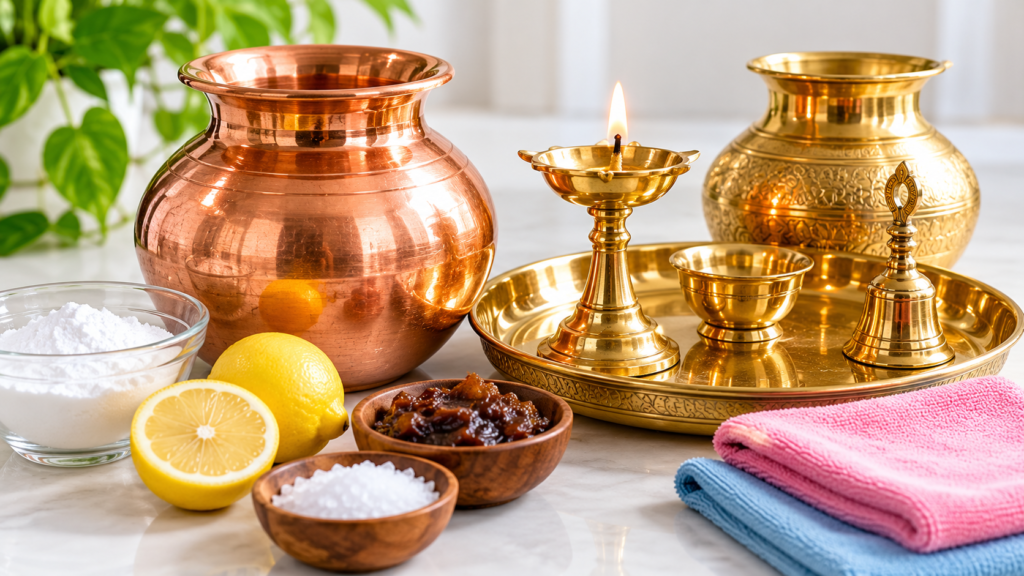
Why Do Copper and Brass Become Dark or Dull?
Copper and brass naturally react with their surroundings. Exposure to air, moisture, fingerprints, oils, and other substances can gradually change their surface appearance.
Copper may develop brown or dark patches, while brass can lose its golden shine and become dull or tarnished. Greenish deposits may also appear under certain conditions.
This process is not always a sign that the item is damaged. Some older objects have an intentional patina that contributes to their appearance and value.
Before cleaning, decide whether you want to remove the tarnish or simply remove dust and dirt. For valuable, antique, or decorative objects, preserving the original finish may be more important than making the surface look brand new.
Before You Start: Important Cleaning Precautions
Keep these points in mind before trying any home remedy:
- Identify whether the item is solid copper, solid brass, plated metal, or lacquered metal if possible.
- Test your chosen method on a small, hidden area first.
- Use a soft cloth or sponge instead of steel wool or a rough scouring pad.
- Do not use acidic cleaners on lacquered or coated surfaces unless the manufacturer’s instructions specifically permit them.
- Avoid experimenting with lemon, vinegar, salt, or abrasive pastes on antiques, valuable pieces, or items with delicate decoration.
- Rinse away cleaning residues thoroughly when the item is suitable for wet cleaning, and dry it promptly.
- Do not mix cleaning products or chemicals.
The Canadian Conservation Institute explains that polishing is an abrasive process that removes some surface metal. Repeated polishing can wear away details and finishes. Read its official guidance on cleaning and polishing brass and copper.
10 Easy Methods to Clean Copper and Brass at Home
1. Warm Water and Mild Dish Soap
Best for: Everyday dirt, dust, fingerprints, and light grease.
This is the gentlest starting point for many washable, uncoated copper and brass items.
What you need:
- Warm water
- A few drops of mild dishwashing liquid
- A soft sponge or cloth
- A clean, dry towel
Steps:
- Add a few drops of mild dish soap to a bowl of warm water.
- Dip a soft cloth or sponge into the solution.
- Gently wipe the item’s surface to remove dust, fingerprints, and grease.
- Rinse with clean water if the item is suitable for rinsing.
- Dry immediately with a soft towel.
This method may not remove heavy tarnish, but it is a sensible first step before attempting anything stronger.
Tip: Avoid soaking antique objects, hollow decorative pieces, or items with loose joints, delicate inlays, or damaged coatings.
2. Lemon Juice and Salt
Best for: Some ordinary tarnish on uncoated copper or brass items.
Lemon juice is acidic, while salt provides mild abrasive action. Together, they may help loosen certain surface deposits, but they can also scratch or alter a delicate finish.
What you need:
- A small amount of lemon juice
- A little salt
- A soft cloth
- Clean water
Steps:
- First, wash away ordinary dirt with mild soap and water.
- For a suitable, uncoated item, mix a small amount of lemon juice with a pinch of salt.
- Test the mixture on a hidden area.
- If the finish remains unchanged, gently apply it to a small tarnished area.
- Rinse thoroughly and dry immediately.
Avoid vigorous rubbing and prolonged contact. Do not use this method on lacquered brass, plated objects, antiques, or items with an intentional patina.
Tip: Never assume that every dark patch is dirt. A natural patina may be part of the item’s original appearance.
3. Tamarind Pulp
Best for: Some tarnished, uncoated copper and brass household items.
Tamarind is commonly available in Indian kitchens and contains natural acids. It can help loosen certain deposits on suitable metal surfaces.
What you need:
- A small piece of tamarind
- Water
- A soft cloth or sponge
Steps:
- Soften a little tamarind pulp in water.
- Remove any large seeds or hard pieces.
- Test a small amount on a hidden part of the item.
- If suitable, gently rub the pulp over the tarnished area.
- Rinse the item thoroughly with clean water.
- Dry it completely using a soft towel.
Do not leave tamarind on the metal for an extended period. Its acidity may affect some finishes, and the results will vary according to the metal and the condition of the surface.
Tip: This method is better suited to ordinary household items than valuable or delicate decorative objects.
4. White Vinegar and Flour Paste
Best for: Certain tarnished, uncoated brass or copper surfaces after a patch test.
Vinegar is acidic, and flour helps create a paste that is easier to apply. Some people use this combination as a homemade polishing treatment, but it is not suitable for every finish.
What you need:
- A little white vinegar
- Plain flour
- A soft cloth
- Clean water
Steps:
- Mix a small amount of vinegar with flour to make a soft paste.
- Test the paste on a hidden area first.
- If appropriate for the item, spread a thin layer over a small tarnished section.
- Keep the contact time short and follow the item’s care requirements.
- Rinse away every trace of the paste.
- Dry the metal completely.
Do not add salt or other cleaning chemicals to make the mixture stronger. Avoid this method on lacquered, plated, antique, or intricately decorated items.
Important: Homemade pastes can leave residue in grooves. Inspect carved areas carefully after cleaning.
5. Baking Soda Paste for Gentle Spot Cleaning
Best for: Limited spot cleaning on suitable, uncoated items after testing.
Baking soda is often used for household cleaning, but its particles can be abrasive. It is not automatically safe for every metal finish.
What you need:
- A small amount of baking soda
- Water
- A soft cloth
Steps:
- Mix a little baking soda with water to create a thin paste.
- Test it on a hidden area first.
- If the surface tolerates it, use a soft cloth to apply a small amount with very light pressure.
- Rinse thoroughly.
- Dry the item completely.
Do not scrub aggressively or use baking soda on delicate finishes, antiques, plated metal, or surfaces you want to keep unmarked.
For a valuable piece, use a product recommended specifically for its finish or seek advice from a metal conservator.
6. Ketchup for Small Tarnished Areas
Best for: Occasional spot treatment on suitable, uncoated copper or brass.
Ketchup contains acidic ingredients, including tomato-based acids and often vinegar. This can help loosen some tarnish, but the product may also contain salt, sugar, and other ingredients that leave residues.
What you need:
- A small amount of ketchup
- A soft cloth
- Clean water
Steps:
- Wash away surface dirt first.
- Test a tiny amount on a hidden area.
- If appropriate, apply a thin layer to a small tarnished section.
- Check the surface frequently rather than leaving it for a long period.
- Rinse very thoroughly and dry immediately.
Ketchup is not a professional metal polish, and it should not be used on coated, plated, antique, or valuable objects.
Tip: Because it can collect in decorative grooves, avoid using it on pieces that are difficult to rinse completely.
7. Use a Commercial Copper or Brass Polish
Best for: Items that need more consistent polishing and whose finish is suitable for the product.
A purpose-made metal polish may be more predictable than a homemade remedy when used according to its label.
What you need:
- A polish specifically labelled for copper or brass
- A soft application cloth
- A clean polishing cloth
- Any protective equipment specified by the manufacturer
Steps:
- Read the product label and confirm that it is suitable for your metal and finish.
- Test it on an inconspicuous area.
- Apply the amount recommended by the manufacturer.
- Rub gently according to the product instructions.
- Remove the residue completely as directed.
- Finish with a clean, soft cloth.
Some polishes are abrasive and may remove surface metal. Avoid using an automotive, stainless-steel, or general-purpose abrasive product unless it is specifically confirmed as suitable for the item.
For valuable antiques or objects with an intentional patina, consult a professional before polishing.
8. Use a Soft Microfiber Cloth for Regular Maintenance
Best for: Light dust, fingerprints, and maintaining the appearance of clean copper and brass.
Sometimes, a metal item does not need a cleaning solution at all.
What you need:
- A clean microfiber cloth or other soft, lint-free cloth
Steps:
- Remove loose dust using gentle strokes.
- Wipe fingerprints and surface marks without applying heavy pressure.
- Use a fresh section of the cloth when it becomes dirty.
- Check the item under good lighting for any remaining residue.
Regular gentle wiping can reduce the need for frequent polishing.
For antiques and decorative pieces, dry dusting is often preferable to applying homemade acids or abrasive cleaners.
9. Clean Intricate Areas With a Soft Brush
Best for: Brass diyas, puja thalis, carved handles, decorative bowls, and other items with grooves.
Dust and residue can collect in decorative details, making the item look dull even when the main surface is relatively clean.
What you need:
- A soft-bristled brush
- A clean, soft cloth
- Mild soapy water only if suitable for the item’s finish
Steps:
- Start with dry dusting using a soft brush.
- Gently move the brush through grooves and decorative details.
- If the item can safely be wet-cleaned, use a slightly damp cloth or soft brush with mild soapy water.
- Remove any soap residue according to the item’s care requirements.
- Dry the object carefully, including its crevices.
Do not use metal picks, knives, or other sharp tools to remove dirt. They may leave scratches or damage fine details.
Avoid immersing antiques, hollow objects, or pieces with vulnerable joints in water.
10. Dry and Buff the Metal Properly After Cleaning
Best for: Finishing almost any suitable cleaning method.
Drying is one of the simplest and most important parts of copper and brass care. Moisture left behind can encourage spotting and may contribute to corrosion under certain conditions.
What you need:
- A clean, dry, soft cloth
Steps:
- After the appropriate cleaning and rinsing process, remove excess water promptly.
- Pay attention to edges, handles, seams, and recessed areas.
- Buff gently with a clean, lint-free cloth.
- Allow the item to dry completely before storing it.
- Keep it in a dry place away from unnecessary moisture.
Do not apply oil, wax, or another coating automatically. Some protective treatments may be suitable for particular items, but they can change the appearance and may be inappropriate for cookware or food-contact surfaces.
For older or valuable objects, follow specialist conservation advice.
How to Clean Copper Utensils Used in the Kitchen
Copper utensils require extra care because the surface may come into contact with food or drinking water.
For routine cleaning:
- Wash the utensil with mild dish soap and water.
- Use a soft sponge to remove food residue.
- Rinse thoroughly.
- Dry immediately with a clean towel.
- If tarnish remains, confirm that the utensil’s finish is suitable for a polishing method before using it.
Do not assume that every copper vessel is safe for every food or drink. Copper can react with acidic foods and liquids. Many vessels are lined with another material, and the condition of that lining matters.
Do not cook or store acidic foods in unlined copper or brass cookware unless the manufacturer confirms it is designed for that use. Never use an aggressively cleaned or damaged vessel for food until you have confirmed that its surface is safe.
How to Clean Brass Diyas and Puja Items
Brass diyas, bells, thalis, and kalash are often used during festivals and religious ceremonies. They may collect oil, soot, fingerprints, and dust.
For ordinary, uncoated items:
- Let any hot item cool completely before cleaning.
- Remove loose dust with a soft cloth or brush.
- Use mild soapy water when suitable for the finish.
- Remove oil and wax residues gently without scraping the metal.
- Use a stronger cleaning method only if the item is uncoated and the finish tolerates it.
- Rinse thoroughly where appropriate and dry completely.
Avoid aggressive polishing on engraved or antique religious objects. If a diya or decorative item has lacquer, plating, painted details, or delicate inlays, use a method designed for that finish.
Copper vs. Brass: Which Cleaning Method Should You Choose?
| Item or surface | Preferred starting method | What to avoid |
|---|---|---|
| Everyday uncoated copper utensil | Mild soap and water | Rough scouring pads |
| Everyday uncoated brass item | Mild soap and water | Aggressive scrubbing |
| Lacquered brass showpiece | Gentle dry dusting or care-label instructions | Lemon, vinegar, abrasive pastes |
| Plated metal item | Manufacturer-approved cleaning method | Strong acids and abrasive polishing |
| Antique copper or brass | Minimal gentle cleaning | Unnecessary polishing or soaking |
| Intricately carved puja item | Soft brush and suitable gentle cleaning | Sharp tools and harsh scrubbing |
When in doubt, choose the gentlest method. Restoring a shiny finish is not always worth the risk of removing an original coating or patina.
Common Mistakes to Avoid When Cleaning Copper and Brass
Using steel wool or rough scrubbers
These can scratch softer metal surfaces and leave permanent marks.
Leaving acidic mixtures on too long
Lemon juice, tamarind, vinegar, and ketchup can affect some finishes. Prolonged contact may cause uneven discoloration or surface damage.
Mixing multiple cleaning ingredients
Combining products does not automatically improve their performance. Keep cleaning methods simple and never mix household cleaners or chemicals.
Polishing antiques too frequently
Repeated polishing removes some surface metal and can wear away details, decorative finishes, and historical patina.
Forgetting to rinse and dry
Residues left in grooves may become visible or contribute to further surface problems. Follow the product instructions and dry suitable items carefully.
Assuming every brass item is solid brass
Some items are plated or coated. Abrasive polishing can remove the thin outer layer and reveal a different metal beneath.
Frequently Asked Questions
1. What is the easiest way to clean copper at home?
For ordinary dirt and fingerprints, begin with warm water, mild dish soap, and a soft cloth. For tarnish, first check whether the item is uncoated and suitable for a more intensive method.
2. How do I make brass shiny again?
For a suitable, uncoated brass item, use a metal polish specifically designed for brass or another method appropriate for its finish. Follow the product instructions, test a hidden area, and avoid aggressive rubbing.
3. Can lemon and salt clean copper?
They may help loosen some tarnish on certain uncoated copper surfaces. However, salt can scratch and lemon juice can affect finishes. Use a small test area and avoid the method on lacquered, plated, antique, or delicate objects.
4. Can I use vinegar to clean brass?
Vinegar is acidic and may affect tarnish on some suitable, uncoated brass items. It is not appropriate for every finish. Avoid it on lacquered or valuable objects unless a specialist confirms that it is safe.
5. How can I clean brass diyas before a festival?
Remove dust with a soft cloth or brush, then use mild soapy water if the finish permits it. Dry thoroughly. Use a suitable polish only when needed and avoid damaging engraved details or decorative coatings.
6. Why does copper turn black after some time?
Copper reacts with substances in its environment, including oxygen and moisture. This can create surface discoloration and tarnish. The appearance depends on the conditions and the substances contacting the metal.
7. Can baking soda damage copper or brass?
Baking soda can act as a mild abrasive. Vigorous rubbing may scratch some finishes, so it should not be assumed safe for every copper or brass object. Test cautiously and avoid it on delicate or valuable pieces.
8. How often should I clean copper and brass items?
There is no single schedule for every item. Lightly dust decorative objects as needed and wash suitable household utensils after use. Polish only when necessary, because repeated polishing can wear down the surface.
9. Should I clean antique brass and copper at home?
Be cautious. Antique objects may have valuable patina, original coatings, or delicate construction. Dry dusting may be sufficient. Consult a qualified conservator before attempting tarnish removal or polishing.
10. How can I keep copper and brass from becoming dull quickly?
Handle clean objects with clean, dry hands, remove fingerprints when practical, dry washable items promptly, and store them in a dry environment. Any protective wax or coating should be selected for the specific item and its intended use.
Final Thoughts
Cleaning copper and brass at home does not always require expensive products or aggressive scrubbing. For many everyday items, a gentle wash, suitable cleaning method, thorough removal of residues, and careful drying can make a noticeable difference.
Start with the mildest approach and choose a method that matches the item’s finish. Lemon, tamarind, vinegar, and homemade pastes may help with certain uncoated objects, but they are not universal solutions. Lacquered items, plated surfaces, and antiques need extra care.
Most importantly, remember that a darker finish is not always a defect. Sometimes, preserving the original appearance is better than making an object look brand new.
Disclaimer: This article provides general household-care information. Always follow the manufacturer’s instructions, test cleaning methods on an inconspicuous area, and consult a qualified conservator for valuable or antique items.
SHARING IS CARING 💖