
Every year, thousands of people around the world turn their attention to some of the largest and most impressive brown bears in Alaska.
The reason is Fat Bear Week, an annual celebration and public competition featuring brown bears living around Brooks River in Katmai National Park and Preserve, Alaska.
At first glance, Fat Bear Week may look like a fun online competition about which bear is the biggest. But behind the entertaining photos and public voting is a fascinating story about wildlife, food, survival, ecosystems, and the extraordinary preparation bears make for winter.
During the warmer months, Katmai’s brown bears spend enormous amounts of time finding and eating calorie-rich food, particularly salmon. The energy they store as body fat becomes extremely important when winter arrives and food becomes scarce.
Fat Bear Week celebrates this seasonal transformation and gives people an opportunity to learn more about the bears and the ecosystem that supports them.
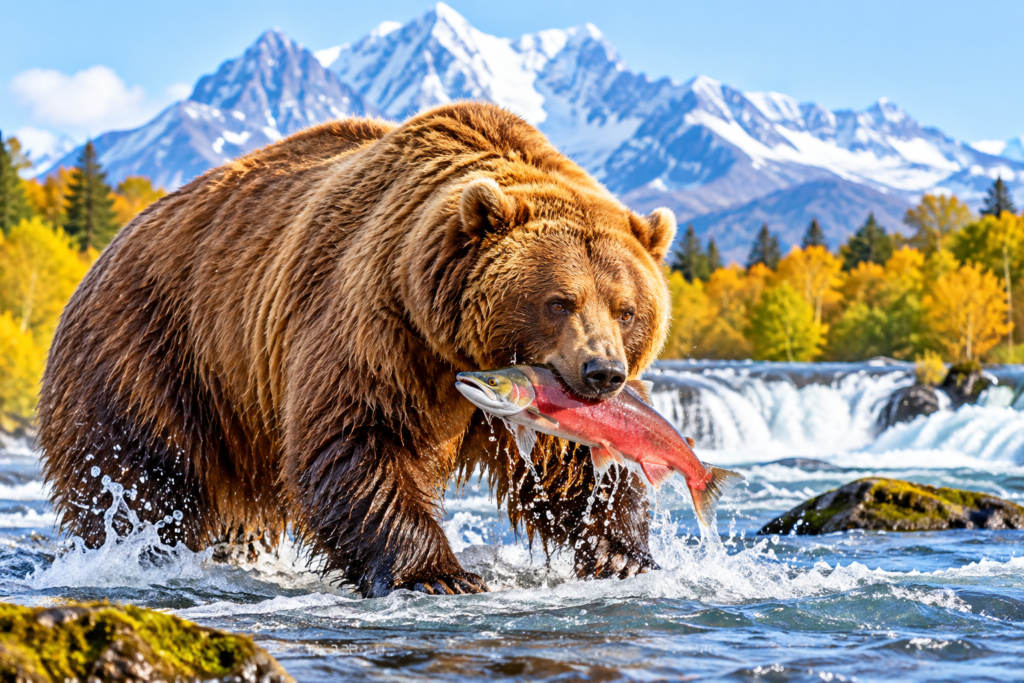
What Is Fat Bear Week?
Fat Bear Week is an annual competition celebrating the brown bears of Katmai National Park and Preserve.
During the competition, selected bears are placed into a tournament-style bracket. Members of the public can vote in head-to-head matchups, and the bear that progresses through the competition can eventually be crowned the Fat Bear Week champion.
The event began in 2014, when it was originally a one-day event called Fat Bear Tuesday. It later expanded into the full Fat Bear Week competition.
The idea is simple: celebrate the bears that have successfully built up the body reserves they need before entering winter.
The competition is entertaining, but its deeper purpose is educational. It helps people understand why healthy bears need abundant food and why the ecosystem surrounding Brooks River is so important.
When Is Fat Bear Week 2026?
Fat Bear Week 2026 runs from September 22 through September 29, 2026.
According to the National Park Service, the bracket was scheduled to be revealed on September 18, with public voting taking place from September 22 through September 29. The 2026 champion is scheduled to be crowned on September 29.
The competition has become an international event, allowing people who may never visit Alaska to follow individual bears through photographs, live cameras, biographies, and online voting.
In 2025, more than 1.7 million votes were cast by people in more than 100 countries before Bear 32, known as “Chunk,” was crowned champion.
Where Does Fat Bear Week Take Place?
Fat Bear Week focuses on brown bears associated with Katmai National Park and Preserve in Alaska, particularly the bears around Brooks River and Brooks Falls.
Katmai is a large protected area containing mountains, volcanoes, rivers, lakes, coastlines, forests, and other important habitats.
Brooks River is especially famous for its salmon runs and the bears that gather there to feed.
The availability of salmon provides bears with an exceptional seasonal food source and gives wildlife observers a remarkable opportunity to watch the animals in their natural environment.
Why Do the Bears Get So Fat?
The answer is survival.
Brown bears need to build substantial energy reserves before winter. During the warmer months, they take advantage of abundant food and consume large quantities of calories.
At Katmai, salmon are one of the most important food sources available to the bears.
The bears spend much of the summer and early fall feeding and accumulating body fat. That fat becomes their energy reserve when they enter their winter dens.
The National Park Service explains that bears can lose up to about one-third of their body weight during their winter period of dormancy.
So, in the world of Fat Bear Week, being extremely heavy is not simply about appearance.
For a wild bear preparing for winter, substantial body fat can be an important survival resource.
The Importance of Salmon
Salmon are central to the Fat Bear Week story.
Each year, salmon move through the waterways of Alaska as part of their life cycle. At Brooks River, bears take advantage of this seasonal abundance.
The fish provide protein and, importantly, large amounts of energy.
A bear can spend hours fishing, waiting for an opportunity to catch a salmon, or feeding in productive areas of the river.
This seasonal food supply helps explain why Katmai’s bears can undergo such dramatic physical changes between the beginning and end of the summer.
The National Park Service describes salmon as a critical part of the ecosystem supporting people, bears, and other animals in the Katmai region.
How Much Weight Can a Bear Gain?
There is no single weight that defines a “fat bear.”
Different bears have different body sizes, ages, sexes, health conditions, and histories.
Some of Katmai’s largest bears can become exceptionally massive by the end of summer.
The National Park Service notes that large bears can gain hundreds of pounds of fat before entering their winter dens.
The important point is not simply how heavy a bear becomes.
Fat Bear Week celebrates the transformation from a comparatively lean bear earlier in the year to a much larger bear after months of feeding.
What Is Hyperphagia?
One of the fascinating concepts associated with Fat Bear Week is hyperphagia.
Hyperphagia is a period of intense feeding that occurs as bears prepare for winter.
During this period, bears are strongly focused on obtaining enough food to build their energy reserves.
Instead of following a human-style schedule of three meals a day, bears take advantage of available food whenever and wherever they can.
For Katmai’s bears, salmon can provide an especially valuable source of nutrition during this important preparation period.
Why Is Fat Important for Winter?
Winter presents a major challenge for wild bears.
Food availability falls dramatically, and bears retreat into dens for an extended period.
Their bodies adapt to this seasonal shortage.
Instead of depending on newly acquired food, they rely heavily on stored energy.
Fat provides that energy.
During winter dormancy, a bear’s metabolism changes and its activity decreases. The animal can survive for months while relying on the energy stored in its body.
This is why the dramatic weight gain seen during Fat Bear Week represents something much more meaningful than simply becoming large.
It represents preparation.
Do Bears Really Hibernate?
People commonly describe what bears do during winter as hibernation.
Bear winter dormancy is unusual compared with the hibernation seen in some smaller mammals.
According to the National Park Service, bears experience major changes in metabolism, heart rate, and breathing while in their dens. Their body temperature does not fall as dramatically as that of some other hibernating animals.
During this period, bears live from their stored energy reserves.
When they emerge in spring, they can weigh substantially less than they did when they entered their dens.
What Happens to a Bear During Winter?
During winter, bears remain in their dens for an extended period.
Their bodies conserve energy, and they survive primarily using the fat reserves accumulated during the previous seasons.
A bear does not simply sleep continuously in exactly the same way humans sleep.
Its body enters a specialized state of reduced activity that allows it to survive a long period when food is unavailable.
The ability to survive winter this way is one of the most remarkable adaptations of brown bears.
Why Are Bigger Bears Better Prepared?
Size and body fat can provide important advantages when winter food is unavailable.
A bear entering winter with substantial energy reserves has more stored fuel to draw upon.
However, being large does not mean that a bear is guaranteed to survive.
Wild animals face many challenges, and survival depends on multiple factors, including age, health, food availability, environmental conditions, competition, and other circumstances.
Fat Bear Week celebrates the successful preparation that can be observed in these animals rather than suggesting that size alone determines survival.
How Does the Fat Bear Week Competition Work?
Fat Bear Week uses a bracket-style competition.
Selected bears are placed into head-to-head matchups.
The public then votes between competing bears.
A bear that receives enough support advances to the next round, while another bear is eliminated.
The process continues until a champion is determined.
This format makes the event easy for people around the world to follow.
It also gives each bear an opportunity to have its own story told.
Instead of simply looking at a photograph and choosing the largest animal, people can learn about individual bears, their fishing strategies, their age, their history, and how their bodies changed throughout the season.
Is Fat Bear Week Only About Weight?
Not exactly.
Although the competition is centered around the bears’ impressive physical transformation, the event is also about survival and ecosystem health.
A successful fat bear is evidence that the animal has been able to find enough food during the summer and fall.
The availability of salmon and other resources is connected to the broader health of the ecosystem.
That makes Fat Bear Week an entertaining way to introduce people to important conservation topics.
How Did Fat Bear Week Begin?
The event began in 2014.
According to the National Park Service, park ranger Mike Fitz noticed comments about photographs showing the dramatic change in a bear’s appearance between early summer and later in the season.
The idea developed into an event called Fat Bear Tuesday.
The first full Fat Bear Week followed in 2015.
Since then, the event has grown substantially and attracted an international audience.
What began as a small celebration eventually became one of the internet’s most recognizable wildlife events.
What Is Fat Bear Junior?
Fat Bear Week also has a competition known as Fat Bear Junior.
This gives younger bears their own opportunity to be celebrated.
The junior competition highlights the growth and development of bear cubs and young bears.
It also provides another way for people to learn about the challenges young bears face as they grow and eventually become more independent.
The National Park Service lists annual Fat Bear Junior champions as part of its history of the event.
Famous Fat Bear Week Champions
Over the years, several bears have become particularly well known among Fat Bear Week followers.
Past champions have included:
- 480 Otis
- 435 Holly
- 409 Beadnose
- 747
- 128 Grazer
- 32 Chunk
The National Park Service’s Fat Bear Week history includes champion records going back to the event’s early years.
Bear 32, known as Chunk, won Fat Bear Week in 2025.
These bears have become recognizable characters to people who follow the event each year.
Why Do People Enjoy Fat Bear Week?
Part of the appeal is simple: the bears are fascinating.
But there are several reasons the event has become so popular.
The Bears Have Individual Personalities
People who follow the bears over time often recognize individual animals and their behavior.
The Transformation Is Easy to See
Photographs from earlier and later in the year can show a dramatic difference in body size.
It Is Educational
The event introduces people to topics such as wildlife biology, salmon ecology, conservation, and seasonal animal behavior.
Anyone Can Follow Along
People do not need to travel to Alaska to participate in the event.
Online cameras and information about the bears allow viewers around the world to follow them.
It Connects Entertainment With Conservation
The competition makes wildlife education approachable and memorable.
Why Does Fat Bear Week Matter for Conservation?
Fat Bear Week provides a window into a much larger environmental story.
A healthy bear population requires a functioning ecosystem.
Bears need food.
Salmon need suitable waterways.
Rivers need healthy habitats.
The surrounding environment supports many other species as well.
This means the impressive size of a Fat Bear is connected to the availability of the natural resources that support it.
The National Park Service describes Fat Bear Week as an opportunity to learn about Katmai’s ecosystem and the importance of intact ecosystems to healthy wild bears.
What Would Happen Without Enough Salmon?
If bears could not access enough high-quality food before winter, building adequate energy reserves could become more difficult.
Changes to salmon populations, river conditions, habitat, climate, human activity, and other environmental factors can influence wildlife ecosystems.
This is one reason salmon conservation and healthy aquatic habitats are important far beyond the fish themselves.
The relationship between salmon and bears is an excellent example of how species within an ecosystem are connected.
Where Can People Watch the Bears?
The bears of Brooks River have become famous partly because of wildlife webcams.
Online cameras allow viewers to watch bears fishing, walking along the river, interacting with other bears, and preparing for winter.
The National Park Service directs viewers to Explore.org’s live bear cameras and other resources about the bears of Katmai.
This has helped transform Fat Bear Week from a local event into a worldwide wildlife experience.
Can You Visit Katmai National Park?
Yes, Katmai National Park and Preserve is a real national park in Alaska, and visitors can experience its wilderness areas.
However, viewing wild bears requires careful attention to safety rules and park guidance.
Bears are wild animals, not pets or performers.
People visiting bear habitat should follow National Park Service instructions, maintain appropriate distances, and never attempt to approach or feed wildlife.
The online webcams provide an alternative way to observe the bears without physically entering their habitat.
Fat Bear Week 2026: What Makes This Year’s Event Special?
The 2026 event runs from September 22 through September 29.
The National Park Service reported that more cubs have been seen at Brooks Camp this year than in a long time, providing another glimpse at the next generation of Katmai’s bears.
The 2026 competition continues the tradition that began more than a decade ago.
As always, the focus is not only on which bear becomes champion but also on the remarkable biological process that allows these animals to prepare for the difficult months ahead.
Fat Bear Week and the Lesson of Preparation
There is an interesting lesson hidden inside Fat Bear Week.
The bears spend months preparing for a period when food will become scarce.
They take advantage of abundance when it is available and build reserves for a more difficult season.
For the bears, this is not a motivational concept. It is biology and survival.
But it provides a fascinating example of how animals adapt to seasonal changes in their environment.
The transformation we see during Fat Bear Week is the result of months of feeding, competition, adaptation, and preparation.
Frequently Asked Questions About Fat Bear Week
What is Fat Bear Week?
Fat Bear Week is an annual public competition celebrating brown bears in Katmai National Park and Preserve, Alaska, and their preparation for winter.
When did Fat Bear Week start?
The event began in 2014 as Fat Bear Tuesday and expanded into Fat Bear Week in 2015.
When is Fat Bear Week 2026?
Fat Bear Week 2026 takes place from September 22 through September 29, with the champion scheduled to be crowned on September 29.
Why do bears become so fat?
Bears build large energy reserves by eating heavily during the warmer months. Those reserves help them survive the winter period when food is scarce.
What do Katmai bears eat?
Katmai’s brown bears eat a variety of foods, but salmon are an especially important seasonal food source around Brooks River.
Do bears really need to gain weight before winter?
Yes. Building sufficient energy reserves is an important part of preparing for the winter period.
How much weight can bears lose during winter?
The National Park Service says bears can lose up to about one-third of their body weight during their winter period.
Is Fat Bear Week only about the biggest bear?
The competition celebrates impressive body condition and preparation for winter, but the event also helps people learn about individual bears and Katmai’s ecosystem.
Where is Fat Bear Week held?
The competition focuses on brown bears in and around Katmai National Park and Preserve, particularly the Brooks River area in Alaska.
Can people vote for the bears?
Yes. Public voting is an important part of the Fat Bear Week competition, with bears competing in bracket-style matchups.
Who won Fat Bear Week 2025?
Bear 32, nicknamed Chunk, was crowned the 2025 Fat Bear Week champion.
Is Fat Bear Week an important conservation event?
It is primarily a public wildlife celebration and educational event, but it also draws attention to the importance of healthy ecosystems, salmon runs, and suitable bear habitat.
Final Thoughts
Fat Bear Week is much more than a competition about which bear looks the biggest.
It is a celebration of the remarkable seasonal transformation of Katmai’s brown bears and the natural ecosystem that makes that transformation possible.
During the warmer months, bears take advantage of abundant food, including salmon, to build the energy reserves they will need for winter. When food becomes scarce, those reserves become essential to their survival.
The annual competition turns this fascinating biological process into an event that people around the world can enjoy and learn from.
For Fat Bear Week 2026, the competition runs from September 22 to September 29, giving wildlife fans another opportunity to learn about Katmai’s bears and follow the journey toward the year’s champion.
Ultimately, every Fat Bear Week participant represents something bigger than a competition: the importance of healthy wildlife, abundant food sources, functioning ecosystems, and the extraordinary ways animals adapt to survive seasonal changes.
Disclaimer: This article is intended for general educational and informational purposes. Wildlife behavior can vary between individual animals and seasons. Visitors to bear habitat should follow official National Park Service safety guidance and never approach, feed, or attempt to interact with wild bears.
SHARING IS CARING 💖