
Introduction
Every day, your mind is exposed to an enormous amount of information.
From the moment you wake up and check your phone to the last video you watch before bed, media surrounds you. News headlines, social media posts, television programs, podcasts, advertisements, and online articles constantly compete for your attention.
Most people believe they are simply consuming information.
What they often fail to realize is that information is also shaping them.
The content you consume influences how you think, what you believe, how you feel, and even the decisions you make. Over time, your mental environment becomes just as important as your physical environment.
Just as unhealthy food can negatively affect your body, unhealthy information can negatively affect your mind.
Understanding how media influences thoughts and behavior is essential in today’s digital world. By becoming aware of these influences, you can make more intentional choices about what you consume and protect your mental well-being.
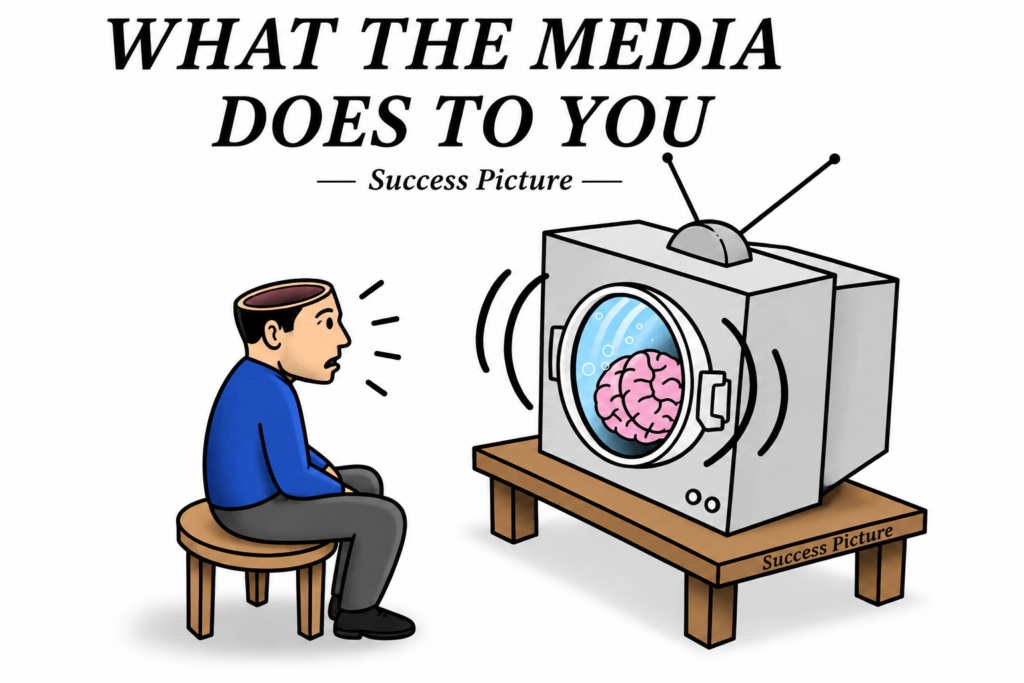
The Human Brain Is Designed to Absorb Information
The human brain is incredibly adaptable.
Psychologists refer to this ability as neuroplasticity—the brain’s capacity to change and reorganize itself based on experiences and information.
Every piece of content you consume leaves an impression.
While one article, video, or social media post may seem insignificant, repeated exposure can gradually shape your beliefs and habits.
For example:
- Constant exposure to negativity can increase anxiety.
- Inspirational content can improve motivation.
- Educational information can expand knowledge.
- Fear-based messaging can influence decision-making.
Your brain learns from repetition.
The information you repeatedly consume often becomes part of your worldview.
Why Media Has Such a Powerful Influence
Media influences people because it engages emotions.
Content that triggers fear, anger, excitement, curiosity, or happiness tends to capture attention more effectively than neutral information.
When emotions are involved, messages become more memorable.
This is why dramatic headlines, emotional stories, and highly engaging content often spread quickly.
The goal is not necessarily manipulation.
However, attention is valuable in the digital economy, and emotionally charged content tends to attract more engagement.
As a result, people may consume information that affects their emotional state without realizing its long-term impact.
The Information Diet: Your Mind Eats What You Feed It
Most people pay attention to what they eat.
They understand that diet affects physical health.
Far fewer people think about their information diet.
An information diet includes:
- News consumption
- Social media content
- Podcasts
- Television programs
- Books
- Online communities
- Conversations
- Entertainment
The content you consume daily becomes mental nutrition.
If your information diet consists primarily of negativity, outrage, fear, and comparison, those influences may shape your mindset.
If your information diet includes learning, personal growth, positivity, and balanced perspectives, it can support healthier thinking.
Your thoughts are often a reflection of your informational environment.
How Social Media Influences Behavior
Social media has transformed the way people communicate and consume information.
While it offers many benefits, it also affects behavior in significant ways.
Comparison Culture
People often compare their lives to carefully curated highlights from others.
This can create feelings of inadequacy, dissatisfaction, and low self-esteem.
Attention Fragmentation
Constant notifications and endless scrolling can reduce focus and attention span.
Emotional Contagion
Emotions spread through social networks.
Exposure to positive content may improve mood, while exposure to negativity may increase stress.
Validation Seeking
Likes, comments, and shares can influence behavior and self-worth if people become overly dependent on external approval.
Understanding these effects allows individuals to use social media more consciously.
The Impact of News Consumption
News serves an important role in society by informing the public.
However, excessive news consumption can sometimes create unintended psychological effects.
Many news stories focus on:
- Conflict
- Crime
- Disasters
- Political disagreements
- Economic concerns
This emphasis often reflects what attracts attention rather than the full reality of everyday life.
Constant exposure to negative news may lead to:
- Increased stress
- Anxiety
- Fearfulness
- Cynicism
- Feelings of helplessness
Staying informed is valuable, but balance is equally important.
The Role of Repetition in Shaping Beliefs
One reason media influences people so effectively is repetition.
When a message is repeated frequently, it can begin to feel familiar and believable.
This psychological phenomenon is sometimes referred to as the familiarity effect.
Repeated exposure can influence opinions on topics such as:
- Health
- Politics
- Success
- Relationships
- Lifestyle choices
- Consumer behavior
Critical thinking helps prevent automatic acceptance of repeated messages.
Always ask:
- Is this information accurate?
- What evidence supports it?
- Are there alternative perspectives?
How Media Affects Mental Health
Media consumption can have both positive and negative effects on mental health.
Positive Effects
Media can:
- Educate
- Inspire
- Connect communities
- Encourage personal growth
- Spread awareness
Negative Effects
Excessive or unbalanced consumption may contribute to:
- Anxiety
- Stress
- Information overload
- Fear
- Reduced attention span
- Sleep disruption
The goal is not to eliminate media but to consume it intentionally.
The Importance of Critical Thinking
In a world overflowing with information, critical thinking has become one of the most valuable skills.
Critical thinkers do not automatically believe everything they see.
Instead, they evaluate information carefully.
Questions to ask include:
- Who created this content?
- What is their purpose?
- Is the source credible?
- What evidence supports the claim?
- Are important details missing?
Critical thinking acts as a filter that helps protect the mind from misinformation and manipulation.
Practical Ways to Protect Your Mind
1. Curate Your Information Sources
Choose reliable and trustworthy sources of information.
2. Limit Negative Content
Avoid excessive exposure to fear-based or emotionally draining content.
3. Schedule Media-Free Time
Take regular breaks from screens and digital platforms.
4. Read More Long-Form Content
Books and in-depth articles often provide greater context than short social media posts.
5. Follow Educational and Positive Content
Consume information that supports learning, growth, and personal development.
6. Practice Mindful Consumption
Ask yourself whether the content you consume is helping or harming your mindset.
Why Your Information Choices Shape Your Future
The thoughts you think today influence the actions you take tomorrow.
Actions become habits.
Habits shape character.
Character influences outcomes.
This means the information you consume today can indirectly affect your future success, relationships, health, and happiness.
People who consistently expose themselves to learning, growth, and positive influences often develop different perspectives than those who consume constant negativity and distraction.
Your future is shaped not only by what you do but also by what you allow into your mind.
ALSO READ…
- Happiness Is Not About Position—It’s About Perspective
- How Social Media Likes Became Today’s Emotional Currency
- The Powerful Lesson About Friendship and Money Most People Learn Too Late
- Why Money Should Be a Tool, Not a Prison
- How You See Yourself Shapes Your Entire Life
Creating a Healthy Information Environment
Imagine spending one month replacing some negative content with:
- Educational books
- Personal development podcasts
- Skill-building videos
- Inspiring stories
- Thoughtful discussions
Many people notice improvements in:
- Focus
- Motivation
- Confidence
- Productivity
- Emotional well-being
Just as a healthy diet supports physical health, a healthy information environment supports mental growth.
Conclusion
Media is one of the most powerful forces shaping modern life.
It influences thoughts, emotions, beliefs, habits, and behaviors—often in subtle ways that go unnoticed.
The good news is that you have more control than you may realize.
By becoming intentional about what you watch, read, listen to, and engage with, you can create a healthier mental environment and develop stronger critical thinking skills.
Remember, your mind is constantly being shaped by the information you consume.
Choose content that educates rather than misleads.
Choose sources that inform rather than manipulate.
Choose ideas that help you grow rather than keep you stuck.
Because the information you feed your mind today plays a major role in the person you become tomorrow.
SHARING IS CARING 💖