
Introduction
Most people dream of extraordinary success.
They read books about billionaires, watch motivational videos, and set ambitious goals for the future. Yet despite their best intentions, many remain stuck in the same place year after year.
Why?
The answer often has less to do with talent and more to do with habits.
Mediocrity isn’t usually caused by a lack of intelligence, opportunity, or potential. More often, it’s the result of repeated behaviors that slowly limit growth, confidence, and achievement.
The good news is that once you recognize these habits, you can replace them with better ones.
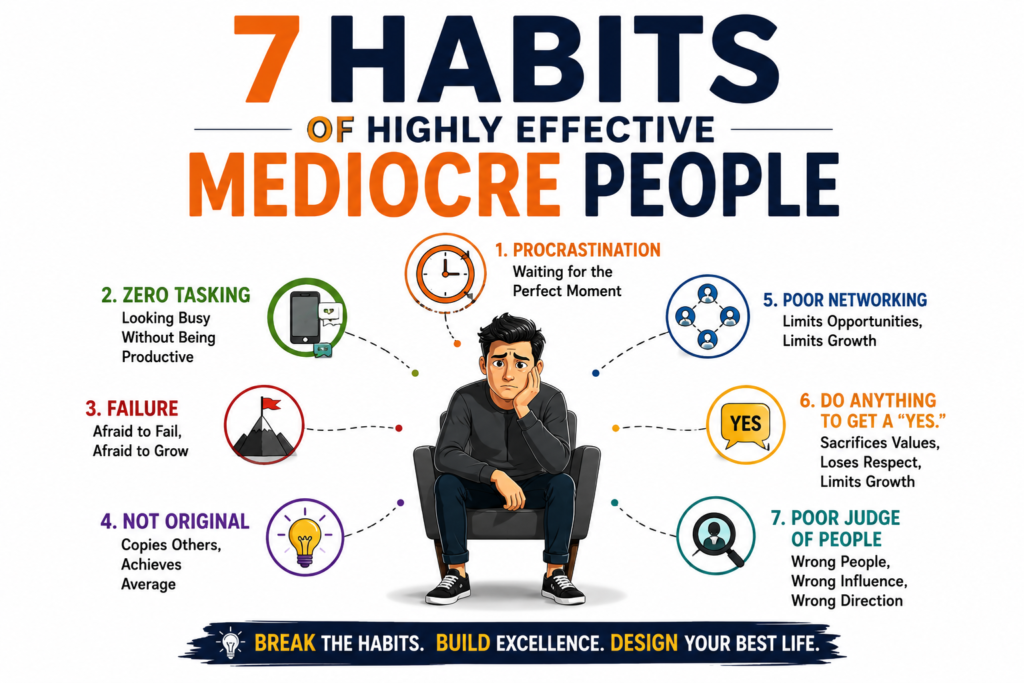
Let’s explore seven common habits of highly effective mediocre people—and what we can learn from them.

1. Procrastination: Waiting for the Perfect Moment
One of the most powerful habits keeping people average is procrastination.
Many people convince themselves that they’ll start tomorrow.
- Tomorrow they’ll launch the business.
- Tomorrow they’ll start exercising.
- Tomorrow they’ll learn a new skill.
- Tomorrow they’ll pursue their dream.
The problem is that tomorrow has a habit of becoming next week, next month, and eventually next year.
Why It Happens
People often procrastinate because they’re afraid of:
- Failure
- Criticism
- Imperfection
- Discomfort
Waiting feels safer than trying.
The Reality
Successful people rarely wait until they feel ready.
They start before they feel prepared and improve along the way.
Action creates momentum. Waiting creates regret.
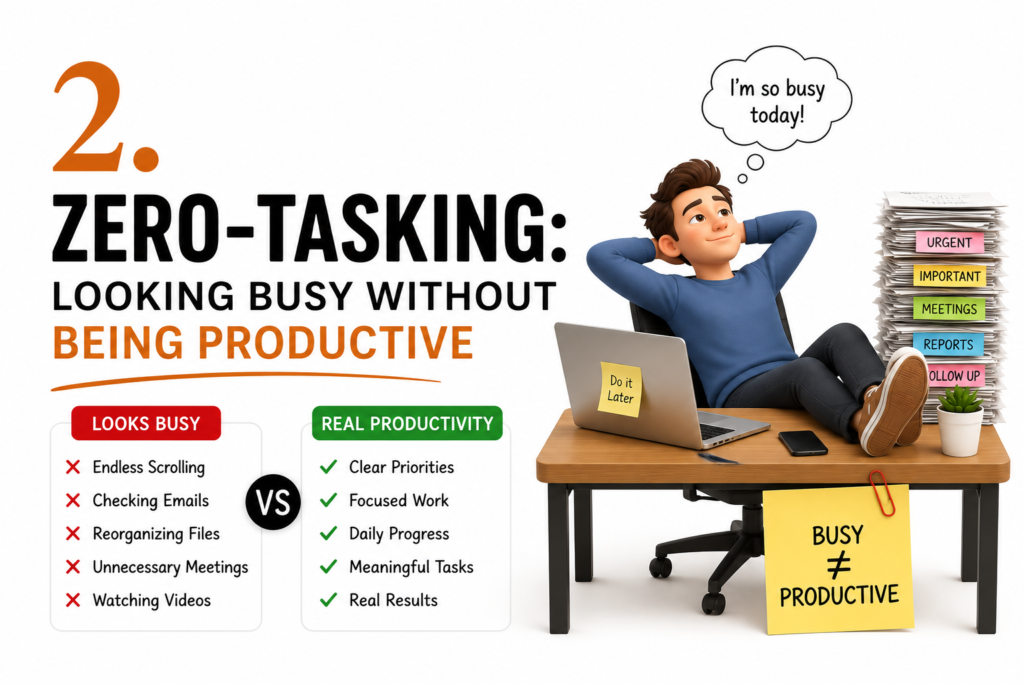
2. Zero-Tasking: Looking Busy Without Being Productive
Modern life makes it easy to appear productive while accomplishing very little.
You check emails.
Scroll social media.
Watch productivity videos.
Reorganize your workspace.
Attend unnecessary meetings.
By the end of the day, you’re exhausted but haven’t moved closer to your goals.
The Productivity Trap
Many people confuse activity with progress.
Being busy and being productive are not the same thing.
What Effective People Do Differently
They identify the tasks that create real results and focus their energy there.
The goal isn’t doing more things.
The goal is doing the right things.
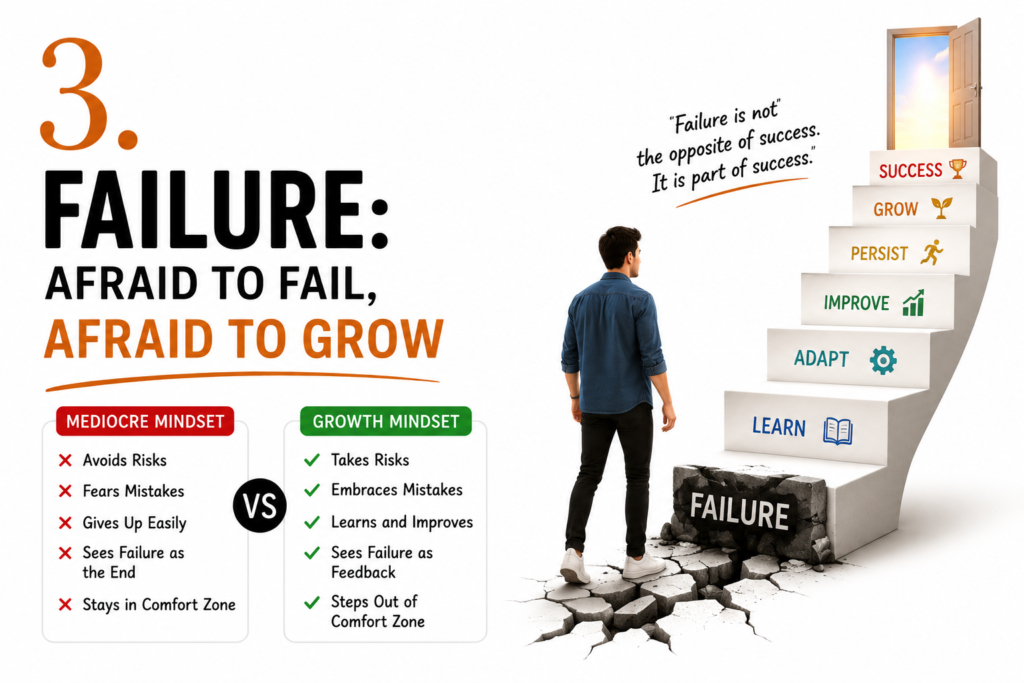
3. Fear of Failure
Mediocre people often see failure as proof they’re not good enough.
As a result, they avoid risks.
They stay in their comfort zone because failure feels too painful.
The Hidden Cost
Avoiding failure also means avoiding growth.
Every skill requires mistakes.
Every success story contains setbacks.
Every expert was once a beginner.
A Better Perspective
Failure isn’t evidence that you’re incapable.
It’s evidence that you’re learning.
The most successful people simply fail faster and learn faster.
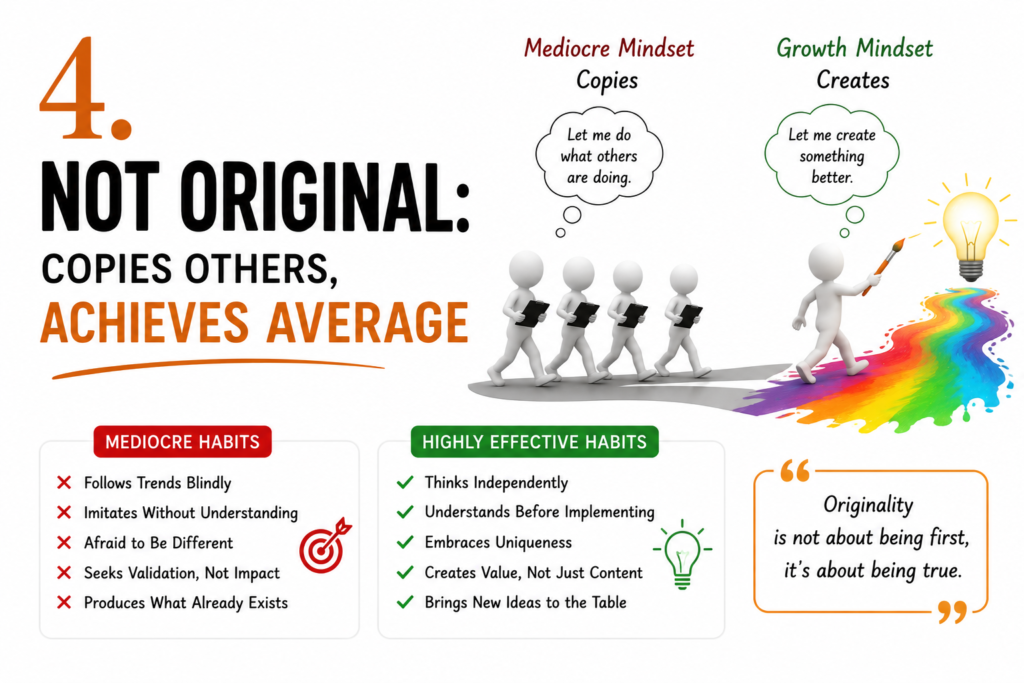
4. Lack of Original Thinking
Many people spend their lives copying what everyone else is doing.
They follow trends.
Repeat popular opinions.
Imitate successful people without understanding the underlying principles.
Why This Happens
Original thinking requires effort.
It requires questioning assumptions and forming independent conclusions.
That’s uncomfortable.
Following the crowd feels easier.
The Problem
When you think like everyone else, you often achieve results similar to everyone else.
Innovation begins when people are willing to think differently.
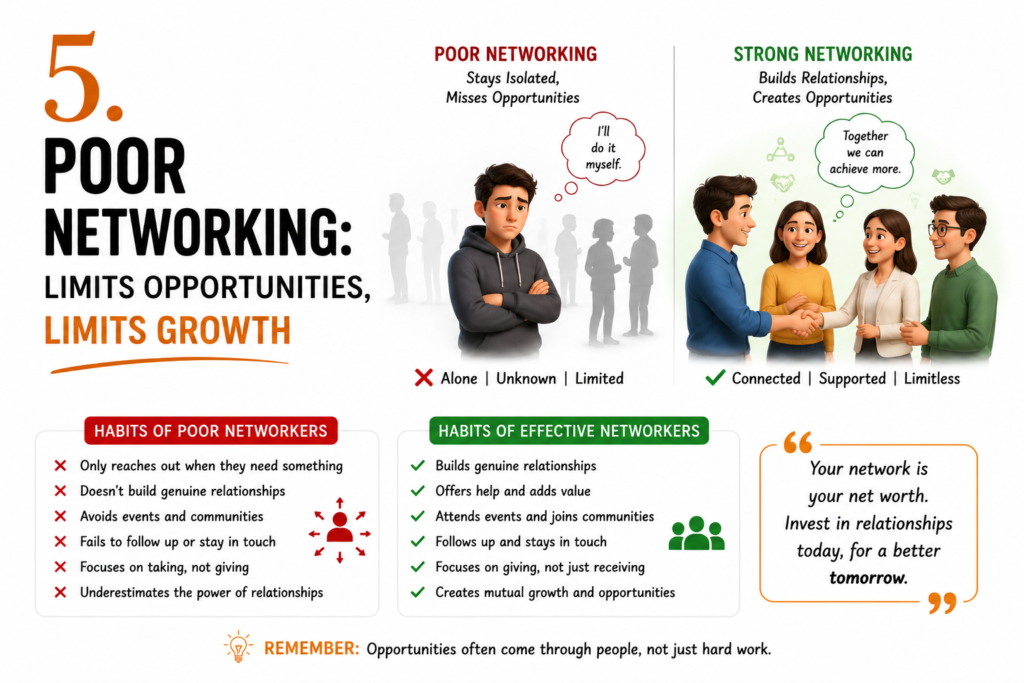
5. Poor Networking
Many people underestimate the power of relationships.
They focus entirely on what they know while ignoring who they know.
Common Networking Mistakes
- Only reaching out when they need something.
- Failing to maintain connections.
- Avoiding professional communities.
- Not helping others first.
Why Relationships Matter
Opportunities often come through people.
Jobs, partnerships, mentorships, and collaborations frequently emerge from strong networks.
Successful people understand that relationships are valuable assets.
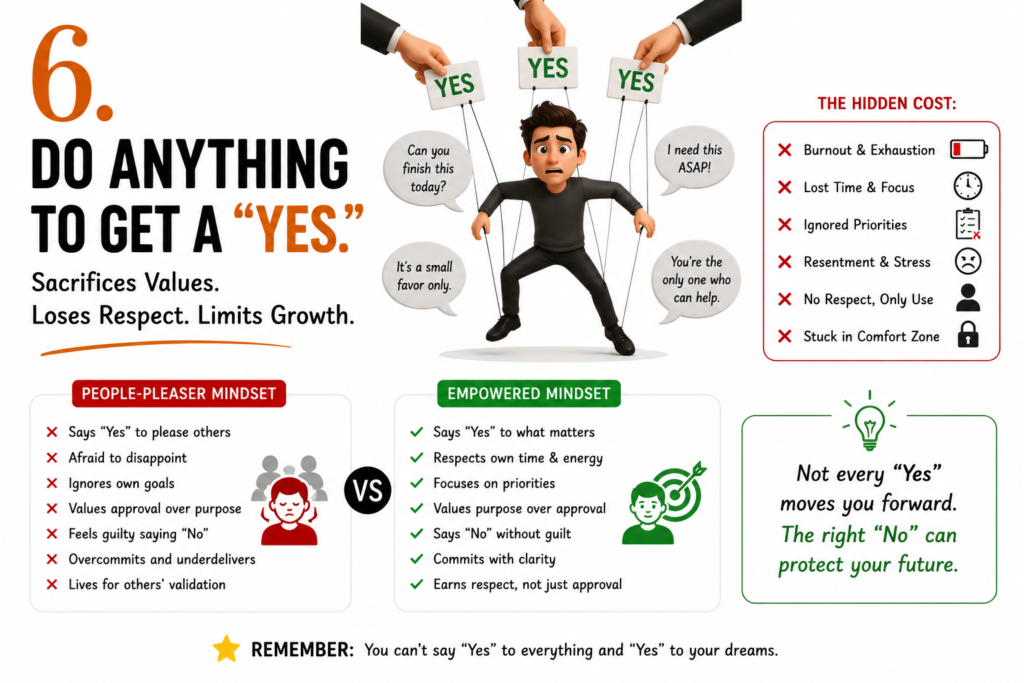
6. Doing Anything to Get a “Yes”
This habit may seem surprising.
Many mediocre people become obsessed with approval.
They constantly seek validation from:
- Friends
- Family
- Colleagues
- Social media audiences
They say “yes” when they should say “no.”
They sacrifice their values to avoid disappointing others.
The Consequence
People-pleasing often leads to:
- Burnout
- Resentment
- Poor decision-making
- Lost opportunities
What High Performers Understand
Respect is often more valuable than approval.
Not everyone needs to agree with your choices.
Success requires the courage to disappoint people occasionally.
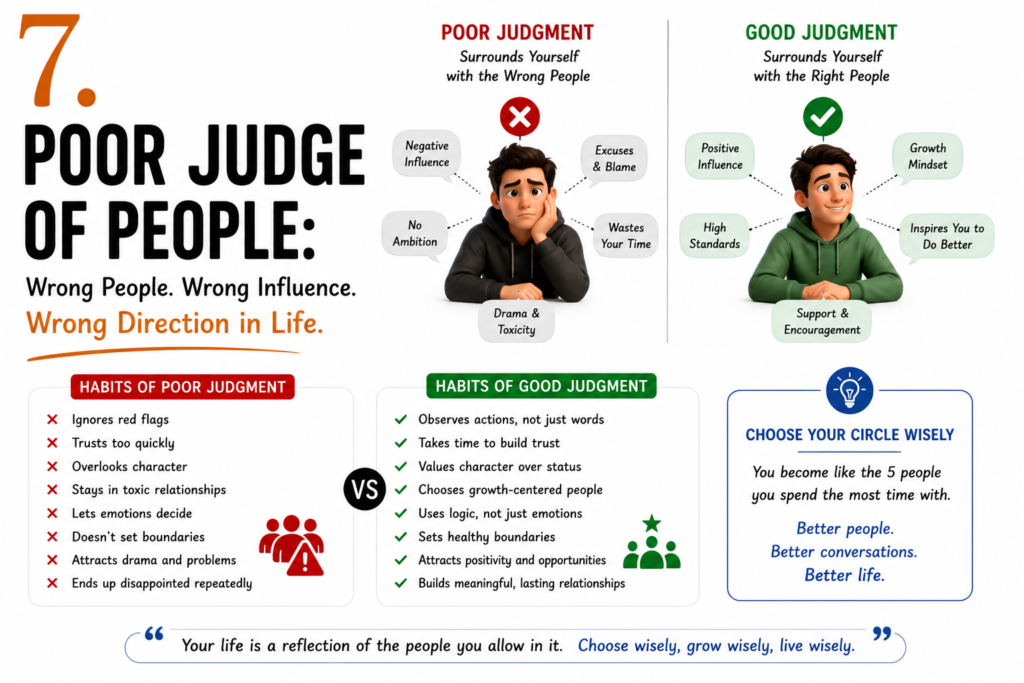
7. Being a Poor Judge of People
The people you trust can dramatically influence your future.
Yet many individuals repeatedly surround themselves with people who:
- Discourage growth
- Encourage excuses
- Create unnecessary drama
- Drain energy
Why This Matters
Human behavior is contagious.
Attitudes, habits, and beliefs spread through social circles.
If your environment rewards mediocrity, achieving excellence becomes much harder.
The Better Approach
Choose relationships carefully.
Spend time with people who:
- Challenge you positively
- Inspire growth
- Celebrate progress
- Hold you accountable
Your circle often predicts your future.
Bonus Habit: Consuming More Than Creating
One additional habit deserves attention.
Many people spend countless hours consuming information but very little time creating.
They:
- Watch tutorials.
- Read books.
- Listen to podcasts.
- Follow influencers.
Yet they rarely apply what they learn.
Knowledge Without Action Changes Nothing
Learning is valuable.
Application is transformational.
Growth happens when information becomes action.
How to Escape Mediocrity
The purpose of this article isn’t to criticize anyone.
In reality, every person has displayed some of these habits at different points in life.
The key is awareness.
Ask yourself:
- What am I postponing?
- Where am I wasting energy?
- What fears are holding me back?
- Am I thinking independently?
- Am I building meaningful relationships?
- Am I seeking approval too often?
- Am I surrounding myself with the right people?
Small improvements in these areas can create remarkable changes over time.
Final Thoughts
Mediocrity rarely arrives overnight.
It’s usually the result of small habits repeated consistently.
The encouraging news is that excellence works the same way.
Small positive habits, practiced daily, gradually transform lives.
You don’t need extraordinary talent.
You don’t need perfect circumstances.
You don’t need to have everything figured out.
You simply need to replace habits that keep you average with habits that help you grow.
The difference between a mediocre life and an exceptional one often comes down to what you repeatedly do every day.
Choose wisely.
SHARING IS CARING 💖