
Introduction
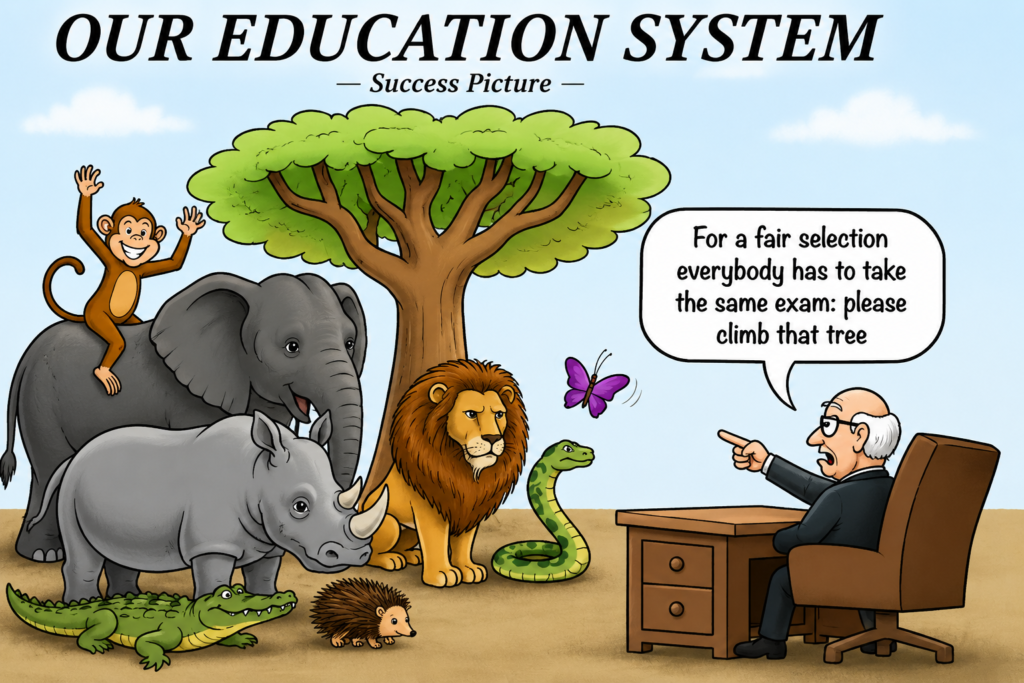
Imagine asking a monkey, an elephant, a fish, and a bird to take the same test and judging them all by one standard.
Would that be fair?
Most people would immediately say no. Yet, in many ways, this is how society often measures success.
From school classrooms to workplaces, people are frequently evaluated using the same criteria, despite having different strengths, talents, personalities, and learning styles.
The truth is simple: success is not standardized.
Every individual possesses unique abilities that deserve recognition and development. Some people excel in mathematics, while others thrive in art, leadership, communication, sports, technology, or creativity.
When society measures everyone by a single standard, countless talents remain hidden and underappreciated.
Recognizing unique strengths is not only important for personal growth—it is essential for building a world where people can reach their full potential.
The Myth of One Definition of Success
Many people grow up believing there is only one path to success.
Good grades.
A prestigious degree.
A high-paying job.
A traditional career.
While these achievements can be valuable, they are not the only indicators of success.
Some of the world’s most influential individuals succeeded because they developed talents that were not always recognized by traditional systems.
Success looks different for different people.
For one person, success may mean becoming a doctor.
For another, it may mean starting a business.
For someone else, it may involve creating art, teaching others, raising a family, or making a positive impact on their community.
There is no universal blueprint for achievement.
Every Person Has Unique Strengths
Human beings are naturally diverse.
Some people are analytical thinkers.
Others are creative problem-solvers.
Some are gifted communicators.
Others excel in leadership, empathy, innovation, or physical performance.
Consider a few examples:
The Creative Thinker
Creative individuals often see possibilities others miss.
They thrive in fields such as design, writing, filmmaking, music, and entrepreneurship.
The Logical Problem Solver
These individuals enjoy analyzing information, solving complex challenges, and developing systems.
The Natural Leader
Some people possess the ability to inspire, organize, and motivate others.
The Empathetic Helper
Many individuals excel at understanding emotions, building relationships, and supporting people.
Each talent contributes value to society.
No single strength is superior to all others.
The Problem with Standardized Measures
Standardized systems can be useful for assessing specific skills.
However, they often fail to capture the full range of human abilities.
A test may measure memorization and academic knowledge.
It may not measure:
- Creativity
- Leadership
- Emotional intelligence
- Resilience
- Innovation
- Communication skills
- Problem-solving ability
- Entrepreneurial thinking
As a result, many talented individuals mistakenly believe they are not intelligent or capable simply because they do not fit traditional definitions of success.
This misunderstanding can damage confidence and limit potential.
Why Comparing People Is Harmful
Comparison is one of the fastest ways to overlook individual strengths.
Every person begins life with different circumstances, interests, experiences, and abilities.
Comparing yourself to others often creates unnecessary frustration.
A student who struggles with mathematics may possess extraordinary artistic talent.
A person who finds public speaking difficult may excel at technical problem-solving.
Someone who performs poorly in traditional classrooms may become an exceptional entrepreneur.
Comparison ignores individuality.
Growth begins when people focus on developing their own strengths instead of competing against someone else’s journey.
The Role of Education in Developing Talent
Education should not simply transfer information.
Its greater purpose is helping individuals discover and develop their potential.
The most effective learning environments recognize that students learn differently.
Some learn through:
- Reading
- Observation
- Discussion
- Hands-on experience
- Creativity
- Experimentation
When educators acknowledge diverse learning styles, students gain opportunities to thrive.
The goal should not be to make every student identical.
The goal should be helping every student become the best version of themselves.
Hidden Talents Often Appear Late
One reason it is dangerous to judge people too early is that talents often emerge at different stages of life.
Many successful individuals struggled in traditional settings before discovering their strengths.
Some entrepreneurs performed poorly in school.
Some artists were initially criticized.
Some innovators faced repeated failures before achieving success.
Potential is not always immediately visible.
Growth takes time.
People deserve opportunities to explore, learn, and develop their abilities without being permanently defined by early performance.
Emotional Intelligence Matters Too
For many years, intelligence was viewed primarily through academic achievement.
Today, experts recognize the importance of emotional intelligence.
Emotional intelligence includes:
- Self-awareness
- Empathy
- Communication
- Relationship management
- Emotional regulation
These skills often play a significant role in personal and professional success.
Someone with strong emotional intelligence may become an outstanding leader, mentor, teacher, or team member.
Success involves more than academic ability alone.
How to Discover Your Unique Talents
Many people spend years searching for their strengths.
The process begins with self-awareness.
Ask yourself:
What Activities Energize Me?
People often perform best in areas they genuinely enjoy.
What Comes Naturally?
Certain skills feel easier because they align with natural strengths.
What Do Others Consistently Appreciate About Me?
Feedback can reveal talents you may overlook.
What Challenges Do I Enjoy Solving?
Interests often point toward hidden abilities.
Talent frequently reveals itself through curiosity and consistent engagement.
Encouraging Others to Reach Their Potential
Recognizing unique talents is not only important for ourselves.
It is equally important for others.
Parents, teachers, managers, and mentors can help people discover strengths by:
- Encouraging exploration
- Celebrating progress
- Avoiding unfair comparisons
- Supporting diverse interests
- Providing opportunities to learn and grow
People flourish when their abilities are acknowledged and valued.
Success Is About Contribution, Not Comparison
One of the most powerful mindset shifts is understanding that success is not about being better than everyone else.
It is about becoming the best version of yourself.
A society needs artists, engineers, teachers, scientists, entrepreneurs, healthcare workers, leaders, and creators.
The world benefits when people contribute their unique strengths.
Your value does not come from fitting someone else’s definition of success.
It comes from developing your talents and using them to create positive impact.
ALSO READ…
- Happiness Is Not About Position—It’s About Perspective
- How Social Media Likes Became Today’s Emotional Currency
- The Powerful Lesson About Friendship and Money Most People Learn Too Late
- Why Money Should Be a Tool, Not a Prison
- How You See Yourself Shapes Your Entire Life
The Future Belongs to Diverse Strengths
The modern world increasingly rewards creativity, adaptability, communication, and innovation.
As technology evolves, unique human strengths become even more valuable.
Organizations and communities thrive when diverse talents work together.
The future will not be built by people who are identical.
It will be built by people who bring different perspectives, skills, and ideas.
Recognizing individual strengths is not just beneficial—it is necessary.
Conclusion
Success is not standardized because people are not standardized.
Every individual possesses unique talents, abilities, and potential.
When society measures everyone by a single definition of success, countless gifts remain undiscovered.
True success begins when people stop comparing themselves to others and start developing their own strengths.
The monkey was never meant to be judged by the elephant’s abilities.
The artist was never meant to compete with the engineer.
The entrepreneur was never meant to follow the same path as everyone else.
Each person has a unique contribution to make.
Recognize your talents.
Develop your strengths.
Embrace your individuality.
Because success is not about fitting into a standard mold—it is about becoming the person you were uniquely created to be.
SHARING IS CARING 💖