
Wheat is one of the most commonly used food grains in Indian households. From fresh chapatis and parathas to puris and other everyday meals, wheat flour is an important part of many families’ diets. Many households buy wheat in bulk after harvest or from local markets to save money and reduce frequent shopping.
However, storing wheat at home for several months can be challenging. Insects, moisture, mould, rats, and poor storage conditions can damage the grain and make it unsuitable for use. Even clean-looking wheat can develop problems if it is stored while damp or kept in an unclean container.
The good news is that a few simple precautions can help you protect your wheat and maintain its quality for longer.
In this guide, you will learn 15 easy wheat storage tips to prevent insects and moisture, choose suitable containers, keep pests away, and store wheat safely in Indian homes.
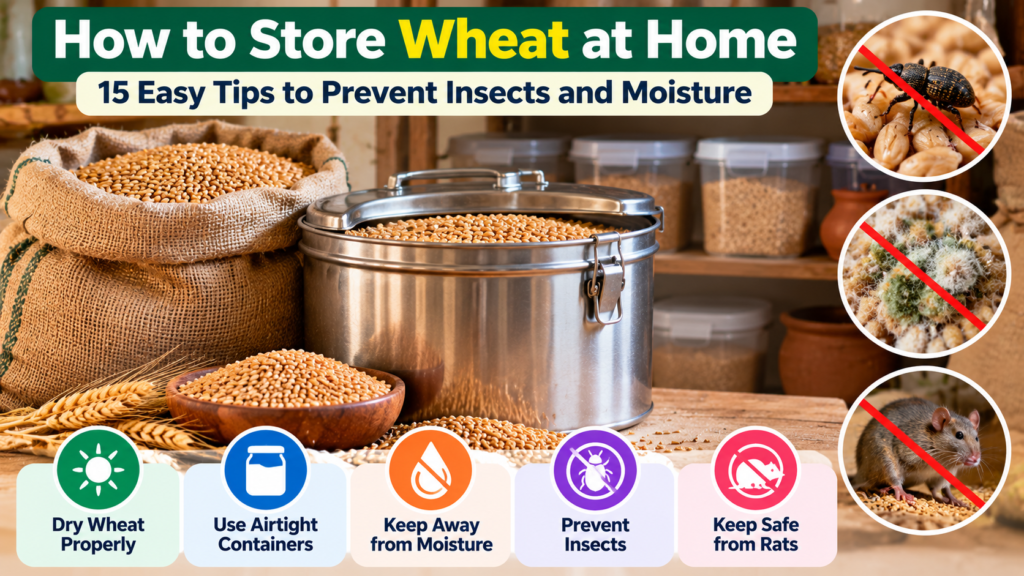
Why Is Proper Wheat Storage Important?
Proper wheat storage helps protect your grain from common problems that can affect its quality, smell, appearance, and usability.
Here are some reasons why correct storage matters:
- Prevents insect infestation: Wheat can attract stored-grain pests such as weevils and grain beetles.
- Controls moisture: Damp conditions encourage mould growth and grain deterioration.
- Reduces food waste: Protecting wheat from spoilage means less grain needs to be discarded.
- Maintains quality: Clean, dry wheat is more likely to retain its normal characteristics during storage.
- Protects against rodents: Suitable containers and a clean storage area help keep rats and mice away.
- Saves money: Buying in bulk is more useful when you can store the grain correctly.
The basic principle is simple: store clean, sufficiently dry wheat in a clean, suitable container, protect it from moisture and pests, and inspect it regularly.
15 Easy Tips to Store Wheat at Home
1. Make Sure the Wheat Is Completely Dry
Dryness is one of the most important factors in safe wheat storage. Wheat that contains too much moisture can develop mould, unpleasant smells, and other quality problems.
If you have purchased freshly harvested wheat, check whether it has been properly dried before putting it away. If further drying is needed, spread the grain in a thin layer on a clean, dry surface in suitable weather.
Protect it from dust, birds, animals, and unexpected rain. Turn the grain occasionally so that drying is more even.
For larger quantities or long-term storage, a grain moisture meter or advice from an agricultural expert can help confirm whether the moisture level is suitable. A moisture level around 12–13% is commonly used as a storage target in agricultural guidance, but the appropriate level depends on the intended storage duration, conditions, and grain use.
Tip: Never seal damp wheat in an airtight container. Trapped moisture can encourage mould and spoilage.
2. Clean the Wheat Before Storing It
Before storing wheat, remove visible dirt, straw, chaff, stones, broken grains, and other unwanted material.
You can clean household quantities by winnowing or using an appropriate grain-cleaning method. Cleaner grain is easier to inspect and store.
Avoid storing wheat that has visible mould, unusual discolouration, or a musty smell with healthy grain.
3. Use Clean, Food-Safe Containers
The container you choose plays a major role in protecting wheat from insects, moisture, and rodents.
Suitable options may include:
- Food-grade plastic containers with tight-fitting lids
- Clean metal grain bins with secure closures
- Food-safe storage drums
- Properly maintained traditional grain containers that protect the grain from dampness and pests
- Suitable airtight storage containers for smaller quantities
Choose a container that is strong, clean, dry, and appropriate for food storage. Avoid containers that previously held chemicals, fuel, pesticides, or other non-food substances.
For a large quantity, select a container that is practical to handle and easy to inspect.
4. Clean and Dry the Container Before Filling It
Never put fresh wheat into a container that still contains old grain, dust, insects, or moisture.
Empty the container completely and clean out the corners, seams, and bottom. Allow it to dry thoroughly before adding wheat.
If the container was previously infested, inspect it carefully and address the problem before using it again. Do not apply household insecticides directly to a food container unless the product is specifically approved for that use and all label instructions are followed.
5. Keep Wheat Away from Moisture
Moisture is a major enemy of stored grain. Water leaks, damp floors, wet walls, and humid storage areas can increase the risk of grain deterioration.
To protect your wheat:
- Choose a dry storage room.
- Repair roof leaks and plumbing problems.
- Keep containers away from wet walls.
- Do not place wheat directly on a damp floor.
- Avoid storing grain beside sinks or other sources of splashing water.
- Check containers after heavy rain or periods of high humidity.
If you notice condensation inside a container, investigate the cause before continuing storage.
6. Store Wheat in a Cool, Dry Place
Choose a storage area that remains reasonably cool, dry, and protected from direct sunlight and weather.
Avoid places where temperatures fluctuate significantly or where moisture regularly collects. A clean pantry, dry storeroom, or suitable grain-storage area may work well, depending on the quantity being stored.
Do not assume that a dark cupboard is automatically suitable. The area should also be clean, dry, and free from pests.
7. Keep the Storage Area Clean
Crumbs, spilled grain, dust, and old food material can attract insects and rodents.
Sweep the storage area regularly and remove spilled wheat immediately. Clean shelves and nearby surfaces, and check corners where insects or rodents may hide.
If you store wheat in a storeroom, keep unrelated household chemicals, cleaning products, and pesticides separate from the grain.
Good housekeeping is one of the simplest ways to reduce pest problems.
8. Protect Wheat from Weevils and Other Grain Insects
Weevils and other stored-grain insects can damage wheat during storage. Infestation may already be present when grain is purchased, or pests may enter through contaminated containers and storage areas.
To reduce the risk:
- Inspect the grain before storing it.
- Use clean, dry containers.
- Close lids properly.
- Avoid mixing infested grain with clean grain.
- Inspect stored wheat regularly.
- Clean the storage area and remove grain spills.
For small household quantities, a suitable airtight container may help limit access by new insects, provided the wheat is sufficiently dry before storage.
If you notice insects, isolate the affected container and inspect nearby grain. Do not assume that removing visible insects makes a badly infested batch safe to eat.
9. Use Airtight Storage Where Appropriate
Airtight, food-safe containers can be useful for storing smaller quantities of dry wheat. They help limit access by insects and reduce exposure to changing humidity when properly sealed.
However, airtight storage is not a substitute for drying the grain first. If moisture is trapped inside, sealing the container may make the problem worse.
For larger quantities, suitable hermetic grain-storage systems may be an option when used correctly and according to their instructions.
10. Keep Wheat Bags Off the Floor
If you store wheat in sacks rather than containers, avoid placing the sacks directly on the floor.
Use a clean, dry, raised platform or suitable pallets. Leave some space between the sacks and walls so you can inspect the area and identify dampness or pest activity.
Keep the storage location away from places where rainwater, cleaning water, or groundwater can collect.
This is particularly important for households storing several bags of wheat and for small farm storerooms.
11. Protect Wheat from Rats and Mice
Rodents can damage grain, contaminate it with droppings and urine, and tear open bags.
To reduce the risk:
- Use strong containers with secure lids.
- Repair gaps around doors and walls.
- Keep the storage room free of clutter.
- Remove spilled grain promptly.
- Store bags on raised platforms.
- Check for droppings, gnaw marks, and torn packaging.
Avoid placing rodent poison directly beside exposed food grain. If rodent control is necessary, use appropriate methods that prevent contamination and follow product instructions carefully.
12. Do Not Mix Old Wheat with Newly Purchased Wheat
It may seem convenient to pour new wheat into a container that still contains some old grain. However, this can make it harder to identify problems and may carry existing insects or contamination into the new batch.
A better approach is to empty the container, inspect it, clean it, dry it, and then add the new wheat.
Keep batches separate when possible, especially if you buy wheat from different sources or at different times.
13. Check the Wheat Regularly
Do not store wheat for months without inspecting it.
Every few weeks, check the container and surrounding area for:
- Live insects or larvae
- Webbing or unusual residue
- Dampness or condensation
- A musty or unusual smell
- Clumping or discolouration
- Torn sacks or signs of rodents
For large quantities, more frequent monitoring may be necessary, particularly during hot or humid weather.
If the grain becomes damp or shows signs of mould, separate it from unaffected grain and assess whether it is safe to keep. Do not consume visibly mouldy or suspicious grain.
14. Use Older Wheat First
When you purchase new wheat, organise the stock so that the older, suitable batch is used first.
This is known as the First In, First Out (FIFO) principle. It reduces the chance of forgetting older grain at the bottom of a container or in the back of a storeroom.
Write the purchase or storage date on the container or bag. If you maintain several batches, label them clearly.
Do not use the FIFO principle to justify consuming grain that has become damp, mouldy, contaminated, or heavily infested.
15. Take Extra Care During the Monsoon Season
Monsoon humidity can make wheat storage more difficult in many parts of India. Damp walls, leaking roofs, wet floors, and humid air can increase the risk of moisture-related damage.
During the rainy season:
- Check the storage room for leaks.
- Keep containers securely closed when appropriate.
- Inspect sacks and containers more frequently.
- Avoid placing wheat near wet walls or windows.
- Clean up any spilled water immediately.
- Check for condensation inside containers.
- Make sure the grain was dry before storage.
If your home has persistent dampness, consider moving wheat to a drier location.
Which Container Is Best for Storing Wheat at Home?
The best container depends on how much wheat you store, how quickly you use it, and the conditions in your home.
| Storage option | Best suited for | Important consideration |
|---|---|---|
| Food-grade plastic container with lid | Small household quantities | Must be clean, dry, and food-safe |
| Metal grain bin | Larger household quantities | Check for rust, gaps, and moisture |
| Food-safe storage drum | Bulk household storage | Use a secure lid and inspect regularly |
| Clean grain sack | Shorter-term storage in a suitable dry room | Offers less protection against insects and moisture |
| Suitable hermetic storage system | Longer storage when correctly managed | Grain must be sufficiently dry before sealing |
For most households, a clean, dry, food-safe container with a secure lid is a practical choice for the quantity of wheat used regularly.
How Long Can Wheat Be Stored at Home?
There is no single storage duration that applies to every household. The time wheat remains in good condition depends on its moisture level, cleanliness, temperature, container, pest exposure, and the surrounding humidity.
Dry, clean grain stored under suitable conditions can remain usable for an extended period. However, storage duration should not be treated as a guarantee of safety.
Consider these general guidelines:
- Small household quantities: Buy an amount you can inspect and use conveniently.
- Bulk household storage: Pay extra attention to drying, container condition, pest control, and regular inspections.
- Long-term storage: Consider measuring moisture content and obtaining advice from a qualified agricultural source.
- Seed wheat: Follow seed-specific storage advice because germination and seed quality may matter in addition to food quality.
Check the grain before using it, regardless of how recently it was stored.
Can Traditional Methods Help Prevent Wheat Insects?
Some households use traditional practices, such as thoroughly drying grain, keeping storage vessels clean, and using suitable traditional grain containers.
The most dependable starting points remain proper drying, sanitation, pest exclusion, and regular inspection.
Do not assume that every traditional remedy is effective or safe. Adding unverified substances, strong-smelling chemicals, or non-food-grade products to wheat can contaminate the grain.
If you plan to use a traditional storage additive, verify that it is suitable for the intended food-storage use and that there is reliable guidance supporting its safety.
What Should You Do If Wheat Already Has Insects?
If you find insects in stored wheat, take the problem seriously.
- Separate the affected container from clean grain.
- Inspect the wheat for the extent of the infestation.
- Check nearby containers and the storage area.
- Clean and dry the empty storage container before reuse.
- Do not mix the affected batch with fresh wheat.
- Discard grain that is mouldy, damp, contaminated, or badly damaged.
- For a large quantity or serious infestation, consult an agricultural extension service or qualified pest-management professional.
Do not use household insect sprays on wheat intended for consumption. Do not attempt to fumigate household grain with highly toxic fumigants yourself. Professional grain fumigation requires appropriate expertise, equipment, and safety procedures.
Common Wheat Storage Mistakes to Avoid
Even a good storage container cannot compensate for poor preparation. Avoid these common mistakes:
- Storing wheat before it is sufficiently dry.
- Reusing a dirty or damp container.
- Keeping grain on a wet floor.
- Leaving storage bags open.
- Ignoring insects because only a few are visible.
- Mixing old grain with new grain.
- Storing wheat next to household chemicals.
- Using unverified chemicals or remedies on food grain.
- Leaving wheat unchecked throughout the monsoon.
- Continuing to use grain that shows signs of mould or contamination.
Small preventive steps can help reduce these risks and protect the quality of your stored wheat.
Frequently Asked Questions About Wheat Storage
1. What is the best way to store wheat at home?
The best approach is to store clean, sufficiently dry wheat in a clean, food-safe container with a secure lid. Keep it in a dry, pest-free area and inspect it regularly.
2. How can I prevent insects in stored wheat?
Start with clean grain and a clean, dry container. Keep the lid secure, remove spilled grain, inspect the storage area, and avoid mixing infested wheat with clean batches.
3. Can I store wheat in a plastic container?
Yes, provided the container is food-grade, clean, dry, strong, and suitable for the amount of wheat being stored. A secure lid helps protect against pests and external moisture.
4. Should wheat be dried before storage?
Yes. Wheat should be sufficiently dry before storage. Grain that contains excessive moisture is more likely to develop mould, spoilage, and other quality problems.
5. Can wheat be stored in airtight containers?
Airtight food-safe containers can be useful for sufficiently dry wheat. Do not seal damp grain, because trapped moisture can encourage deterioration.
6. How do I protect wheat during the monsoon?
Keep wheat away from leaks, damp walls, wet floors, and sources of water. Use suitable containers, inspect the grain more frequently, and ensure it was dry before storage.
7. Can I mix new wheat with old wheat?
It is better to keep batches separate. Empty, inspect, clean, and dry the container before storing the next batch. This makes it easier to identify problems and use older grain first.
8. What should I do if my wheat smells musty?
A musty smell can indicate moisture problems or mould. Separate the affected grain and do not consume it if mould, dampness, or contamination is suspected. Simply drying visibly mouldy grain does not guarantee that it is safe.
9. Is sunlight useful for drying wheat?
Sunlight can help dry wheat when the weather is suitable. Spread it on a clean, dry surface, protect it from dust, birds, and animals, and bring it under cover before rain or evening moisture. For large quantities, verify the grain’s moisture level when possible.
10. How often should I inspect stored wheat?
For ordinary household storage, checking every few weeks is a useful routine. Inspect more frequently during humid weather or if you have previously experienced insects or dampness.
11. Can I use insecticide directly on wheat?
Do not use ordinary household insecticides on grain intended for consumption. Grain treatments must be specifically approved for the intended use and applied according to the label by qualified people where required.
12. How can farmers get advice on storing large quantities of wheat?
Farmers can contact their local agricultural extension office, Krishi Vigyan Kendra, or relevant agricultural department for advice on grain moisture, suitable storage structures, and pest management.
Useful Official and Agricultural Resources
For more information about grain storage and post-harvest practices, consult these resources:
- ICAR – Indian Institute of Wheat and Barley Research: Research and guidance related to wheat production and management.
- Tamil Nadu Agricultural University Agritech Portal – Grain Storage: Information on grain cleaning, drying, and stored-grain pest prevention.
- Food Corporation of India and Department of Food & Public Distribution FAQs: Government information about foodgrain storage and preservation.
- Food and Agriculture Organization of the United Nations: Agricultural resources on post-harvest handling and grain storage.
These resources can help readers distinguish everyday household practices from the more technical methods required for storing large quantities of grain.
Conclusion
Storing wheat at home does not have to be difficult. With the right preparation and a little regular attention, you can reduce the risk of insects, moisture, rodents, and spoilage.
Start by cleaning and drying the wheat properly. Choose a suitable food-safe container, keep it in a dry place, protect it from pests, and inspect it regularly. During the monsoon, pay particular attention to dampness and condensation.
Remember that clean grain, suitable moisture levels, proper containers, and regular inspection are the foundations of safe wheat storage. These simple habits can help Indian households protect their food supplies and reduce unnecessary waste.
Disclaimer: This article provides general household grain-storage guidance. Requirements for long-term grain storage, seed preservation, and pest treatment may differ. For large quantities or suspected contamination, seek advice from an agricultural extension professional or qualified food-safety expert.
SHARING IS CARING 💖