
Introduction
Success is rarely a solo journey. Behind every great achievement—whether in business, sports, or life—there is often a team working together with a shared purpose. While individual talent is important, it is teamwork that transforms effort into excellence.
In today’s fast-paced and competitive world, collaboration has become more valuable than ever. No matter how skilled a person is, there are always limitations. But when people combine their strengths, support each other, and move in the same direction, they can achieve results that would be impossible alone.
This is why the phrase “teamwork is the secret to success” holds so much truth. It is not just a motivational idea—it is a proven principle seen across industries and throughout history.
What Does Teamwork Really Mean?
Teamwork is more than just working together. It is about:
- Sharing a common goal
- Supporting each other’s strengths and weaknesses
- Communicating effectively
- Trusting one another
- Taking collective responsibility
True teamwork happens when individuals stop thinking only about “me” and start focusing on “we.”
When a team is aligned, every member contributes in their own way, creating a powerful synergy where the whole becomes greater than the sum of its parts.
Why Teamwork Is the Foundation of Success
1. Combines Strengths and Skills
Every person has unique abilities. Some are great leaders, some are creative thinkers, and others are excellent problem-solvers. When these skills come together, they complement each other.
Instead of one person trying to do everything, teamwork allows tasks to be divided based on strengths, leading to better efficiency and higher-quality results.
2. Encourages Innovation and Creativity
Collaboration brings different perspectives to the table. When people share ideas, they challenge each other’s thinking and inspire new solutions.
Many groundbreaking innovations are the result of teamwork, not individual effort. A team can brainstorm, refine, and improve ideas much faster than a single person.
3. Builds Strong Support Systems
Success comes with challenges, setbacks, and failures. During difficult times, a strong team provides emotional and practical support.
When one person feels discouraged, others can lift them up. This shared strength helps teams stay motivated and focused even in tough situations.
4. Increases Productivity and Efficiency
Working alone can be slow and overwhelming. But in a team, tasks are divided and completed simultaneously.
This not only saves time but also ensures that work is done more effectively. Teams can handle complex projects much better than individuals.
5. Creates Accountability
In a team, everyone is responsible not just for their own work but also for the success of the group.
This sense of accountability encourages individuals to stay committed, meet deadlines, and maintain high standards.
Real-Life Example of Teamwork Leading to Success
Think about successful organizations, sports teams, or even small startups. Behind every big win is a group of people working together.
For example, in sports, even the most talented player cannot win a match alone. It takes coordination, strategy, and trust among teammates.
Similarly, in business, companies grow not because of one person, but because of teams that collaborate across departments—marketing, development, sales, and support.
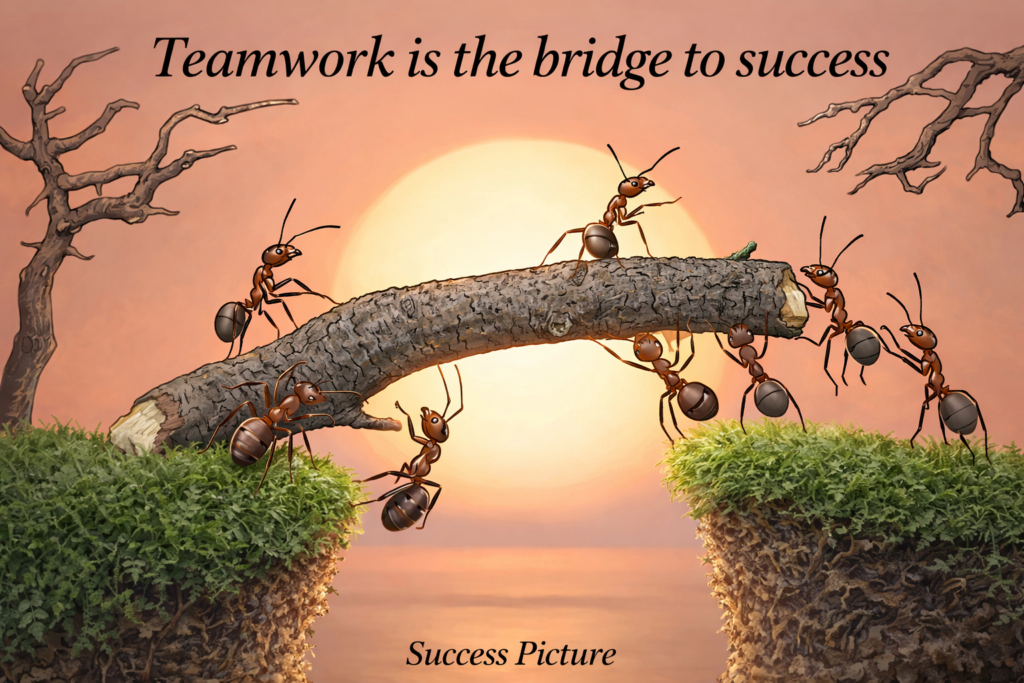
Even in nature, teamwork plays a powerful role. Ants, for example, can carry objects many times their size by working together. Individually, they are limited—but as a team, they are unstoppable.
The Key Elements of Effective Teamwork
1. Clear Communication
Open and honest communication is the backbone of teamwork. Without it, misunderstandings can occur, leading to mistakes and conflicts.
Teams that communicate well can solve problems faster and work more efficiently.
2. Trust and Respect
Trust allows team members to rely on each other without fear. Respect ensures that everyone’s ideas and contributions are valued.
When trust and respect are present, teams become stronger and more cohesive.
3. Shared Goals
A team must have a clear and common objective. When everyone is working toward the same goal, efforts become aligned and meaningful.
Without a shared vision, teamwork can become disorganized and ineffective.
4. Leadership and Direction
Good leadership guides the team, keeps everyone focused, and ensures that progress is being made.
A strong leader does not control the team but empowers each member to perform their best.
5. Flexibility and Adaptability
Challenges and unexpected situations are inevitable. Teams that can adapt and adjust quickly are more likely to succeed.
Flexibility allows teams to overcome obstacles without losing momentum.
How to Apply Teamwork in Your Daily Life
1. Be Willing to Collaborate
Don’t try to do everything alone. Seek opportunities to work with others and learn from them.
2. Value Others’ Contributions
Every team member plays an important role. Appreciate their efforts and recognize their strengths.
3. Communicate Clearly
Share your ideas, listen actively, and ensure that everyone is on the same page.
4. Support Your Team
Help others when they need it. A strong team grows when members support each other.
5. Focus on the Goal, Not the Ego
Success is about achieving results, not proving who is better. Keep your focus on the bigger picture.
READ MORE…
- How to Stay Kind Without Becoming Weak
- If Someone Avoids You, Respect the Distance and Move On
- Win the War in Your Mind, Win in Life
- Some Goodbyes Are the Beginning of Your Growth
- The Eagle Mindset: Rise Above Every Excuse
Common Mistakes That Break Teamwork
- Lack of communication
- Ego and competition within the team
- trust among members
- Poor leadership
- clarity of goals
Avoiding these mistakes can significantly improve team performance and success.
Benefits of Teamwork in the Long Run
- Stronger relationships
- Better problem-solving skills
- Increased confidence
- Greater success opportunities
- Personal and professional growth
Teamwork not only helps achieve goals but also builds valuable life skills.
Conclusion
Teamwork is not just a strategy—it is a mindset. It teaches us that success is not about standing alone at the top, but about rising together.
When people collaborate, support each other, and work toward a shared goal, they create something far more powerful than individual effort.
Remember, great things are never done by one person—they are done by a team.
If you want to achieve lasting success, start building strong connections, trust your team, and move forward together.
SHARING IS CARING 💖