
Introduction: Why Walking Away Sometimes Means Moving Forward
One of the hardest lessons in life is realizing that not everyone who enters your life is meant to stay forever.
As children, we often believe that relationships last forever.
Friendships feel permanent.
Romantic relationships seem unbreakable.
Family connections appear unconditional.
But life gradually teaches a different truth:
Some people become part of our journey for only a season.
And sometimes, letting go of certain relationships is not an act of cruelty.
It is an act of self-respect.
Many people remain in unhealthy relationships because they fear loneliness.
Others stay because they hope people will change.
Some feel guilty for creating distance.
Others worry about what society will think.
As a result, they continue carrying relationships that repeatedly drain their energy, damage their confidence, and prevent their growth.
Eventually, they realize something powerful:
Protecting your peace often requires difficult decisions.
And occasionally, removing the wrong people creates room for healthier relationships, greater self-respect, and personal transformation.
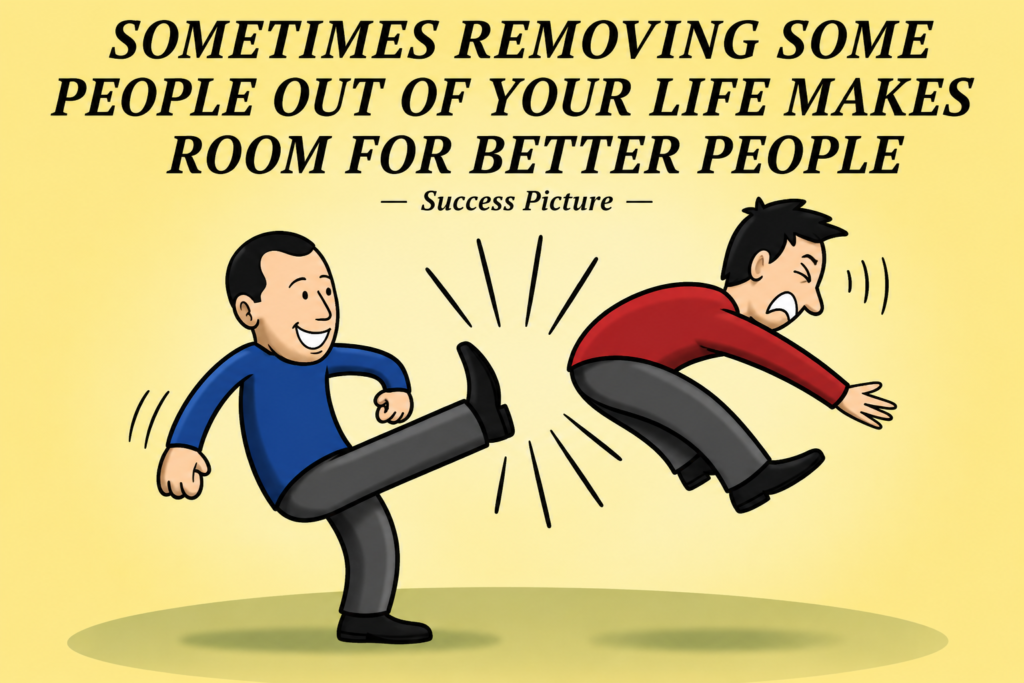
The Real-Life Story of a Friendship That Became Unhealthy
Imagine two friends who meet during school.
They share countless memories.
They celebrate achievements together.
They support one another during difficult times.
Years pass.
One friend continues encouraging growth.
The other becomes increasingly negative.
Every success is criticized.
Every decision is questioned.
Every accomplishment becomes a source of jealousy.
The relationship slowly changes.
Conversations become emotionally exhausting.
Instead of feeling supported, one friend feels constantly drained.
For a long time, they stay because of history.
They remember the good memories.
They tell themselves things will improve.
Eventually, they realize something important:
History alone cannot sustain an unhealthy relationship.
Creating distance feels painful.
But months later, they notice something unexpected.
Their confidence improves.
Their stress decreases.
Their energy returns.
They begin forming healthier relationships.
Sometimes, letting go creates space for growth that could not occur otherwise.
What Makes a Relationship Toxic?
The word “toxic” is often overused.
Disagreements alone do not make relationships toxic.
People naturally have conflicts.
Differences are normal.
Mistakes happen.
However, certain patterns repeatedly harm emotional well-being.
Toxic relationships often involve:
Constant criticism.
Manipulation.
Disrespect.
Jealousy.
Control.
Dishonesty.
Emotional exhaustion.
Lack of accountability.
Relationships should not be perfect.
But they should feel emotionally safe and respectful.
When relationships consistently damage mental well-being, they deserve honest evaluation.
Why People Stay in Unhealthy Relationships
Many people remain in unhealthy situations longer than they should.
The reasons are deeply human.
Fear of Being Alone
Loneliness can feel frightening.
Some people tolerate unhealthy relationships because they believe having someone is better than having no one.
Hope for Change
People remember better times.
They hope those moments will return.
Sometimes change occurs.
Often it does not.
Guilt
Creating boundaries may feel selfish.
People worry about disappointing others.
Familiarity
Even unhealthy situations can feel comfortable simply because they are familiar.
Human beings often fear uncertainty more than discomfort.
The Psychology of Emotional Exhaustion
Relationships influence mental health.
Supportive relationships create emotional security.
Unhealthy relationships often produce stress.
Imagine carrying a heavy backpack every day.
At first, you adapt.
Eventually, exhaustion develops.
Toxic relationships operate similarly.
People may not immediately notice the damage.
Gradually:
Energy decreases.
Confidence weakens.
Anxiety increases.
Happiness declines.
Many people only recognize the emotional burden after creating distance.
Why Boundaries Matter
Boundaries are not walls designed to keep everyone away.
Boundaries are guidelines that protect emotional well-being.
Healthy boundaries communicate:
What behavior is acceptable.
What behavior is unacceptable.
How people deserve to be treated.
What values deserve protection.
Boundaries are acts of self-respect.
Without boundaries, people often become overwhelmed by others’ expectations and behaviors.
Real-Life Example: Learning to Say No
Imagine an employee who constantly helps everyone.
He accepts every request.
Works additional hours.
Sacrifices personal time.
Rarely refuses anything.
Eventually, exhaustion develops.
Stress increases.
Relationships suffer.
Then something changes.
He begins politely saying:
“I cannot do that today.”
“I need time for myself.”
“I have other priorities.”
Initially, he feels guilty.
Eventually, he feels something different:
Relief.
Boundaries protected his energy and improved his life.
Why Letting Go Feels So Difficult
Letting go rarely hurts because people enjoy suffering.
It hurts because relationships carry memories.
Shared experiences.
Dreams.
Conversations.
Laughter.
Support.
Walking away often feels like saying goodbye to possibilities that once existed.
People grieve not only what relationships became but also what they hoped those relationships would become.
This emotional conflict explains why letting go is difficult.
The Difference Between Giving Up and Letting Go
These ideas are often confused.
Giving up means abandoning something valuable without reason.
Letting go means accepting that something is causing more harm than growth.
Sometimes relationships improve through communication and effort.
Other times, repeated patterns reveal painful truths.
Not every relationship can be repaired.
Recognizing this reality requires courage and maturity.
The Importance of Protecting Your Peace
Peace is one of life’s most valuable experiences.
A peaceful mind improves:
Decision-making.
Relationships.
Productivity.
Creativity.
Health.
Emotional well-being.
Toxic relationships frequently disrupt peace.
Constant drama.
Repeated disappointment.
Unnecessary conflict.
Persistent negativity.
Protecting peace is not selfish.
It is responsible self-care.
Real-Life Example: The Garden Analogy
Imagine a garden.
Some plants flourish.
Others become weeds.
Weeds compete for sunlight, water, and nutrients.
If left unmanaged, they prevent healthy growth.
Relationships sometimes function similarly.
Positive people encourage growth.
Negative influences repeatedly drain energy.
Protecting the garden occasionally requires removing what prevents healthy development.
The same principle often applies to life.
Personal Growth Often Requires Difficult Decisions
Growth rarely occurs inside complete comfort.
Sometimes personal development requires:
Changing environments.
Leaving unhealthy situations.
Creating boundaries.
Reevaluating relationships.
Choosing yourself.
These decisions can feel painful.
Yet many people eventually discover that difficult decisions often become turning points.
The relationship they feared leaving becomes the lesson that transforms their lives.
Why Better Relationships Often Arrive Later
Many people notice something surprising after creating healthy boundaries.
Their social circles improve.
They meet people who:
Respect boundaries.
Celebrate success.
Communicate honestly.
Encourage growth.
Offer support.
The space created by letting go often allows healthier relationships to develop.
Not every relationship improves life simply because it exists.
The quality of relationships matters enormously.
The Life Lesson Hidden Inside Every Goodbye
Every relationship teaches something.
Some people teach love.
Some teach trust.
Some teach patience.
Some teach resilience.
Others teach important boundaries.
Even painful relationships can create wisdom.
They reveal:
What behaviors matter.
What values deserve protection.
What relationships should feel like.
What treatment should never be accepted.
Sometimes the people who leave our lives become our greatest teachers.
Practical Steps for Letting Go and Moving Forward
Accept Reality
Stop focusing entirely on potential.
Evaluate present patterns.
Set Healthy Boundaries
Protect emotional well-being.
Spend Time with Supportive People
Positive relationships encourage healing.
Practice Self-Compassion
Healing requires patience.
Focus on Personal Growth
Invest energy into learning and self-improvement.
Embrace New Possibilities
Every ending creates opportunities for new beginnings.
The Courage to Choose Yourself
Choosing yourself does not mean becoming selfish.
It means understanding that your well-being matters.
Your peace matters.
Your mental health matters.
Your growth matters.
Relationships should enrich life rather than consistently diminish it.
Sometimes the most loving thing you can do for yourself is walk away from environments that repeatedly harm your emotional well-being.
Conclusion: Sometimes Goodbye Creates Space for Better Things
Life introduces countless people into our journeys.
Some remain forever.
Others stay only briefly.
Every relationship leaves an impact.
But not every relationship deserves unlimited access to your peace, energy, and future.
Sometimes letting go feels like failure.
Later, it often reveals itself as wisdom.
The wrong relationships frequently occupy space that healthier relationships need to grow.
The wrong environments often prevent personal transformation.
The wrong influences sometimes keep people trapped in versions of themselves they have already outgrown.
Protect your peace.
Respect your boundaries.
Trust your growth.
Because occasionally the first step toward a better life is having the courage to release what no longer supports the person you are becoming.
And sometimes, removing certain people from your life is not the end of your story.
It is the beginning of a better chapter.
SHARING IS CARING 💖