
What Is a Ta-Da List?
A “Ta-Da List” is a simple yet powerful way to look at productivity from a more positive and motivating perspective. Instead of focusing on tasks that still need to be completed, a Ta-Da List highlights what you have already accomplished. The name comes from the expression “ta-da,” which people often use to celebrate a finished task or a small victory. This approach shifts attention away from pressure and toward progress, helping individuals feel more encouraged and confident about their efforts.
In everyday life, traditional to-do lists can sometimes feel overwhelming. Seeing a long list of unfinished tasks may create stress or a sense of falling behind. A Ta-Da List works differently by capturing completed actions, no matter how small they seem. Whether it’s finishing a work assignment, replying to emails, exercising, or even taking a short break to recharge, writing these achievements down creates a visible record of productivity. This simple habit reinforces the idea that progress is happening, even on days that feel slow or unproductive.
One of the key benefits of a Ta-Da List is the boost in motivation it provides. When people recognize their accomplishments, their brain naturally associates effort with reward. This builds a sense of momentum, making it easier to continue working and stay consistent. Over time, this positive reinforcement can improve confidence and reduce the tendency to procrastinate. Instead of focusing on what is left undone, individuals begin to appreciate how much they have already achieved.
Another important advantage is its impact on mental well-being. Productivity is not only about completing tasks but also about maintaining a healthy mindset. A Ta-Da List encourages gratitude and self-awareness by helping people acknowledge their daily efforts. This can reduce feelings of burnout and self-criticism, especially during busy or challenging periods. By celebrating small wins, individuals develop a more balanced and supportive inner dialogue.
Using a Ta-Da List does not mean abandoning a traditional to-do list. Both methods can work together effectively. A to-do list helps with planning and organization, while a Ta-Da List provides reflection and encouragement. At the end of the day, reviewing what has been completed can create a sense of closure and satisfaction. It also helps identify patterns of productivity and areas where time and energy are being used well.
In essence, a Ta-Da List is a mindset tool as much as it is a productivity method. It reminds people that progress is built step by step and that every effort counts. By shifting focus from pressure to achievement, it transforms the way productivity is experienced. Over time, this simple habit can lead to greater consistency, improved motivation, and a more positive relationship with work and daily tasks.
Mental health benefits of a Ta-Da list
The mental health benefits of a Ta-Da List come from a simple but powerful shift in perspective—from focusing on unfinished tasks to recognizing completed achievements. Unlike a traditional to-do list, which can often create stress and overwhelm, a Ta-Da List highlights progress, helping individuals feel more in control and accomplished throughout the day.
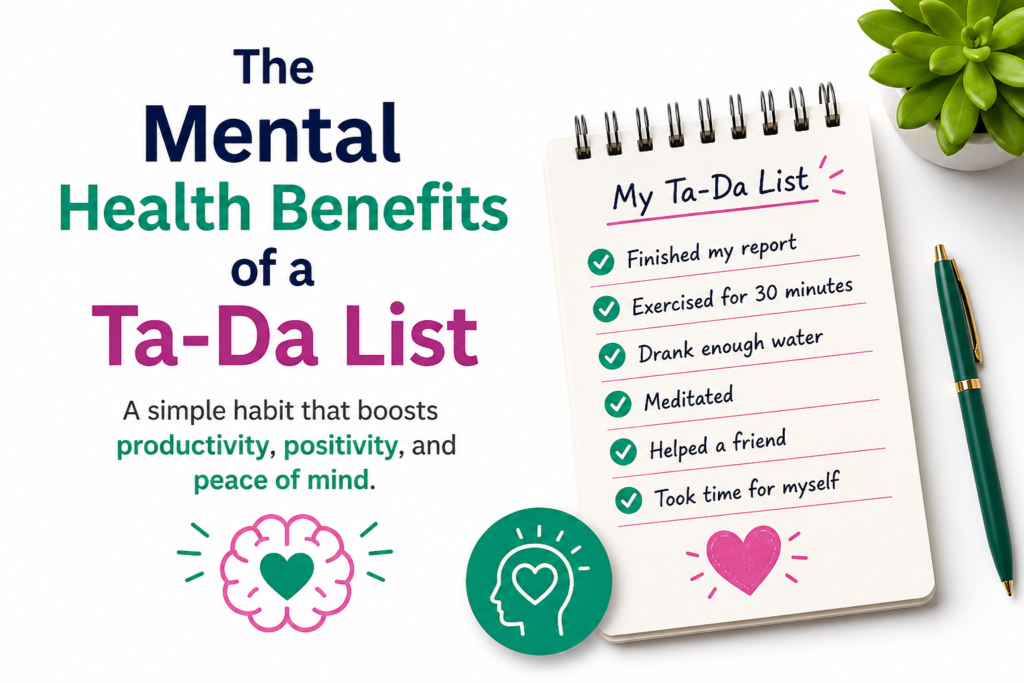
One of the biggest advantages is its ability to reduce anxiety and mental pressure. When people see a long list of pending tasks, it can feel discouraging. A Ta-Da List, however, provides visible proof of productivity, even through small wins like replying to emails or completing daily chores. This shift helps break negative thinking patterns and replaces them with a sense of progress and motivation.
Another key benefit is the boost in self-confidence and self-esteem. By writing down completed tasks, individuals begin to recognize their efforts more clearly. This habit reinforces a positive self-image and builds a stronger belief in one’s abilities. Over time, this creates a healthier mindset focused on growth rather than perfection.
A Ta-Da List also improves emotional well-being by encouraging a positive inner dialogue. Instead of focusing on what was not done, it shifts attention to what has been achieved. This reduces self-criticism, prevents burnout, and promotes a more balanced and supportive mental state.
In addition, it enhances motivation and consistency. Each completed task acts as a small reward, creating a sense of momentum. This makes it easier to stay consistent, especially during low-energy days, and supports long-term productivity habits.
Finally, a Ta-Da List promotes mindfulness and reflection. Taking a moment to acknowledge completed actions increases awareness of how time and energy are spent. This not only improves daily habits but also contributes to better mental clarity and focus.
In conclusion, the Ta-Da List is more than a productivity tool—it is a simple strategy for improving mental health, reducing stress, and building a positive mindset. By focusing on achievements instead of pressure, it helps individuals feel more motivated, confident, and balanced in their everyday lives.
How to Create a Ta-Da List Ritual
Creating a Ta-Da List ritual is simple, practical, and easy to maintain in daily life. The goal is to turn small achievements into visible proof of progress, productivity, and mental clarity. Instead of waiting for big results, this ritual helps you recognize everyday wins and build consistent motivation.
Start by choosing a specific time to reflect—either at the end of your workday or before going to bed. Take a notebook, notes app, or journal and write down everything you completed, no matter how small. This includes tasks like finishing a report, replying to messages, exercising, cooking a healthy meal, or even taking a break to recharge. The key is to focus on completed actions, not pending ones.
For example, instead of ending your day thinking, “I didn’t finish everything,” your Ta-Da List might look like:
- Completed project draft ✅
- Replied to important emails ✅
- Walked for 20 minutes ✅
- Prepared dinner at home ✅
This simple shift creates a sense of achievement and satisfaction, helping your mind associate effort with progress.
To make this ritual more effective, keep it consistent and honest. Avoid overthinking or filtering tasks—everything counts. Over time, you’ll begin to notice patterns in your productivity and feel more confident about your daily efforts. You can also combine it with a to-do list by planning tasks in the morning and reflecting on completed ones at night.
Another powerful tip is to add a short reflection line like:
“Today I made progress by staying consistent.”
This reinforces a positive mindset and strengthens your inner motivation.
By practicing this Ta-Da List ritual daily, you build a habit of recognizing success, reducing stress, and improving mental well-being. It’s a small change that creates a big impact, helping you stay focused, motivated, and confident in your journey of self-improvement.
FAQS
1. What is a Ta-Da List and how does it work?
A Ta-Da List is a simple productivity method that focuses on tasks you have already completed instead of what is still pending. By writing down finished actions, it creates a sense of achievement, motivation, and progress, helping you stay positive and productive.
2. How is a Ta-Da List different from a traditional to-do list?
A to-do list highlights tasks you need to complete, which can sometimes feel overwhelming. A Ta-Da List, on the other hand, focuses on completed tasks, boosting confidence, mental clarity, and motivation by showing how much you’ve already accomplished.
3. Can a Ta-Da List really improve mental health?
Yes, using a Ta-Da List can support mental well-being by reducing stress and encouraging positive thinking. It shifts your focus from pressure to progress, helping you feel more in control and less overwhelmed throughout the day.
4. When is the best time to create a Ta-Da List?
The best time to create a Ta-Da List is at the end of the day. This allows you to reflect on your accomplishments and recognize your progress. However, you can also update it throughout the day to maintain continuous motivation.
5. What should I include in a Ta-Da List?
You should include all completed tasks, both big and small. This can be work-related tasks, personal activities, healthy habits, or even simple actions like taking a walk or organizing your space. Every small win contributes to your overall productivity and self-improvement.
SHARING IS CARING 💖