
Education is not just about marks on a report card—it is about how adults respond when children struggle. The message in this image perfectly captures a powerful shift in parenting and teaching styles over the years. In 2000, bad grades were often met with fear, pressure, and blame. Today, the focus is increasingly on communication, understanding, and improvement.
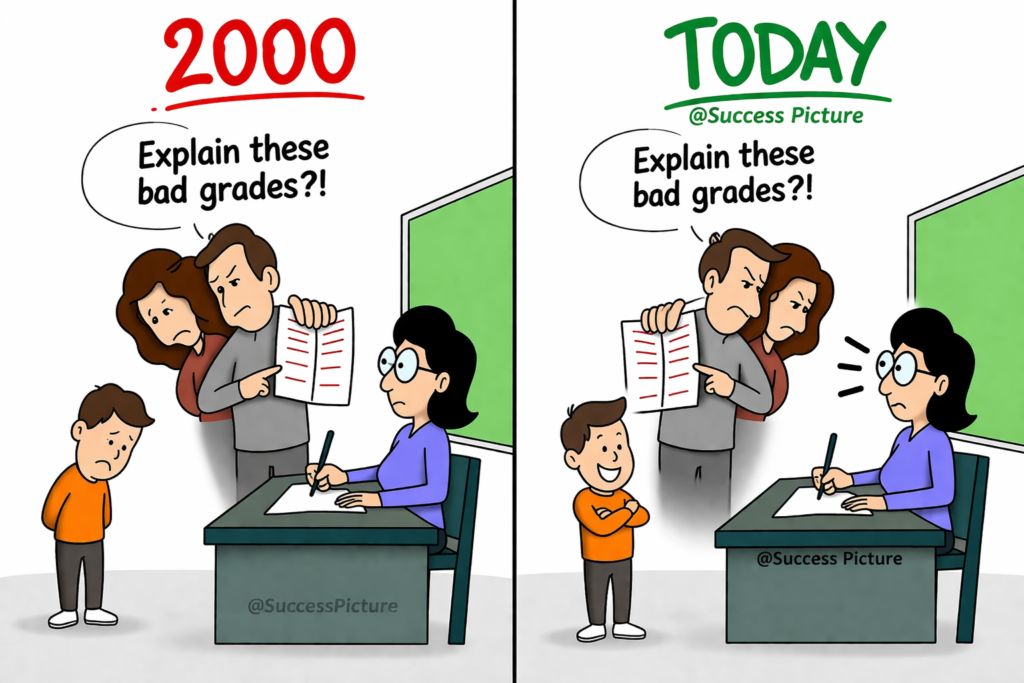
This change reflects how society now better understands child psychology, emotional intelligence, and the importance of mental well-being in academic success. The child in the “2000” panel looks sad, ashamed, and pressured, while the child in the “Today” panel looks calm, confident, and supported. That visual contrast tells an important story: the way adults explain failure can shape a child’s future relationship with learning.
In the USA, where parents and teachers are paying more attention to student mental health, growth mindset, and supportive education methods, this topic is highly relevant and deeply valuable. Let’s explore how parenting and teaching approaches have changed, why this shift matters, and how families and educators can help children turn poor grades into long-term growth.
The 2000 Approach: Fear, Pressure, and Immediate Blame
In the early 2000s, many children experienced a strict response when they brought home poor grades.
The common reaction was:
- anger
- disappointment
- scolding
- punishment
- comparisons with other students
- pressure to “do better”
- focus only on marks
Parents often asked:
“Why are your grades so bad?”
Teachers sometimes used a similar tone, focusing on the mistake instead of the reason behind it.
The intention was usually good—adults wanted the child to improve. But the method often created fear instead of learning.
Children in this environment often developed:
- anxiety around tests
- fear of failure
- low confidence
- shame about asking questions
- pressure to appear perfect
- dislike for school
This is exactly what the left side of the image represents.
The Today Approach: Understanding Before Judging
Modern parenting and teaching styles are more focused on finding the cause behind the grade.
Instead of blaming the child, adults now ask:
- Was the lesson difficult?
- Did the child understand the concept?
- Are there distractions at home?
- Is the child stressed or overwhelmed?
- Are study habits effective?
- Does the child need extra help?
This approach shifts the focus from punishment to problem-solving.
The child in the “Today” panel appears happier because support creates emotional safety. When students feel safe, they are more honest about what they need.
That honesty leads to better improvement.
Why This Shift Happened
The biggest reason for this change is a better understanding of how children learn.
Over time, parents and teachers realized that bad grades are often caused by hidden issues such as:
- poor study methods
- low confidence
- unclear teaching
- stress
- sleep problems
- too much screen time
- emotional struggles
- attention difficulties
- social pressure
- family issues
Today, education is less about punishment and more about identifying barriers to success.
This modern mindset is healthier and far more effective.
How Fear-Based Responses Hurt Students
Fear may produce short-term obedience, but it rarely creates long-term academic confidence.
When children are punished for every bad grade, they may:
- hide report cards
- lie about homework
- avoid asking for help
- lose interest in learning
- study only to avoid punishment
- feel emotionally distant from parents
This creates a dangerous cycle where the child becomes more afraid of adults than motivated to improve.
The “2000” side of the image strongly reflects this emotional pressure.
Why Supportive Communication Works Better
Today’s better parenting and teaching methods focus on communication.
Supportive responses sound like:
- “What part was difficult?”
- “Let’s figure this out together.”
- “How can we help you improve?”
- “Do you need more practice?”
- “What distracted you this week?”
These questions teach children:
- reflection
- honesty
- accountability
- resilience
- problem-solving
- emotional expression
Most importantly, it helps children see poor grades as feedback, not identity.
A grade becomes something to improve, not something to fear.
Parents’ Role Has Changed Significantly
In 2000, many parents saw grades as a reflection of discipline.
Today, parents increasingly understand that grades reflect:
- systems
- routines
- support
- habits
- environment
- learning style
Modern parents are more likely to help by:
- setting study schedules
- reducing distractions
- helping with homework
- hiring tutors
- creating reading habits
- limiting phone use
- improving sleep routines
This shift creates partnership instead of conflict.
Parents move from judges to coaches.
Teachers Are More Like Mentors Today
The role of teachers has evolved too.
Earlier teaching styles often focused mainly on results.
Now teachers are more likely to:
- explain mistakes clearly
- encourage questions
- provide feedback
- identify weak concepts
- support emotional well-being
- offer extra practice resources
- personalize learning strategies
This mentoring approach helps students feel seen instead of criticized.
The “Today” side of the image beautifully represents this supportive classroom culture.
Technology Has Changed the Challenge
One major difference between 2000 and today is the rise of digital distractions.
Modern students face:
- smartphones
- social media
- gaming
- short attention spans
- online multitasking
- endless notifications
- information overload
This means poor grades today may not come from lack of intelligence, but from lack of focus systems.
That’s why modern parents and teachers explain bad grades differently—they understand today’s learning environment is far more complex.
How to Explain Bad Grades the Right Way
Whether you are a parent or teacher, here is the healthiest way to respond:
1) Stay Calm
A calm tone encourages honesty.
2) Ask Why
Find the real cause before assuming laziness.
3) Focus on Solutions
Move quickly toward:
- better study habits
- tutoring
- extra revision
- reduced distractions
4) Build a Plan
Use:
- homework time blocks
- weekly reviews
- phone-free study sessions
- practice tests
- subject-specific support
5) Praise Effort
Celebrate consistency and improvement, not just top marks.
The Psychological Benefit of Today’s Approach
Modern communication helps children build:
- confidence
- trust
- emotional intelligence
- resilience
- growth mindset
- academic courage
Children learn that setbacks are temporary.
Instead of thinking:
“I am bad at school.”
They learn:
“I need a better way to study.”
That mindset difference can change a child’s future.
What USA Parents and Teachers Can Learn From This
In the USA, where academic competition and student stress are common, this lesson is especially valuable.
The best results come when adults balance:
- accountability
- emotional support
- practical systems
- realistic expectations
- communication
The goal is not just better grades.
The real goal is to raise children who know how to learn, adapt, and recover from setbacks.
That is what the “Today” side of the image truly symbolizes.
Daily Habits That Prevent Bad Grades
To help children improve consistently:
- set fixed study hours
- revise daily for 30 minutes
- keep phones away while studying
- review weak subjects weekly
- ask teachers questions early
- use mock tests
- sleep 8 hours
- encourage reading
- praise progress
- create stress-free communication
Small habits build better academic confidence.
ALSO READ…
- Push Yourself First: The Real Secret to Achieving Your Dreams
- The Reality of Society: Why Hard Work Alone Isn’t Always Enough
- Your Mindset Is Your Strength or Your Weakness: The Hidden Power Within
- Work Today, Win Tomorrow: The Discipline That Builds Extraordinary Success
- Clean Your Mind: Why Leaving a Negative Environment Is the First Step to Success
Final Thoughts
The difference between 2000 and today is not just about education—it is about emotional growth in parenting and teaching.
The old model focused on blame.
The new model focuses on understanding.
The image sends a beautiful and important lesson:
children grow faster when adults explain bad grades with empathy, strategy, and support instead of fear.
When parents and teachers work together to guide rather than shame, students become more confident, more responsible, and more motivated to improve.
That is how modern education creates stronger learners and healthier minds.
SHARING IS CARING 💖