
Have you ever wondered whether getting a credit card is a smart financial decision? Perhaps you have seen people paying for shopping, booking flights, ordering food, or managing monthly expenses with a credit card. You may also have heard about cashback, reward points, airport lounge access, and special discounts.
A credit card can be a useful financial tool when you understand how it works and use it responsibly. It allows you to make purchases using a credit limit provided by a bank or other card issuer and repay the amount according to your billing cycle.
However, a credit card is not free money. Interest charges, annual fees, late-payment penalties, and unnecessary spending can turn its benefits into financial problems.
So, what are the actual advantages of having a credit card in India?
In this guide, we will explore the top 10 reasons to have a credit card in India, including convenience, cashback, rewards, emergency flexibility, online security features, and credit history. We will also explain the risks and share practical tips to help you decide whether a credit card suits your needs.
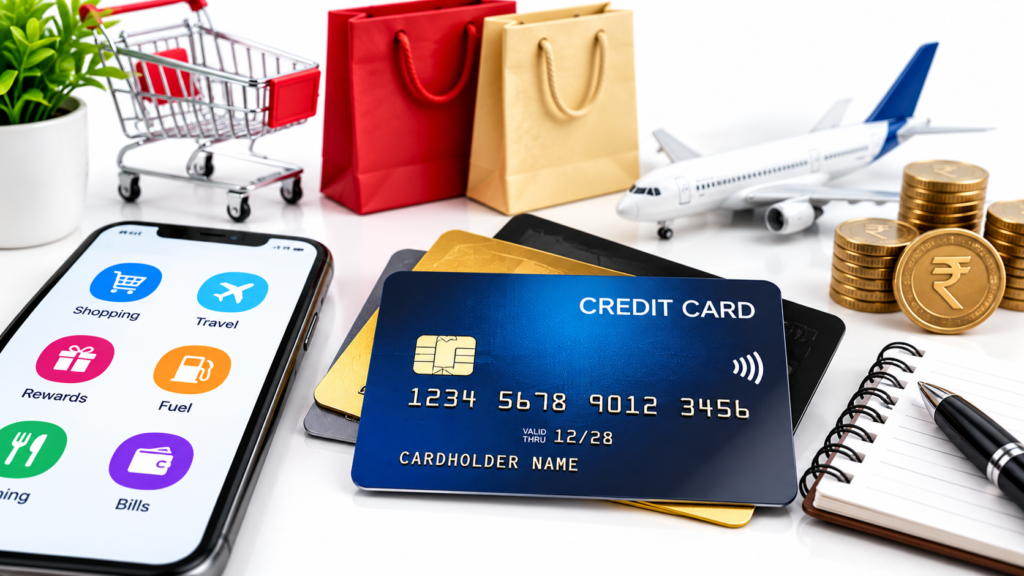
What Is a Credit Card?
A credit card is a payment instrument that allows an eligible customer to borrow money from a card issuer for permitted purchases and transactions, subject to the card’s terms and credit limit.
For example, suppose your bank gives you a credit limit of ₹50,000. You use the card to purchase groceries worth ₹3,000, pay an electricity bill of ₹2,000, and buy clothes worth ₹5,000.
Your total spending is ₹10,000. You must repay the amount according to your credit card statement and payment due date.
If you pay the full statement balance by the due date and comply with the card’s terms, eligible purchases may receive an interest-free period. The exact treatment depends on the issuer’s terms and whether you have an outstanding balance from a previous billing cycle.
Paying only the minimum amount due is not the same as clearing your bill. Interest can make your remaining balance expensive.
The Reserve Bank of India publishes rules governing credit card issuance, disclosures, billing, charges, and customer protection. You can review its official credit card directions before choosing a card.
Top 10 Reasons to Have a Credit Card in India
1. Earn Cashback on Eligible Purchases
One of the most popular reasons to get a credit card is cashback.
Depending on the card, you may receive a percentage of eligible spending back as a statement credit, account credit, or another form of benefit.
For example, imagine you spend ₹10,000 on eligible purchases in a month and your card offers 2% cashback on those transactions. You could receive ₹200 in cashback, provided the purchases qualify under the card’s rules.
That sounds useful, but the details matter. Some cards offer different cashback rates for different categories, while others have monthly caps, exclusions, minimum transaction requirements, or annual fees.
Before applying, check:
- Which transactions qualify for cashback
- Whether the reward has a monthly or annual limit
- Whether utility bills, fuel, insurance, or other payments are excluded
- Whether a minimum spending requirement applies
- Whether the annual fee outweighs the expected benefits
Smart tip: Never spend extra money just to earn cashback. A small reward is not worth purchasing something you do not need.
2. Collect Reward Points on Everyday Spending
Many credit cards offer reward points on eligible purchases.
You may earn points when you pay for groceries, online shopping, dining, travel, or other permitted transactions. Depending on the card, you might redeem those points for vouchers, merchandise, travel bookings, statement credits, or other available rewards.
However, reward systems differ considerably.
One card might offer more points for travel, while another may be better suited to regular shopping. Points can also have expiry dates, redemption fees, minimum redemption limits, or different values depending on how you use them.
Before choosing a card, ask yourself which expenses you make regularly.
If you travel frequently, a travel-focused card may be more useful. If most of your spending is on groceries and everyday purchases, a card with relevant shopping benefits may be a better match.
Smart tip: Compare the actual monetary value of rewards rather than focusing only on the number of points advertised.
3. Build a Credit History Through Responsible Use
A credit card can help you establish a record of borrowing and repayment.
Credit information companies may use reported credit account information, including payment history and outstanding balances, when calculating credit scores. A record of timely repayments can support a healthy credit profile, although no particular score is guaranteed.
This may be useful when you later apply for a home loan, vehicle loan, personal loan, or another credit product. Lenders consider several factors when evaluating applications, and a credit score alone does not guarantee approval.
To use a credit card in a way that supports your credit profile:
- Pay your bills on time.
- Avoid letting balances remain unpaid.
- Keep spending within a comfortable budget.
- Check your credit report for errors.
- Apply for new credit only when necessary.
A credit card is not the only way to establish a credit history, and you do not need to carry debt or pay interest to demonstrate responsible use.
Smart tip: Focus on repayment habits, not on borrowing more money to increase your credit score.
4. Enjoy an Interest-Free Period on Eligible Purchases
A credit card may allow you to make a purchase today and repay it later without interest, provided you meet the issuer’s conditions.
For example, suppose you buy a household appliance early in your billing cycle. Depending on the statement date and payment due date, you may have several weeks to pay for it.
This can help with cash-flow management because you do not necessarily need to pay for every purchase immediately from your bank account.
However, an interest-free period is not a permanent feature for every outstanding transaction. If you carry an unpaid balance from a previous statement, the interest-free benefit on new purchases may be suspended under the card’s terms.
Cash advances and certain other transactions may also attract interest or fees from the transaction date.
Smart tip: Use the interest-free period as a payment convenience, not as a reason to buy items you cannot afford.
5. Get Discounts on Shopping, Dining, and Entertainment
Banks, merchants, and card networks sometimes partner to offer discounts on eligible purchases.
Depending on the card and current promotion, these offers may include:
- Online shopping discounts
- Restaurant deals
- Movie-ticket offers
- Travel-booking promotions
- Seasonal shopping sales
- Discounts on selected products or services
For example, a retailer may offer a discount when you pay using a particular bank’s credit card. Another promotion may provide a discount only above a specified purchase value.
Offers change frequently and may have limited availability, so do not assume that a benefit will remain available indefinitely.
Before making a purchase, check the offer’s validity period, minimum spending requirement, maximum discount, eligible cards, and exclusions.
Smart tip: Compare the final price after the discount with the price offered elsewhere. An advertised offer does not always mean you are getting the best deal.
6. Make Online Payments Conveniently
Credit cards are widely used for online shopping and many other digital transactions.
Depending on the merchant and issuer, you may be able to use a credit card for:
- Shopping on e-commerce websites
- Hotel and flight bookings
- Subscription payments
- Eligible utility payments
- Certain education or service payments
- Purchases from international merchants, where permitted
Using a credit card can keep eligible purchases together on one monthly statement, making it easier to review your spending.
It may also offer additional payment options when a merchant does not accept a particular alternative.
However, not every payment category is supported by every card. Some transactions may attract convenience fees, processing charges, reward exclusions, or other conditions.
Smart tip: Enable transaction alerts and check your statement regularly. Never share your card PIN, CVV, OTP, or banking password with someone claiming to help you complete a transaction.
7. Access Emergency Spending Flexibility
Unexpected expenses can happen at any time. A medical consultation, urgent household repair, or necessary travel booking may arise before your next salary or other income arrives.
If you already have an available credit limit, a credit card may provide short-term payment flexibility for eligible expenses.
However, this should not be confused with an emergency fund.
Any amount you spend must eventually be repaid. If you cannot clear the statement balance, interest and other applicable charges can make the expense significantly more expensive.
For this reason, it is sensible to maintain savings for emergencies whenever possible.
A credit card may help you handle the timing of a payment, but it is not a substitute for having money set aside for unexpected needs.
Smart tip: Keep a separate emergency fund and use credit only when you understand how and when you will repay the amount.
8. Benefit From Travel Rewards and Selected Travel Perks
Some credit cards are designed for people who travel regularly.
Depending on the specific product, benefits may include travel reward points, eligible airport lounge access, hotel-related offers, flight-booking promotions, or other travel privileges.
These benefits can be attractive for people who already spend money on travel.
However, they are not automatically included with every credit card. Lounge access may require a minimum spending amount, a limited number of visits, an eligible card variant, or payment of a fee. Some benefits may also change over time.
When comparing travel cards, consider the annual fee, reward redemption value, foreign currency markup, lounge access conditions, and the amount you normally spend on travel.
Smart tip: Choose a travel card only if its benefits justify the cost for your actual travel habits.
9. Track Spending With Monthly Statements
A credit card statement can provide a useful overview of your transactions during a billing period.
It generally shows purchases, payments, credits, fees, and the outstanding amount due. This can help you identify spending patterns and notice transactions you do not recognize.
For example, if you use your card for groceries, fuel, online subscriptions, and dining, your monthly statement may help you see which categories account for the largest share of your spending.
Many issuers also provide mobile apps that allow you to review recent transactions, monitor your available credit limit, and receive payment reminders.
Nevertheless, a statement is only a record of your card activity. It does not automatically create a budget or prevent overspending.
Smart tip: Review your statement every month, compare it with your budget, and report suspicious transactions promptly through the issuer’s official channels.
10. Use Additional Card Benefits Where They Make Sense
Some credit cards provide benefits beyond cashback and ordinary reward points.
Depending on the card, these may include selected purchase protections, extended warranties, travel-related insurance, fuel surcharge waivers, concierge services, or other privileges.
Such benefits are not universal. Their availability, exclusions, limits, and claim procedures depend on the particular card and its terms.
For instance, a purchase protection benefit may apply only to eligible items purchased with the card and may exclude certain types of damage or loss.
Similarly, an insurance benefit may have specific eligibility requirements and may not cover every situation.
Before relying on any extra benefit, read the terms and conditions or ask the issuer for written clarification.
Smart tip: Treat additional benefits as a bonus. Choose a card primarily for features that match your spending and repayment habits.
Credit Card Benefits at a Glance
| Benefit | How it may help | What to check |
|---|---|---|
| Cashback | Returns part of eligible spending | Caps and exclusions |
| Reward points | Provides redemption benefits | Point value and expiry |
| Credit history | Records repayment behaviour | Timely payment and reporting |
| Interest-free period | Allows payment at a later date | Billing cycle and eligibility |
| Shopping discounts | Reduces eligible purchase costs | Offer conditions |
| Online convenience | Simplifies many digital payments | Fees and security |
| Emergency flexibility | Helps manage payment timing | Repayment ability |
| Travel benefits | Offers selected travel perks | Annual fee and access rules |
| Monthly statements | Helps review transactions | Regular monitoring |
| Additional benefits | May provide extra value | Coverage and exclusions |
Example: How a Credit Card Could Save You Money
Imagine you spend ₹8,000 each month on purchases that qualify for a hypothetical 2% cashback offer.
Your potential cashback would be:
| Calculation | Amount |
|---|---|
| Monthly eligible spending | ₹8,000 |
| Cashback rate | 2% |
| Potential monthly cashback | ₹160 |
| Potential cashback over 12 months | ₹1,920 |
This example assumes that all spending qualifies and that there are no reward caps or other restrictions. It is an illustration, not an offer from any particular bank.
Now imagine the card has an annual fee of ₹1,000. Your potential cashback after subtracting that fee would be ₹920 for the year, before considering other fees or any additional benefits.
If you overspend to earn cashback or pay substantial interest on an unpaid balance, the financial benefit could disappear quickly.
The lesson: Calculate the net benefit after fees and use a credit card for planned spending rather than treating rewards as extra income.
What Are the Disadvantages of Having a Credit Card?
Credit cards can be useful, but they are not right for everyone. Here are some important drawbacks to understand before applying.
1. High Interest Charges
Credit card interest can be expensive when you do not pay the total amount due by the deadline. The applicable rate depends on the card and its terms.
Even a relatively small unpaid balance can become costly over time.
2. Annual and Other Fees
Some cards have joining fees, annual fees, cash advance fees, foreign currency charges, or transaction-specific charges. A card advertised as free may still have conditions, so read the fee schedule carefully.
3. Overspending
The ability to pay later can make spending feel less immediate. This may encourage unnecessary purchases and make it harder to stay within a budget.
4. Late Payment Consequences
Missing a payment deadline may lead to charges and can affect your credit history, depending on the circumstances and reporting practices.
5. Fraud and Unauthorized Transactions
Credit cards can be targets for scams, phishing, and unauthorized transactions. Keep your card details private, enable alerts, and report suspicious activity immediately.
6. Credit Utilization and Borrowing Risk
Using a large portion of your available credit may affect your credit profile. More importantly, a high balance can make repayment difficult. Your credit limit should not be treated as a spending target.
How to Use a Credit Card Smartly in India
If you decide to get a credit card, follow these practical habits.
1. Pay the full statement balance on time. This is one of the most important ways to avoid interest on eligible purchases.
2. Never rely only on the minimum payment. Paying the minimum may keep the account from becoming immediately overdue under the applicable terms, but the remaining balance can continue attracting interest.
3. Choose a card based on your real expenses. Compare benefits against the spending you already do instead of changing your lifestyle to chase rewards.
4. Check fees before applying. Read the annual fee, interest rate, late-payment charges, cash advance charges, and other conditions.
5. Set up payment reminders or automatic payments. If you use automatic payments, make sure sufficient money is available in your linked account and verify that the payment has gone through.
6. Review every statement. Look for unfamiliar transactions, incorrect charges, and subscriptions you no longer need.
7. Protect your card information. Never disclose an OTP, PIN, CVV, or banking password to anyone who contacts you unexpectedly.
8. Keep your spending within your budget. A credit card should help you manage payments, not push you into debt.
9. Avoid unnecessary cash advances. Cash withdrawals on a credit card can attract fees and interest under the issuer’s terms.
10. Read official terms and conditions. Check the issuer’s website for current rates, charges, rewards, and exclusions.
For additional consumer guidance, visit the Reserve Bank of India’s official website.
Who Should Consider Getting a Credit Card?
A credit card may be suitable for someone who:
- Has regular income or a clear repayment plan
- Can manage monthly spending within a budget
- Wants to earn rewards on purchases they already make
- Is comfortable tracking bills and payment dates
- Understands the fees and interest conditions
- Can avoid unnecessary borrowing
A credit card may be unsuitable, or may require extra caution, if you frequently miss bill payments, struggle to control spending, or already have expensive outstanding debt.
You do not need a credit card simply because other people have one. A debit card and a well-managed savings account may be sufficient for your needs.
How to Choose the Right Credit Card in India
Before applying, compare more than just the welcome offer.
Compare the annual fee
Calculate whether the benefits you realistically expect to use justify the annual fee. Some cards waive the fee after meeting a spending threshold, but that threshold may not be worth pursuing if it encourages unnecessary purchases.
Check the reward structure
Understand which purchases earn rewards, whether any categories are excluded, and how much each point is worth when redeemed.
Review interest rates and charges
Read the card’s Key Fact Statement, most important terms and conditions, and fee schedule. The RBI’s credit card directions and related FAQs explain important consumer protections and disclosure requirements.
Consider your usual spending
If you spend more on groceries, choose a card with useful benefits in that category. If you travel frequently, compare the travel benefits and associated costs.
Check eligibility requirements
Banks and other issuers set eligibility criteria, which may include age, income, credit history, employment or other requirements. Approval is not guaranteed, even if you meet the stated minimum criteria.
Understand customer support and security
Review the issuer’s official procedures for reporting fraud, blocking a card, disputing a transaction, and raising a complaint.
Frequently Asked Questions
1. What are the top 10 reasons to have a credit card?
The main reasons include cashback, reward points, building credit history through responsible repayment, an interest-free period on eligible purchases, shopping discounts, online payment convenience, emergency spending flexibility, travel benefits, monthly spending statements, and additional card-specific benefits.
2. Is it good to have a credit card in India?
It can be useful if you understand the terms, stay within your budget, and pay your bills on time. It may be less suitable if you struggle with repayment or tend to overspend.
3. Does having a credit card improve your credit score?
Responsible use and timely repayment can contribute to a healthy credit profile. However, a credit card does not guarantee a higher score, and lenders consider other information when evaluating credit applications.
4. Can I use a credit card without paying interest?
Eligible purchases may receive an interest-free period if you meet the issuer’s conditions, including paying the total amount due on time. Cash advances and certain other transactions may have different rules.
5. Is paying the minimum amount due enough?
The minimum amount due is not the same as the total outstanding balance. Paying only the minimum can leave a balance that attracts interest and takes much longer to repay.
6. Are credit card rewards really worth it?
They can be worthwhile when you earn rewards on planned purchases and the value exceeds fees and other costs. They are generally less useful if you overspend or pay interest to earn them.
7. Can a credit card help during an emergency?
It can provide temporary payment flexibility if you have an available credit limit. However, you still need to repay the amount, so an emergency savings fund remains important.
8. Should beginners get a credit card?
Beginners can consider a card if they understand billing cycles, repayment deadlines, fees, and interest. Starting with a manageable limit and simple reward structure may make it easier to develop responsible habits.
9. Is a lifetime-free credit card always the best option?
Not necessarily. A lifetime-free card may save annual fees, but its rewards and other benefits may be limited. Compare the overall terms and the features you will actually use.
10. What happens if I miss a credit card payment?
You may face applicable late-payment charges or interest, and the missed payment may affect your credit record. Contact the issuer promptly if you cannot pay, and consult the card’s terms for the consequences and available options.
Final Thoughts
A credit card can be a useful part of personal financial management when used with care. Cashback, reward points, discounts, payment convenience, and a record of responsible repayments are all potential advantages.
However, the real value of a credit card depends on how you use it. Fees, interest, missed payments, and unnecessary spending can outweigh its benefits.
Before applying, compare the available cards, read the terms, and choose one that fits your spending habits and repayment ability. Pay your full statement balance whenever possible, monitor transactions, and never borrow simply to earn rewards.
The smartest reason to have a credit card is not to spend more money. It is to manage the spending you already need to do more conveniently and responsibly.
Disclaimer: This article is for general educational purposes and does not constitute personalized financial advice. Credit card terms, fees, rewards, eligibility, and regulatory requirements may change. Confirm current details with the card issuer and consult official RBI resources when necessary.
SHARING IS CARING 💖