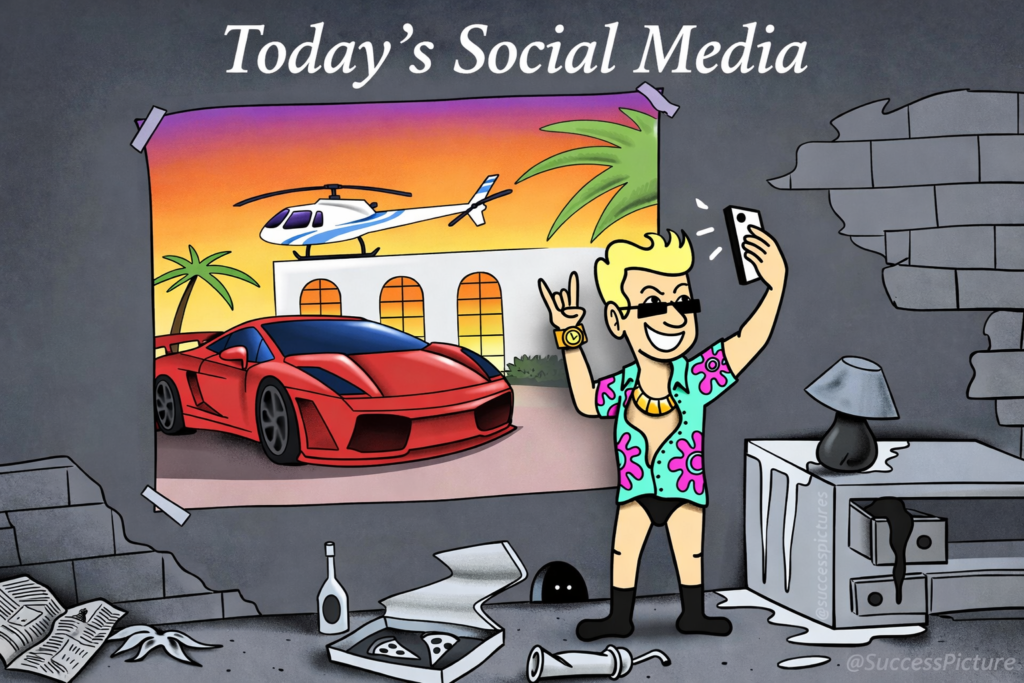
In today’s digital age, social media has become a powerful tool that shapes how we see the world—and ourselves. The image above delivers a striking message about modern life: what we see online is often far from reality.
At first glance, the image shows luxury—a sports car, a helicopter, a lavish lifestyle, and a confident individual taking a selfie. But behind the scenes, the truth is very different. The glamorous background is just a setup, while the real environment is messy, broken, and far from perfect.
This contrast highlights a growing issue in modern society: the illusion of perfection on social media.
In this article, we will explore how social media creates false perceptions, how it affects mental health, and how you can develop a healthier relationship with digital platforms.
🌍 The Rise of Social Media Illusion
Social media platforms like Instagram, TikTok, and Facebook allow users to present curated versions of their lives. People often share their best moments—vacations, achievements, luxury items—while hiding struggles and imperfections.
What We See vs Reality
- What we see: Success, happiness, luxury
- What’s hidden: Struggles, failures, everyday challenges
This selective sharing creates an illusion that others are living perfect lives.
🧠 Why People Create Fake Perfection
There are several reasons why individuals portray unrealistic lifestyles online.
1. Desire for Validation
Likes, comments, and shares provide a sense of approval and recognition.
2. Social Pressure
People feel the need to match the standards set by others online.
3. Personal Branding
Many individuals use social media to build an image that attracts followers or opportunities.
4. Escaping Reality
Some use social media as a way to escape from real-life problems.
⚠️ The Impact on Mental Health
The illusion of perfection can have serious effects on mental well-being, especially in the United States where social media usage is extremely high.
Common Effects
- Low self-esteem
- Anxiety and depression
- Constant comparison
- Fear of missing out (FOMO)
When people compare their real lives to someone else’s highlight reel, they often feel inadequate.
🔍 The Truth About Online Success
Many influencers and content creators present a lifestyle that may not reflect their actual situation.
Hidden Realities
- Sponsored content and paid promotions
- Borrowed or rented luxury items
- Edited photos and staged environments
Understanding this can help viewers separate reality from illusion.
📉 Comparison: The Silent Confidence Killer
One of the biggest dangers of social media is comparison.
How Comparison Affects You
- Makes you feel behind in life
- Reduces motivation
- Creates unnecessary stress
Instead of focusing on personal growth, individuals become distracted by others’ lives.
💡 How to Break Free from Social Media Illusion
Developing a healthy relationship with social media is essential.
1. Limit Screen Time
Reducing time spent on social platforms can improve mental clarity.
2. Follow Realistic Content
Engage with creators who share authentic and honest experiences.
3. Focus on Your Journey
Your life path is unique—avoid comparing it to others.
4. Practice Digital Detox
Take breaks from social media to reconnect with real life.
5. Be Mindful of Content
Remember that not everything you see online is real.
🏆 Building Real Confidence
True confidence comes from real achievements, not online validation.
Ways to Build Confidence
- Set and achieve personal goals
- Develop new skills
- Focus on self-improvement
- Surround yourself with supportive people
Confidence built in real life is stronger and more lasting than digital approval.
🌱 The Importance of Authentic Living
Living authentically means being true to yourself rather than trying to impress others.
Benefits of Authenticity
- Greater happiness
- Stronger relationships
- Reduced stress
- Clear sense of purpose
When individuals stop trying to match unrealistic standards, they find more peace and satisfaction.
🌎 Social Media in the USA: A Growing Concern
In the United States, studies show that people spend several hours daily on social media platforms. This increased usage has raised concerns about its impact on mental health and self-image.
Experts now encourage:
- Digital balance
- Mindful usage
- Real-life engagement
ALSO READ…
- Stop Arguing With Stupid People: A Powerful Lesson About Protecting Your Peace
- Go So Far They Can’t Hear You: A Powerful Lesson About Ignoring Doubt and Believing in Yourself
- Your Mind Is a Factory: What You Feed It Shapes Your Life
- Let Your Heart and Brain Guide Your Life: The Secret to Making Better Life Decisions
- Be Humble. Stay Hungry. Be the Hardest Worker in the Room: The Mindset That Builds Real Success
🔄 Turning Social Media into a Positive Tool
Social media is not inherently bad—it depends on how it is used.
Positive Uses
- Learning new skills
- Networking and career growth
- Sharing knowledge
- Building communities
When used wisely, it can be a powerful tool for personal and professional development.
✨ Final Thoughts
The message behind the image is clear and powerful:
Not everything you see online is real.
Social media often shows a filtered version of life, hiding the struggles behind the scenes. Comparing yourself to these illusions can lead to unnecessary stress and dissatisfaction.
Instead, focus on your own journey, build real confidence, and embrace authenticity.
Remember, real success is not about how your life looks online—it’s about how it feels in reality.
SHARING IS CARING 💖