
In today’s digital world, smartphones have become an essential part of our daily lives. They help us stay connected, informed, and entertained. However, while these devices bring people closer across distances, they can also create distance between those sitting right beside us.
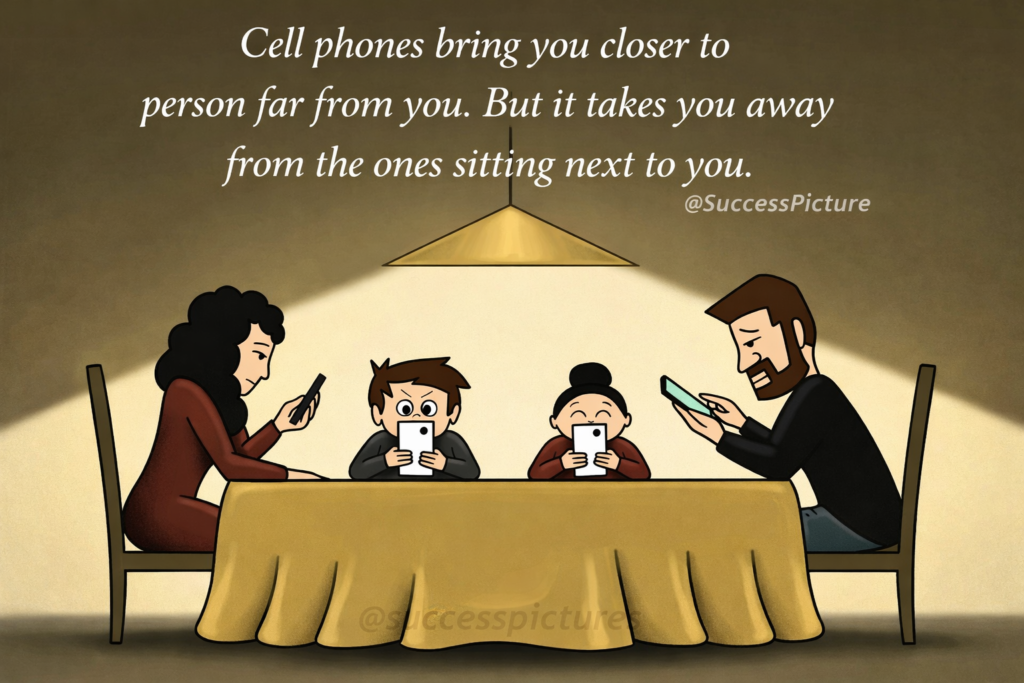
The image above perfectly illustrates a modern reality: a family sitting together at the same table, yet emotionally disconnected. Each person is absorbed in their phone, missing the opportunity for meaningful interaction. This silent disconnect is becoming increasingly common in households across the United States and around the world.
In this article, we will explore how smartphones affect relationships, why real-life connections matter, and how we can restore balance in a digitally driven world.
📌 The Reality of Modern Communication
Smartphones have revolutionized communication. With just a few taps, we can connect with anyone across the globe. Social media, messaging apps, and video calls have made long-distance communication easier than ever.
However, this convenience comes with a hidden cost.
Instead of engaging with people physically present, many individuals prioritize digital interactions. This shift has created a paradox: we are more connected than ever before, yet many people feel lonelier and more disconnected in real life.
📉 How Smartphones Affect Family Relationships
The image highlights a powerful issue—family members sitting together but not truly connecting. This situation is becoming increasingly common in modern households.
1. Reduced Face-to-Face Interaction
When people focus on their phones, they miss opportunities for meaningful conversations. Simple discussions during meals can strengthen relationships, but these moments are often replaced by screen time.
2. Emotional Disconnection
Even when physically present, emotional presence matters. Constant phone use can make others feel ignored or undervalued.
3. Weakened Bonds
Strong relationships are built through shared experiences, laughter, and communication. Excessive smartphone use can limit these interactions.
🧠 The Psychology Behind Phone Addiction
Smartphones are designed to capture attention. Notifications, messages, and social media updates trigger dopamine release in the brain, making people want to check their phones repeatedly.
Why It’s Hard to Disconnect
- Instant gratification from notifications
- Fear of missing out (FOMO)
- Habitual checking behavior
- Endless content consumption
Over time, this creates a cycle where individuals prioritize their devices over real-life interactions.
⚠️ The Impact on Children and Teenagers
Children and teenagers are particularly vulnerable to the effects of excessive screen time.
1. Reduced Social Skills
Face-to-face communication helps develop empathy, understanding, and emotional intelligence. Without it, social skills may weaken.
2. Shortened Attention Span
Constant digital stimulation can make it difficult for young individuals to focus on tasks or conversations.
3. Family Disconnect
When both parents and children are absorbed in their devices, family relationships can weaken significantly.
❤️ Why Real Connections Matter
Human beings are naturally social. Real-life interactions provide emotional support, understanding, and a sense of belonging.
Benefits of Face-to-Face Interaction
- Builds trust and stronger relationships
- Improves mental health
- Encourages meaningful conversations
- Strengthens family bonds
Unlike digital communication, real interactions allow people to read emotions, body language, and tone—elements essential for deep connections.
⚖️ Finding Balance Between Technology and Life
Technology is not the problem—it is how we use it that matters. Smartphones can be powerful tools when used wisely.
Practical Ways to Restore Balance
1. Create Phone-Free Zones
Designate areas such as the dining table or bedroom as phone-free spaces.
2. Set Screen Time Limits
Limiting daily usage helps reduce dependency on devices.
3. Practice Mindful Usage
Be aware of how often and why you check your phone.
4. Prioritize Real Conversations
Make an effort to engage with people around you without distractions.
5. Schedule Family Time
Spend dedicated time with family members without digital interruptions.
ALSO READ…
- Stop Arguing With Stupid People: A Powerful Lesson About Protecting Your Peace
- Go So Far They Can’t Hear You: A Powerful Lesson About Ignoring Doubt and Believing in Yourself
- Your Mind Is a Factory: What You Feed It Shapes Your Life
- Let Your Heart and Brain Guide Your Life: The Secret to Making Better Life Decisions
- Be Humble. Stay Hungry. Be the Hardest Worker in the Room: The Mindset That Builds Real Success
🏡 The Importance of Family Time
Family time is essential for building strong relationships. Simple activities such as eating together, talking, or playing games can create lasting memories.
When smartphones are set aside, families can:
- Share experiences
- Strengthen emotional connections
- Build trust and understanding
Even small changes, like having one phone-free meal per day, can make a significant difference.
🌎 A Growing Concern in the USA
In the United States, smartphone usage continues to rise. Studies show that many individuals spend several hours per day on their devices, often at the expense of personal relationships.
This trend has led to increasing awareness about digital well-being. Many experts now emphasize the importance of balancing technology use with real-life interactions.
🔄 Changing Habits for a Better Life
Breaking the habit of excessive phone use may not be easy, but small steps can lead to meaningful change.
Start With Awareness
Recognize how often you use your phone and how it affects your relationships.
Make Intentional Choices
Choose to engage with people around you rather than defaulting to your device.
Lead by Example
Parents can set positive examples for children by limiting their own screen time.
✨ Final Thoughts
The message behind the image is simple yet powerful:
Technology should bring people together, not pull them apart.
Smartphones have transformed the way we communicate, but they should never replace real human connection. The people sitting next to us—family, friends, loved ones—deserve our attention more than any screen ever will.
By making small, conscious changes, we can restore balance, strengthen relationships, and create more meaningful moments in our daily lives.
Remember, the most valuable connections are not found online—they are right in front of us.
SHARING IS CARING 💖