
Life is full of relationships, friendships, partnerships, and connections that shape our daily experiences. People often rely on family, friends, coworkers, and communities for support and encouragement. While strong relationships are valuable, there is one truth that many people eventually discover through experience:
Sometimes the only person you can truly rely on is yourself.
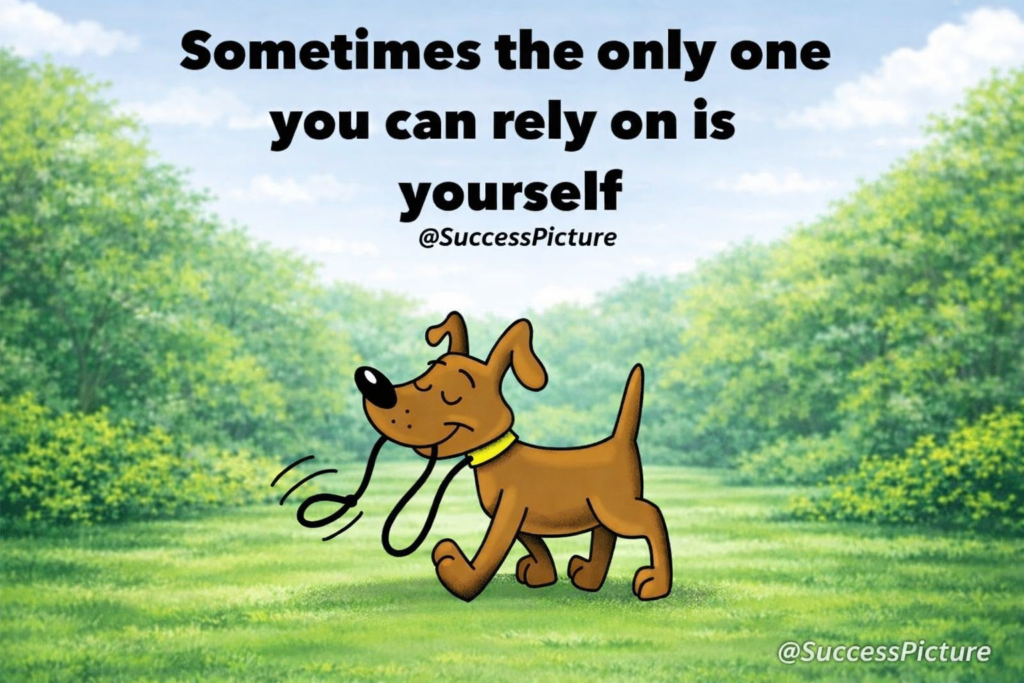
The image above expresses this idea through a simple yet powerful metaphor. A dog is shown holding its own leash in its mouth while walking forward confidently. The message above the image reads:
“Sometimes the only one you can rely on is yourself.”
This visual reminder highlights an important lesson about independence, self-trust, and personal responsibility. While support from others is helpful, true strength often comes from believing in your own abilities and taking control of your own life.
In this article, we will explore the deeper meaning of self-reliance, why depending too heavily on others can lead to disappointment, and how developing confidence in yourself can create a stronger, more successful life.
The Meaning Behind the Image
The image shows a dog confidently walking forward while holding its own leash. Normally, someone else holds the leash and guides the dog. But in this illustration, the dog takes control of its own direction.
This symbolizes personal responsibility and independence.
The message suggests that instead of waiting for someone else to lead, guide, or rescue us, we must sometimes take charge of our own journey.
Life does not always provide reliable guides. People may come and go, circumstances may change, and support systems may fail. In those moments, self-reliance becomes one of the most valuable qualities a person can develop.
Why Self-Reliance Matters
Self-reliance means trusting your own abilities, judgment, and effort to navigate life’s challenges.
It does not mean rejecting help from others. Instead, it means understanding that your progress ultimately depends on your own actions.
When you develop self-reliance, you gain:
- Confidence in your decisions
- Emotional independence
- Greater resilience during difficult times
- Stronger motivation to achieve goals
People who rely too heavily on others often struggle when support disappears. But those who trust themselves can adapt and move forward even when circumstances become difficult.
The Reality of Dependence
Many people grow up believing that someone else will always provide guidance or solutions.
Parents, teachers, mentors, and friends often help us throughout our lives. However, adulthood eventually brings moments when we must make decisions alone.
Depending too much on others can create several problems.
1. Disappointment When Expectations Fail
When people place their hopes entirely in others, they risk disappointment.
Friends may move away, colleagues may change jobs, and even trusted individuals may fail to meet expectations.
Self-reliant individuals understand that while others can support them, their success cannot depend entirely on someone else’s actions.
2. Lack of Personal Growth
Relying on others to solve problems prevents personal development.
Challenges often teach valuable lessons about responsibility, problem-solving, and perseverance.
By facing difficulties independently, people develop stronger skills and confidence.
3. Loss of Confidence
When someone constantly depends on external validation or direction, they may begin to doubt their own judgment.
Self-reliance strengthens inner confidence and encourages individuals to trust their abilities.
Self-Trust: The Foundation of Independence
At the heart of self-reliance lies self-trust.
Self-trust means believing that you can handle life’s uncertainties and make thoughtful decisions.
People with strong self-trust understand that mistakes are part of growth. Instead of fearing failure, they use setbacks as opportunities to learn and improve.
Developing self-trust allows individuals to pursue goals without constantly seeking approval from others.
The Role of Responsibility in Personal Success
Self-reliance also requires taking responsibility for your actions.
Responsible individuals do not blame circumstances, other people, or bad luck for every problem.
Instead, they ask questions such as:
- What can I learn from this situation?
- How can I improve next time?
- What actions can I take right now to move forward?
This mindset empowers people to take control of their future rather than waiting for someone else to change their situation.
Examples of Self-Reliance in Everyday Life
Self-reliance appears in many aspects of daily life.
For example:
Career Development
Successful professionals often take initiative to learn new skills, improve their knowledge, and seek opportunities rather than waiting for promotions or recognition.
Personal Growth
People who pursue personal development through reading, education, or self-reflection rely on their own motivation to grow.
Problem Solving
Self-reliant individuals face challenges with determination instead of immediately asking others to fix the problem.
These behaviors create long-term independence and success.
Balancing Independence With Healthy Relationships
While self-reliance is valuable, it does not mean rejecting relationships or isolating yourself from others.
Healthy relationships still provide support, encouragement, and companionship.
The key difference is understanding that:
Support from others is helpful, but your life direction remains your responsibility.
Self-reliant people appreciate help but do not depend on it.
They build strong relationships while maintaining independence and personal accountability.
The Confidence That Comes From Self-Reliance
One of the most powerful benefits of self-reliance is confidence.
When individuals solve problems, overcome challenges, and achieve goals through their own effort, they develop a deeper belief in their abilities.
This confidence leads to:
- Greater courage to pursue opportunities
- Reduced fear of failure
- Increased motivation to take action
- Stronger leadership skills
Confidence built through experience is far more powerful than confidence built on external approval.
ALSO READ…
- 20 Hard Work Quotes for Career Success to Keep You Motivated Every Day
- 25 Quotes About Success Without Shortcuts That Inspire Real Growth
- The Hidden Truth About Success: Why Self-Respect Matters More Than Blind Approval
- Too Much Trust Might Kill You: The Hidden Danger of Blind Trust in Life and Business
- We Are Too Connected: How Digital Overload Is Quietly Controlling Your Life
Practical Ways to Build Self-Reliance
Developing self-reliance is a gradual process that requires practice and patience.
Here are several practical strategies that can help.
1. Make Your Own Decisions
Start practicing independent decision-making.
Instead of asking for advice in every situation, take time to evaluate your options and choose the best path yourself.
Over time, this strengthens your confidence.
2. Take Responsibility for Your Goals
If you have goals for your career, education, health, or finances, take ownership of the steps needed to achieve them.
Avoid waiting for perfect circumstances or external motivation.
3. Learn New Skills
Expanding your knowledge and abilities increases independence.
Learning practical skills such as communication, financial planning, and problem-solving prepares you to handle challenges more effectively.
4. Develop Emotional Strength
Life includes setbacks and disappointments.
Emotional resilience helps you recover quickly and continue moving forward without relying on others to solve every problem.
5. Trust Your Instincts
Your intuition often develops through experience.
Learning to listen to your instincts can guide you toward better decisions and stronger self-confidence.
Why Self-Reliance Leads to Personal Freedom
Self-reliant individuals experience a sense of freedom that comes from knowing they can handle life’s uncertainties.
Instead of feeling controlled by circumstances or dependent on others, they feel empowered to shape their own future.
This freedom allows people to pursue meaningful goals, explore opportunities, and build fulfilling lives.
Final Thoughts
The image of the dog holding its own leash offers a simple yet powerful message about life.
While relationships and support systems are valuable, there are moments when we must rely on ourselves to move forward.
Developing self-reliance strengthens confidence, resilience, and personal growth. It teaches us that while others may guide or support us along the way, our journey ultimately belongs to us.
Remember this important lesson:
The person most responsible for your success, happiness, and growth is you.
When you trust yourself, take responsibility for your choices, and keep moving forward—even without external guidance—you develop the strength needed to navigate life with confidence and purpose.
SHARING IS CARING 💖