
Most problems in life, business, health, and personal growth share one common issue: people focus on symptoms instead of causes. The phrase “Solve the problem at its root” captures a powerful truth—real solutions don’t come from quick fixes. They come from understanding what lies beneath the surface.
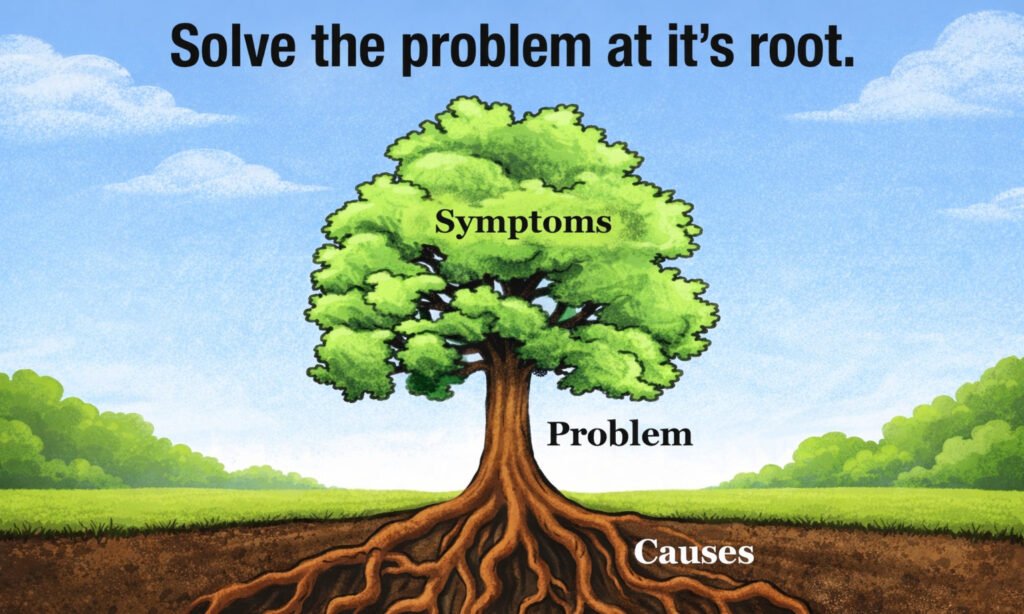
The image of a tree perfectly explains this concept. The leaves represent symptoms, the trunk represents the visible problem, and the roots represent the true causes. If you only trim the leaves, the problem will return. But if you address the roots, long-term change becomes possible.
In this blog, we’ll explore what it truly means to solve problems at their root, why most people fail to do it, and how you can apply this mindset to create lasting results in your life.
Understanding the Root Cause Concept
A root cause is the fundamental reason a problem exists. Symptoms are merely warning signs. Treating symptoms may provide temporary relief, but it rarely solves anything permanently.
Examples:
- Stress is a symptom; burnout or lack of boundaries is the cause
- Poor performance is a symptom; unclear goals or lack of training is the cause
- Health issues are symptoms; lifestyle habits are often the cause
The image visually reinforces this idea by showing that the largest and most important part of the tree—the roots—exists below the surface, unseen but critical.
Why Most People Focus on Symptoms
People naturally gravitate toward symptoms because they are visible, immediate, and uncomfortable. Root causes, on the other hand, require patience, honesty, and deeper thinking.
Common reasons people avoid root causes:
- They take time to identify
- They may require difficult changes
- They challenge habits and beliefs
- They demand accountability
However, ignoring root causes allows problems to grow stronger over time.
The Cost of Not Solving Problems at the Root
When problems are not addressed properly, they tend to repeat themselves. This leads to frustration, wasted effort, and emotional exhaustion.
In business:
- Fixing short-term sales drops without improving strategy leads to recurring losses
In personal life:
- Treating anxiety without addressing lifestyle or mindset leads to ongoing stress
In relationships:
- Repeated conflicts occur when communication issues remain unresolved
The image reminds us that unresolved roots continue to feed visible problems.
How to Identify the Root Cause of a Problem
Solving problems at their root begins with awareness. Here are practical steps to uncover the true cause:
1. Ask “Why” Repeatedly
Ask why a problem exists, then ask why again. This process often reveals deeper issues.
2. Look for Patterns
Recurring problems usually share the same root cause.
3. Separate Symptoms from Causes
Write down what you see versus what may be driving it.
4. Be Honest With Yourself
Root causes often involve personal habits, decisions, or mindset.
Applying Root Cause Thinking to Everyday Life
Personal Growth
If motivation is lacking, the root cause may be burnout, fear of failure, or unclear goals—not laziness.
Career and Work
Low productivity often stems from poor systems, distractions, or lack of purpose rather than effort.
Health and Wellness
Many health symptoms improve when sleep, nutrition, and stress management are addressed.
Emotional Well-Being
Emotional reactions often originate from unresolved experiences or beliefs.
Why Root Solutions Create Long-Term Success
Root-level solutions create stability. Just like a healthy tree stands strong in storms, addressing causes builds resilience.
Benefits of solving problems at the root:
- Long-lasting results
- Reduced stress and repetition
- Better decision-making
- Sustainable growth
Instead of constantly reacting, you begin responding strategically.
Root Cause Thinking in Leadership and Business
Successful leaders and organizations prioritize root cause analysis. They focus on systems, not blame.
Examples:
- Improving processes instead of criticizing employees
- Investing in training instead of replacing staff
- Fixing communication instead of managing conflict repeatedly
This approach saves time, money, and morale.
Common Mistakes to Avoid
- Rushing to solutions without analysis
- Treating symptoms as the real problem
- Avoiding uncomfortable truths
- Expecting instant results
Solving problems at the root requires patience and consistency.
Small Changes at the Root Create Big Results
You don’t need dramatic actions. Small, intentional changes at the root level lead to significant improvements over time.
Examples:
- Setting boundaries to reduce stress
- Creating routines to improve focus
- Addressing mindset to improve confidence
Like roots growing silently, progress often happens before visible results appear.
Final Thoughts
The message “Solve the problem at its root” is a reminder to think deeper, not faster. Life rewards those who address causes, not just symptoms.
When you focus on roots, you stop chasing temporary fixes and start building lasting solutions.
Real growth begins beneath the surface.
SHARING IS CARING 🧡