
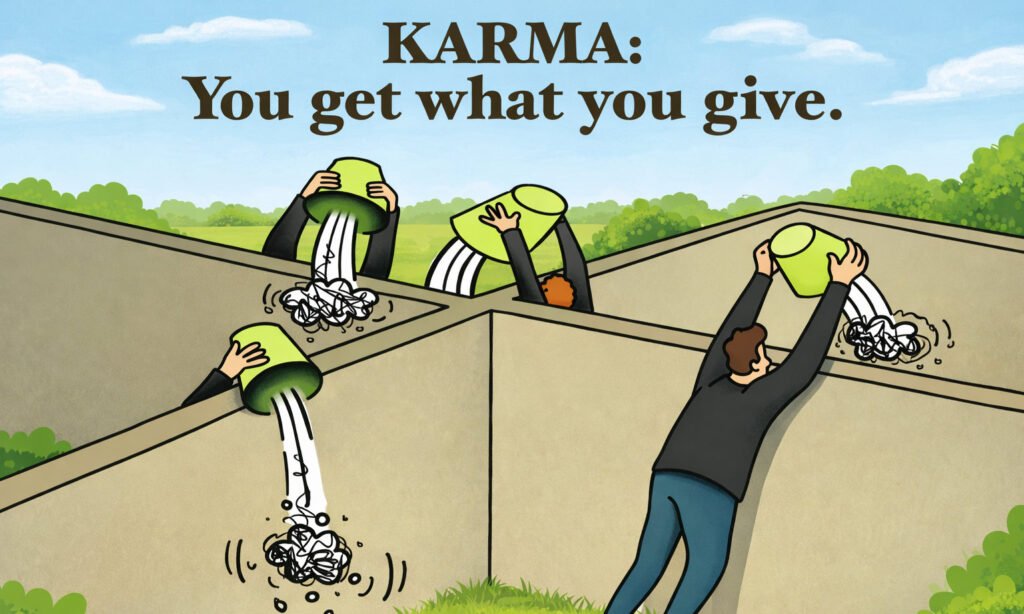
The phrase “Karma: You get what you give” is simple, yet deeply powerful. It reflects a universal principle that actions—both positive and negative—have consequences. The image visually represents this truth by showing people pouring something out, only for it to return to them in unexpected ways.
In today’s fast-paced world, where instant results are often expected, karma reminds us that life operates on balance, intention, and responsibility. What we put into the world eventually finds its way back to us.
This blog explores the real meaning of karma, how it applies to everyday life, and why understanding this principle can lead to personal growth, stronger relationships, and long-term success.
Understanding the Meaning of Karma
Karma is not about punishment or reward. It is about cause and effect. Every action carries energy, and that energy influences future outcomes.
In simple terms:
- Positive actions create positive outcomes
- Negative actions create negative outcomes
- Neutral actions create learning experiences
The image illustrates this idea visually—what is poured out eventually flows back, reinforcing the idea that intentions matter just as much as actions.
Karma Is Not Instant, but It Is Consistent
One of the biggest misconceptions about karma is timing. Many people expect immediate results. In reality, karma works over time.
You may not see the results today, tomorrow, or even next month. But over time, patterns emerge.
Examples:
- Consistent honesty builds trust
- Repeated kindness builds respect
- Ongoing negativity creates conflict
- Dishonest behavior leads to consequences
The image symbolizes this delayed return, reminding us that patience is part of the process.
How Karma Shows Up in Daily Life
Karma is not abstract. It appears in everyday situations:
1. Relationships
When you give respect, empathy, and honesty, relationships tend to grow stronger. When you give manipulation or neglect, distance follows.
2. Career and Work
People who consistently work with integrity and effort often gain long-term opportunities. Shortcuts may work temporarily, but rarely lead to sustainable success.
3. Mental and Emotional Health
Positive thinking, gratitude, and kindness toward yourself create inner peace. Constant negativity feeds stress and dissatisfaction.
The Image’s Deeper Message
The illustration shows individuals pouring something out without realizing it will come back to them. This represents unconscious behavior—actions taken without awareness of consequences.
Many people unknowingly create their own challenges by:
- Spreading negativity
- Acting without empathy
- Making impulsive decisions
- Ignoring long-term impact
The image reminds us to act with intention because what you give does not disappear—it returns.
Why Karma Matters More Than Ever Today
In a digital world driven by speed and visibility, actions spread faster than ever. A single post, comment, or decision can impact many people.
Karma in the modern world includes:
- Online behavior
- Professional reputation
- Social responsibility
- Ethical choices
The principle remains the same: energy flows back.
Karma and Personal Growth
Understanding karma encourages self-reflection. Instead of blaming external circumstances, you begin asking better questions:
- What am I contributing?
- How do my actions affect others?
- What habits am I reinforcing daily?
This awareness leads to growth and maturity.
Good Karma Is Built Through Small Actions
You do not need grand gestures to create good karma. Small, consistent actions matter most:
- Listening without interrupting
- Being honest even when it’s difficult
- Helping without expecting returns
- Taking responsibility for mistakes
These actions may seem insignificant, but over time, they shape your life experience.
Breaking the Cycle of Negative Karma
If life feels stuck or repetitive, karma invites reflection—not guilt.
Steps to reset:
- Acknowledge patterns
- Change behavior consciously
- Practice forgiveness
- Act with intention
Change begins the moment awareness starts.
Karma Is Not About Perfection
Everyone makes mistakes. Karma is not about being perfect—it’s about learning.
Mistakes are lessons, not life sentences. What matters most is what you do next.
Karma and Long-Term Success
True success is sustainable. It is built on trust, effort, and consistency. Karma supports long-term success by encouraging ethical behavior and mindful choices.
Short-term gains achieved through negative actions rarely last. Karma ensures balance over time.
Final Thoughts
The message “Karma: You get what you give” is a reminder to live consciously. Every word, action, and decision contributes to the life you experience.
You may not control everything that happens to you, but you always control what you give.
And what you give, returns.
SARING IS CARING 🧡