
Friendship is one of the most powerful and meaningful relationships in human life. True friends support us during difficult times, celebrate our achievements, and encourage us to grow. However, not everyone who appears friendly truly has good intentions.
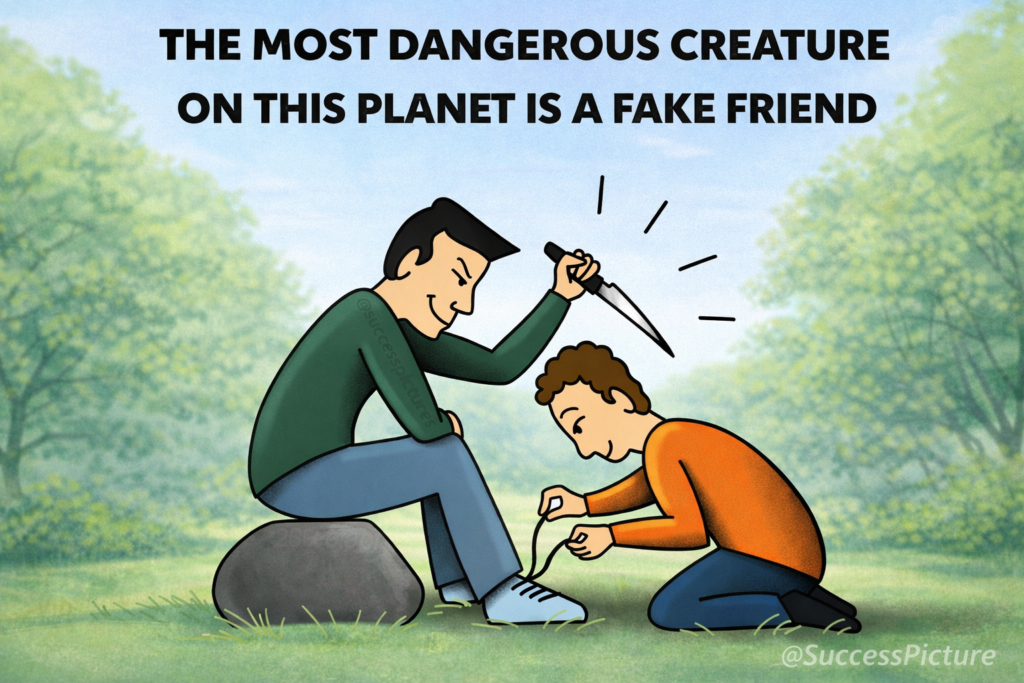
The powerful message shown in the image above states:
“The most dangerous creature on this planet is a fake friend.”
While this statement might seem dramatic at first, it highlights an important truth about human relationships. Fake friends can cause emotional damage, break trust, manipulate situations, and even destroy opportunities.
Unlike enemies, whose intentions are usually clear, fake friends operate under the disguise of trust and loyalty. This hidden nature makes them far more dangerous than open opposition.
In this article, we will explore why fake friends are harmful, how to recognize them, and how to protect your mental peace and personal growth from toxic relationships.
Understanding the Meaning Behind the Image
The illustration shows one person sitting peacefully while another appears to help tie their shoe. However, behind the seemingly friendly act, the person helping is secretly holding a knife.
This image symbolizes betrayal disguised as friendship.
It reminds us that sometimes the people closest to us may not truly support our well-being. Instead, they may pretend to care while secretly working against us.
This metaphor highlights an important life lesson:
Not everyone who smiles with you truly wishes you success.
Recognizing the difference between genuine friends and fake ones is essential for building healthy relationships.
Why Fake Friends Are More Dangerous Than Enemies
Enemies are often easy to identify. They openly disagree with you, criticize you, or compete against you.
Fake friends, however, behave differently.
They may:
- Pretend to support you
- Hide jealousy
- Share your secrets
- Manipulate situations behind your back
Because fake friends gain your trust, they have access to your personal life, thoughts, and vulnerabilities.
This access allows them to cause greater harm than someone who openly opposes you.
The Hidden Motives Behind Fake Friendships
Not everyone becomes a fake friend intentionally. However, many toxic friendships develop due to hidden motives.
Some common motives include:
Jealousy
Jealous individuals may pretend to support you while secretly feeling threatened by your success.
Personal Gain
Some people build friendships mainly for personal benefits, such as networking, financial help, or social status.
Competition
In some cases, friends may see your achievements as competition rather than inspiration.
Manipulation
Certain individuals maintain friendships mainly to control or influence others.
Recognizing these motives helps protect you from emotional harm.
ALSO READ…
- 20 Hard Work Quotes for Career Success to Keep You Motivated Every Day
- 25 Quotes About Success Without Shortcuts That Inspire Real Growth
- The Hidden Truth About Success: Why Self-Respect Matters More Than Blind Approval
- Too Much Trust Might Kill You: The Hidden Danger of Blind Trust in Life and Business
- We Are Too Connected: How Digital Overload Is Quietly Controlling Your Life
Signs You Might Have Fake Friends
Identifying fake friendships is not always easy, but certain patterns can reveal toxic behavior.
Here are several common warning signs.
1. They Only Appear When They Need Something
Fake friends often disappear when you need support but return when they need favors.
True friendship is based on mutual care, not convenience.
2. They Celebrate Your Failures
Instead of encouraging your success, fake friends may feel secretly happy when things go wrong in your life.
They might disguise this behavior through subtle comments or sarcasm.
3. They Gossip About Others
People who constantly gossip about others will likely gossip about you as well.
Trustworthy friends respect privacy and loyalty.
4. They Compete Instead of Supporting
Healthy friendships involve encouragement, not constant competition.
Fake friends may compare achievements, criticize your progress, or try to undermine your confidence.
5. They Disappear During Difficult Times
True friends show up during challenges.
Fake friends often vanish when situations become inconvenient or uncomfortable.
The Emotional Impact of Fake Friendships
Toxic friendships can cause serious emotional damage.
When someone you trust betrays you, it can lead to:
- Stress
- Anxiety
- Loss of confidence
- Difficulty trusting others
- Emotional exhaustion
These effects can impact other areas of life, including career, relationships, and personal growth.
For this reason, recognizing unhealthy relationships early is extremely important.
Why People Stay in Toxic Friendships
Despite recognizing unhealthy behavior, many people continue maintaining fake friendships.
Several factors contribute to this.
Fear of Loneliness
Some individuals prefer staying in unhealthy relationships rather than being alone.
However, toxic friendships often cause more harm than solitude.
Long History
People sometimes remain friends simply because they have known each other for many years.
But longevity does not always equal loyalty.
Social Pressure
In some situations, people feel obligated to maintain friendships due to shared social circles.
However, protecting your mental health should always be a priority.
The Value of Genuine Friendships
While fake friends can cause harm, genuine friendships provide incredible value.
True friends:
- Celebrate your success
- Support you during hardships
- Respect your boundaries
- Encourage personal growth
- Offer honest advice
These relationships build trust, happiness, and emotional stability.
Quality friendships are far more important than large social circles.
How to Protect Yourself From Fake Friends
Protecting yourself from toxic relationships requires awareness and boundaries.
Here are practical strategies to maintain healthy friendships.
1. Pay Attention to Actions, Not Words
Anyone can say supportive words, but actions reveal true intentions.
Observe how people behave consistently over time.
2. Set Clear Boundaries
Healthy friendships respect personal boundaries.
If someone repeatedly violates your limits, it may be time to reconsider the relationship.
3. Avoid Sharing Too Much Too Soon
Trust should develop gradually.
Sharing personal information too quickly can make you vulnerable to manipulation.
4. Surround Yourself With Positive People
Spend time with individuals who encourage growth and positivity.
Positive environments foster stronger mental health and confidence.
5. Trust Your Intuition
If something feels wrong in a friendship, trust your instincts.
Your intuition often recognizes red flags before your mind does.
The Importance of Self-Respect
One of the most powerful ways to avoid fake friendships is through self-respect.
When you value yourself, you naturally avoid people who treat you poorly.
Self-respect leads to:
- Stronger boundaries
- Better decision-making
- Healthier relationships
People who respect themselves attract others who respect them as well.
Choosing Quality Over Quantity
Many people focus on having a large number of friends.
However, meaningful friendships matter far more than social popularity.
A small circle of loyal friends is far more valuable than a large network of unreliable ones.
True friendship is measured by trust, loyalty, and support—not by numbers.
Learning From Past Experiences
Encountering fake friends can be painful, but these experiences often teach valuable lessons.
They help you:
- Recognize toxic behaviors
- Develop stronger boundaries
- Appreciate genuine friendships
- Improve emotional intelligence
Over time, these lessons lead to wiser relationship choices.
Final Thoughts
The message illustrated in the image serves as a powerful reminder that not all friendships are genuine.
Fake friends can appear supportive while secretly working against your best interests.
Learning to recognize toxic relationships and protect your personal boundaries is essential for emotional well-being and personal growth.
True friendships bring encouragement, loyalty, and positivity into your life.
Remember this important lesson:
A few loyal friends are worth far more than many fake ones.
By choosing your relationships wisely, you protect your peace, strengthen your self-confidence, and create a healthier, happier life.
SHARING IS CARING 💖