
In a world filled with constant notifications, endless responsibilities, and growing stress, many people are searching for something increasingly rare: inner peace.
We chase success, wealth, recognition, and comfort, believing that happiness lies somewhere ahead. Yet even after achieving many of our goals, a feeling of restlessness often remains.
More than 2,500 years ago, a man asked the same questions that millions continue to ask today:
Why do people suffer?
Can true peace be found?
Is there a way to live with greater awareness and less anxiety?
That man was Gautama Buddha.
His life journey and teachings continue to inspire people from all backgrounds, religions, and cultures. The path he discovered was not about escaping life but understanding it deeply.
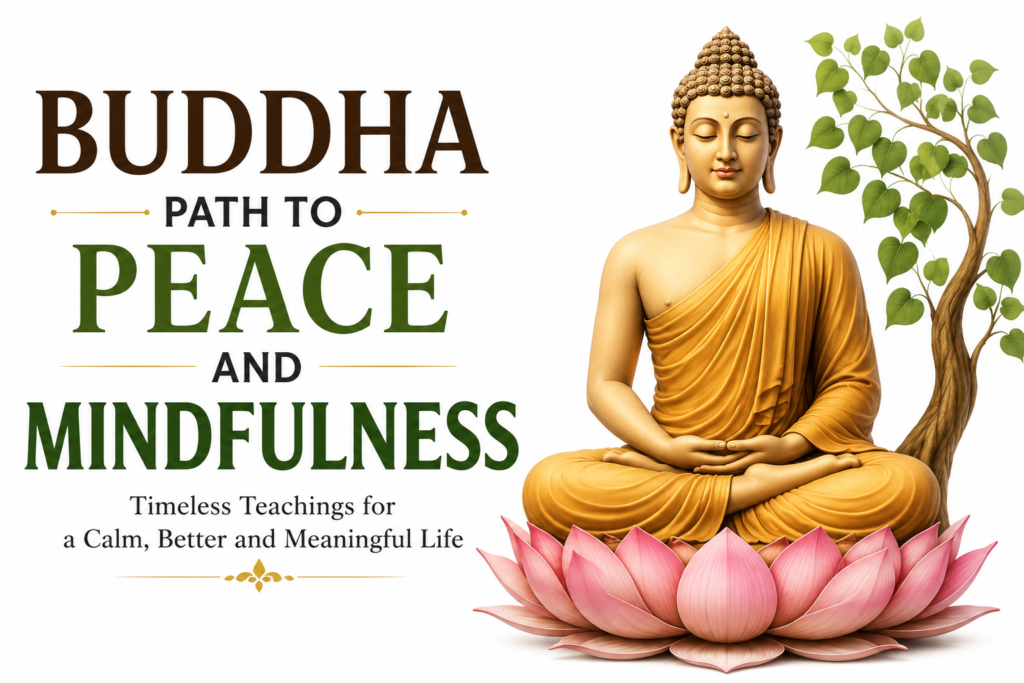
This article explores the Buddha’s path to peace and mindfulness through real events from his life and the timeless lessons that remain relevant today.
The Prince Who Had Everything
Before becoming known as Buddha, Siddhartha Gautama was born into a royal family in ancient Nepal.
His father wanted him to become a great king and protected him from anything unpleasant.
Siddhartha lived in luxury.
He had beautiful palaces, fine clothes, excellent food, and every comfort imaginable.
From the outside, his life seemed perfect.
Yet something was missing.
Despite all the comforts surrounding him, he felt an emptiness that wealth could not fill.
This realization offers an important lesson:
External success does not automatically create inner peace.
Many people today experience the same feeling. They may have careers, homes, and possessions yet still struggle with anxiety, stress, or dissatisfaction.
The Four Sights That Changed Everything
One day, Siddhartha left the palace and encountered experiences that transformed his understanding of life.
He saw:
- An old man
- A sick person
- A dead body
- A peaceful wandering monk
These encounters became known as the Four Sights.
For the first time, he realized that aging, illness, and death affect everyone regardless of status or wealth.
At the same time, he noticed the calmness of the monk who seemed free from fear and attachment.
This discovery sparked a profound question:
If suffering is unavoidable, is there a way to live with wisdom and peace?
Many people experience similar turning points.
A personal loss, health challenge, or difficult life event often forces us to question what truly matters.
Leaving Comfort Behind
At the age of 29, Siddhartha made a remarkable decision.
He left his palace, wealth, and royal status behind to search for deeper truth.
This was not an act of rejection toward his family.
It was a commitment to understanding life itself.
He spent years studying with spiritual teachers and practicing extreme self-discipline.
At one point, he reduced his food intake so severely that he became physically weak.
Yet despite these efforts, he still had not found the peace he sought.
The Lesson of the Middle Path
One of the most important discoveries in Buddha’s life came when he realized that neither luxury nor extreme deprivation leads to lasting peace.
Instead, he taught what became known as the Middle Path.
The Middle Path encourages balance.
It avoids excess and avoids harmful extremes.
This lesson remains valuable today.
Modern life often pushes people toward extremes:
- Working too much
- Constantly chasing success
- Overconsumption
- Perfectionism
- Burnout
The Buddha’s insight reminds us that balance often creates greater happiness than excess.
The Night of Enlightenment
Determined to find answers, Siddhartha sat beneath a Bodhi tree and vowed not to leave until he understood the nature of suffering and peace.
Throughout the night, he reflected deeply.
By dawn, he achieved enlightenment.
From that moment forward, he became known as Buddha, meaning “The Awakened One.”
His awakening was not about gaining supernatural powers.
It was about understanding the mind.
He discovered that much of human suffering comes from attachment, craving, and resistance to life’s natural changes.
Understanding Mindfulness
One of Buddha’s greatest contributions to humanity was the practice of mindfulness.
Mindfulness means paying attention to the present moment with awareness and without judgment.
It sounds simple.
Yet most people spend their lives:
- Worrying about the future
- Regretting the past
- Comparing themselves to others
- Reacting automatically
Mindfulness brings attention back to the present.
This is where life actually happens.
A Real-Life Example from Buddha’s Teaching
One famous story involves a grieving mother named Kisa Gotami.
After losing her young child, she was overwhelmed by sorrow.
Desperate for help, she approached Buddha and begged him to bring her son back to life.
Instead of dismissing her pain, Buddha gave her a task.
He asked her to collect a mustard seed from a household that had never experienced death.
She searched throughout the village.
Every family was willing to give a mustard seed.
But every family had also experienced loss.
Gradually, she realized that suffering and grief are universal human experiences.
This understanding helped her begin healing.
The lesson remains powerful today.
Often, peace begins when we recognize that we are not alone in our struggles.
How Buddha’s Teachings Apply Today
1. Accept Change
Everything changes.
Jobs change.
Relationships change.
Circumstances change.
Resisting change often creates unnecessary suffering.
Acceptance allows us to adapt with greater peace.
2. Practice Mindful Awareness
Instead of constantly multitasking, focus on one thing at a time.
Pay attention while eating, walking, listening, or working.
Simple awareness can reduce stress significantly.
3. Let Go of Excessive Attachment
Many people tie their happiness to possessions, status, or approval.
Buddha taught that lasting peace comes from within rather than external conditions.
4. Cultivate Compassion
One of Buddha’s central teachings was kindness toward all beings.
Compassion strengthens relationships and creates emotional well-being.
5. Observe Thoughts Without Becoming Them
Mindfulness teaches us to notice thoughts without immediately reacting.
This simple practice can reduce anxiety and improve emotional control.
Why Buddha’s Message Still Resonates
Thousands of years have passed since Buddha walked the earth.
Yet his teachings continue to influence millions of people worldwide.
The reason is simple:
Human nature has not changed.
People still seek happiness.
People still experience loss.
People still struggle with fear, stress, and uncertainty.
The Buddha’s teachings provide practical tools for navigating these challenges with greater wisdom and peace.
The True Meaning of Peace
Many people believe peace means having no problems.
Buddha taught something different.
Peace is not the absence of challenges.
Peace is the ability to remain centered despite challenges.
It comes from understanding the mind, accepting reality, and living with awareness.
This kind of peace cannot be purchased.
It cannot be achieved through status or possessions.
It must be cultivated from within.
READ MORE…
- Perspective Shapes Reality: How the Way You See Things Influences Your Life, Success, and Happiness
- Success Is Not Standardized: The Importance of Recognizing Unique Talents
- How Media Shapes Your Mind: Understanding the Hidden Impact of Information on Your Thoughts and Behavior
- Make Your Money Work for You: How Building Assets Creates Wealth and Financial Freedom
- Turn Your Fears Into Goals: How Facing What Scares You Leads to Success and Confidence
Final Thoughts
The story of Gautama Buddha is not merely a religious story.
It is a human story.
A story about a man who had everything yet felt incomplete.
A story about someone who questioned life’s deepest mysteries and devoted himself to finding answers.
His journey from prince to enlightened teacher continues to inspire people because it addresses universal human experiences.
The Buddha Path to Peace and Mindfulness is not about escaping life.
It is about living fully, consciously, and compassionately.
In a world that constantly demands our attention, perhaps Buddha’s greatest lesson is also the simplest:
Slow down.
Be present.
And discover the peace that has been within you all along.
SHARING IS CARING 💖