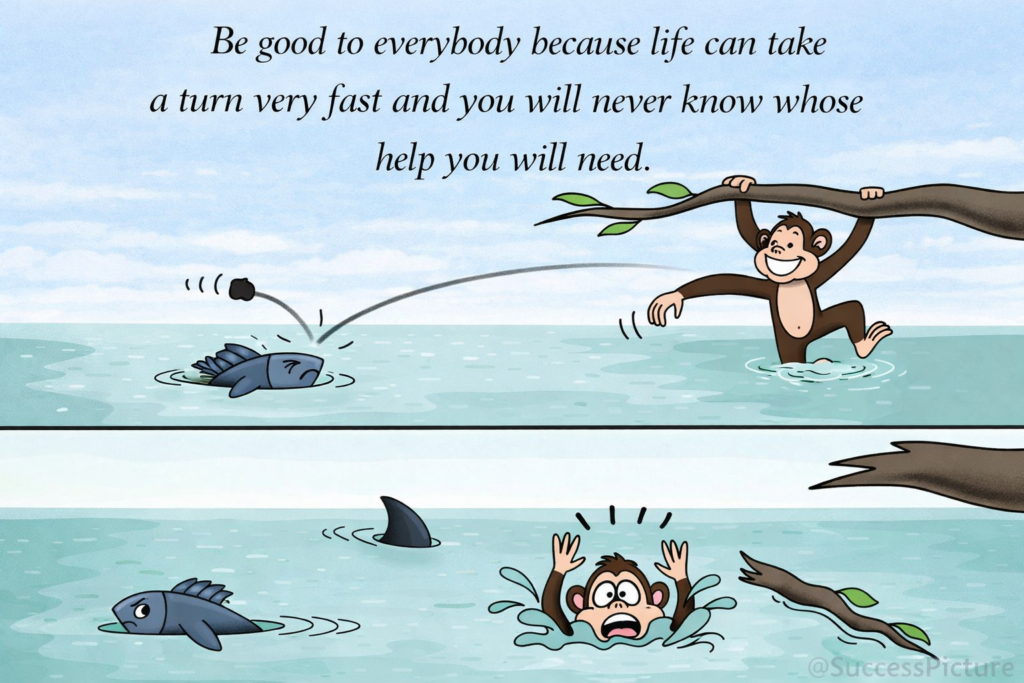
Life is unpredictable. One moment, everything feels stable and under control, and the next, circumstances can change in an instant. The image above delivers a powerful life lesson through a simple yet meaningful story:
“Be good to everybody because life can take a turn very fast and you will never know whose help you will need.”
This message is more relevant today than ever. In a fast-paced, competitive world, kindness is often overlooked. However, it remains one of the most powerful tools for building meaningful relationships and navigating life’s unexpected challenges.
In this article, we will explore the importance of kindness, how it impacts our lives, and why treating others well can make a significant difference in both personal and professional success.
🌍 Understanding the Message Behind the Image
The image shows a monkey helping a fish, only to later find itself in danger and needing help. This visual metaphor highlights a fundamental truth:
The roles in life can change at any moment.
Today, you might be in a position to help others. Tomorrow, you might need support yourself.
This cycle of giving and receiving is a natural part of life. Kindness creates a network of trust and goodwill that often returns when it is needed most.
❤️ Why Kindness Matters in Everyday Life
Kindness is more than just a moral value—it is a practical and powerful way to improve life.
1. Builds Strong Relationships
People are naturally drawn to those who treat them with respect and care. Kindness strengthens friendships, family bonds, and professional connections.
2. Creates Trust and Respect
When individuals consistently act with kindness, they build a reputation of reliability and integrity.
3. Improves Mental Well-Being
Acts of kindness release positive emotions and reduce stress, benefiting both the giver and the receiver.
🔄 The Cycle of Kindness
Kindness often works in a cycle. When you help someone, they may help you in return—or pass that kindness to someone else.
How the Cycle Works
- You help someone in need
- They remember your support
- Opportunities for mutual support arise
- Positive relationships develop
Over time, this cycle creates a supportive environment where people look out for one another.
⚠️ Life Is Unpredictable
One of the most important lessons from the image is that life can change quickly.
Examples of Unexpected Changes
- Job loss or career shifts
- Health challenges
- Financial difficulties
- Personal struggles
During such times, the support of others becomes invaluable. The kindness you show today may determine the help you receive tomorrow.
🤝 Kindness in Professional Life (USA Perspective)
In the United States, workplace culture is evolving to emphasize collaboration, empathy, and emotional intelligence.
Benefits of Kindness at Work
- Better teamwork
- Increased productivity
- Stronger leadership
- Improved workplace culture
Employers increasingly value individuals who demonstrate kindness and respect, as these qualities contribute to long-term success.
🧠 The Psychology of Kindness
Scientific studies show that kindness has measurable benefits for the brain and body.
Psychological Benefits
- Boosts happiness
- Reduces anxiety
- Enhances emotional well-being
Physical Benefits
- Lowers stress levels
- Improves heart health
- Strengthens the immune system
Kindness is not just good for others—it is also beneficial for your own health.
🌱 Teaching Kindness to the Next Generation
Children learn by observing behavior. When they see kindness in action, they are more likely to practice it themselves.
Ways to Encourage Kindness
- Lead by example
- Encourage empathy
- Teach gratitude
- Promote sharing and helping
Building a culture of kindness starts at home and extends into communities.
🚀 How to Practice Kindness Daily
Kindness does not require grand gestures. Small actions can have a significant impact.
Simple Ways to Be Kind
- Offer help to someone in need
- Listen actively during conversations
- Show appreciation and gratitude
- Be patient and understanding
- Support others during difficult times
Consistency in small acts of kindness creates lasting positive effects.
⚖️ Kindness vs. Weakness
Some people mistakenly believe that kindness is a sign of weakness. In reality, it requires strength, patience, and emotional intelligence.
Why Kindness Is Strength
- It takes courage to treat others well in difficult situations
- It demonstrates self-control and maturity
- It builds influence and respect
Kind individuals often become leaders because they inspire trust and loyalty.
🌟 The Long-Term Impact of Kindness
Kindness creates a ripple effect that extends far beyond immediate interactions.
Long-Term Benefits
- Stronger relationships
- Better opportunities
- Increased personal fulfillment
- Positive reputation
Over time, these benefits contribute to both personal and professional success.
ALSO READ…
- Stop Arguing With Stupid People: A Powerful Lesson About Protecting Your Peace
- Go So Far They Can’t Hear You: A Powerful Lesson About Ignoring Doubt and Believing in Yourself
- Your Mind Is a Factory: What You Feed It Shapes Your Life
- Let Your Heart and Brain Guide Your Life: The Secret to Making Better Life Decisions
- Be Humble. Stay Hungry. Be the Hardest Worker in the Room: The Mindset That Builds Real Success
🔄 When Kindness Comes Back
Many people experience moments when kindness they once showed returns unexpectedly.
Real-Life Examples
- A colleague helps you after you supported them
- A friend stands by you during difficult times
- A stranger offers help when you least expect it
These moments highlight the true value of treating others well.
✨ Final Thoughts
The message behind the image is clear and powerful:
Kindness is not optional—it is essential.
Life is unpredictable, and roles can change quickly. The person you help today might be the one who helps you tomorrow.
By choosing kindness, you build stronger relationships, create positive environments, and prepare yourself for life’s unexpected challenges.
Remember, success is not just about achievements—it is also about how you treat people along the way.
SHARING IS CARING 💖