Life often tests our values and character. Sometimes we see someone struggling, hurting, or facing a difficult situation. In those moments, we are given a choice: we can either ignore the problem, laugh along with others, or step forward and help.
The message illustrated in the image above highlights a powerful truth:
“Wrong is wrong, and right is right.”
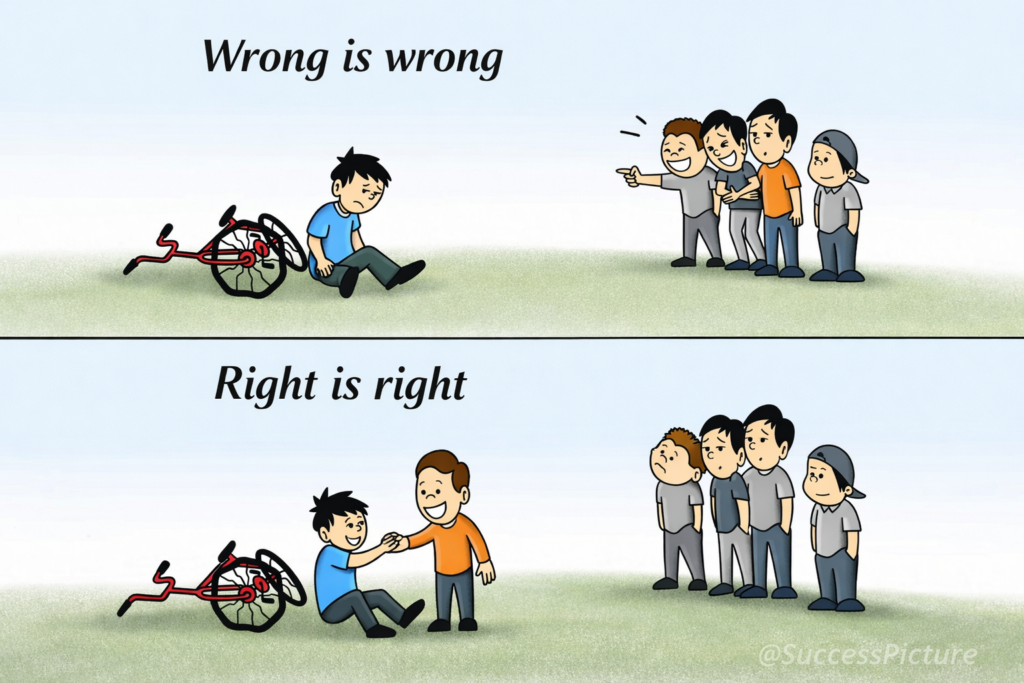
The image shows two different reactions to the same situation. In the first scene, a person falls from a bicycle and sits on the ground in pain while a group of people stand nearby laughing and pointing. In the second scene, one person chooses to help the fallen individual stand up, while the others look uncomfortable.
The lesson is simple but deeply meaningful. Doing the right thing does not depend on what the majority chooses. Sometimes standing up for what is right means acting differently from everyone else.
In this article, we will explore the importance of moral courage, why doing the right thing matters even when others disagree, and how small acts of kindness and integrity can make a powerful difference in the world.
Understanding the Message Behind the Image
The two scenes in the image represent a contrast between negative behavior and positive character.
In the first scenario, a group of people reacts to someone’s misfortune by laughing. This behavior reflects a lack of empathy and compassion. Instead of helping the person who fell, they choose to mock the situation.
In the second scene, one individual decides to help the injured person stand up. This simple action changes the entire situation. Instead of cruelty, the moment becomes one of kindness and support.
The message is clear:
True character is revealed by how we treat others when they are vulnerable.
Doing the right thing may not always be popular, but it is always meaningful.
The Influence of Group Behavior
One reason people sometimes act wrongly is the influence of group behavior.
Psychologists call this phenomenon social conformity. Humans naturally tend to follow the actions of the group around them, even when those actions are not morally correct.
For example, if a group begins laughing at someone who falls, others may join in simply because they do not want to stand out or challenge the group.
However, following the crowd does not make an action right. Ethical decisions require individuals to think independently and act according to their values.
Why Doing the Right Thing Can Be Difficult
Although helping someone in need seems like an obvious choice, people often hesitate to act for several reasons.
Fear of Judgment
Some individuals worry about being criticized or mocked by others if they behave differently from the group.
Desire to Fit In
Humans naturally want to belong to social groups. This desire can sometimes cause people to ignore their moral instincts.
Uncertainty
In certain situations, people may hesitate because they are unsure how to help.
Despite these challenges, choosing kindness and integrity remains the best path.
Moral Courage: Standing Up for What Is Right
The person in the second scene of the image demonstrates moral courage.
Moral courage is the ability to act ethically even when facing pressure, criticism, or opposition.
People with moral courage are willing to stand apart from the crowd when necessary.
Examples of moral courage include:
- Helping someone who is being bullied
- Defending someone who is treated unfairly
- Speaking out against harmful behavior
- Supporting people in difficult situations
These actions may seem small, but they create meaningful change in communities and relationships.
The Impact of Kindness
Kindness is one of the most powerful forces in human interaction.
Simple acts of kindness—such as helping someone stand up after a fall—can have lasting emotional effects.
When people experience kindness, they often feel:
- Valued
- Supported
- Encouraged
- Connected
Kindness also has a ripple effect. When someone receives help, they are more likely to help others in the future.
This chain reaction spreads positivity throughout communities.
Leadership Through Integrity
The individual who chooses to help in the image demonstrates an important leadership quality.
Leadership is not limited to positions of authority. Anyone can lead by example through their actions.
People who consistently act with integrity inspire others to behave similarly.
In many cases, one person’s positive action can influence an entire group.
For example, when someone steps forward to help another person, others may feel encouraged to join or reconsider their own behavior.
Why Integrity Matters in Everyday Life
Integrity means doing what is right even when no one is watching.
It involves aligning actions with personal values and ethical principles.
People with strong integrity are known for qualities such as:
- Honesty
- Responsibility
- Compassion
- Fairness
Integrity builds trust in relationships, workplaces, and communities.
When people know they can rely on someone’s character, they feel safer and more comfortable interacting with them.
Real-Life Examples of Doing the Right Thing
The lesson in the image applies to many real-life situations.
Helping Someone in Need
Whether it’s assisting someone who dropped their belongings or supporting a colleague struggling with a project, small acts of help can make a big difference.
Standing Against Bullying
In schools and workplaces, bullying often continues because bystanders remain silent. One person speaking up can change the situation.
Supporting Friends During Hard Times
True friends stand by each other during difficult moments instead of ignoring or mocking problems.
These actions demonstrate that doing the right thing often begins with simple decisions.
Teaching the Value of Empathy
Empathy is the ability to understand and share the feelings of another person.
Developing empathy encourages individuals to respond with kindness rather than judgment.
When we imagine ourselves in someone else’s situation, it becomes easier to choose compassionate actions.
For example, imagine falling off a bicycle in front of a group of people. Most individuals would hope someone would help rather than laugh.
Empathy transforms perspective and encourages positive behavior.
The Power of One Person’s Choice
One of the most important lessons from the image is that change often begins with a single individual.
Even when others behave negatively, one person’s positive action can create a powerful contrast.
History offers many examples of individuals who stood up for what was right even when others disagreed.
Their courage inspired movements, protected vulnerable communities, and created lasting change.
While helping someone after a fall may seem like a small action, it reflects the same principle: individual choices matter.
Encouraging a Culture of Kindness
Communities become stronger when people encourage kindness and integrity.
This culture can be built through everyday behaviors such as:
- Treating others with respect
- Offering help when someone struggles
- Speaking kindly about others
- Standing against harmful behavior
When kindness becomes a social norm, negative behaviors such as mockery or cruelty become less common.
ALSO READ…
- 20 Hard Work Quotes for Career Success to Keep You Motivated Every Day
- 25 Quotes About Success Without Shortcuts That Inspire Real Growth
- The Hidden Truth About Success: Why Self-Respect Matters More Than Blind Approval
- Too Much Trust Might Kill You: The Hidden Danger of Blind Trust in Life and Business
- We Are Too Connected: How Digital Overload Is Quietly Controlling Your Life
Lessons We Can Learn From the Image
The image teaches several valuable life lessons.
1. Right and wrong are not determined by the majority.
Even if many people behave incorrectly, ethical behavior remains the right choice.
2. Kindness is a powerful response to negativity.
Helping others creates positive outcomes for both the giver and the receiver.
3. Individual actions can influence group behavior.
One person’s courage may inspire others to change their attitude.
4. True character is revealed through actions.
How we treat people during difficult moments reflects our values.
Applying This Lesson in Everyday Life
We encounter opportunities to choose kindness and integrity every day.
For example:
- Offering assistance to someone struggling with heavy bags
- Supporting a coworker during a stressful project
- Standing up for someone being treated unfairly
- Listening compassionately when a friend needs support
These moments allow us to demonstrate our values through actions.
Each choice strengthens our character and contributes to a more supportive environment.
Final Thoughts
The simple message in the image—“Wrong is wrong, and right is right”—reminds us that ethical behavior does not depend on popularity or social pressure.
True character emerges when we choose kindness and compassion even when others choose negativity.
Helping someone in need, defending fairness, and acting with integrity are actions that shape not only our personal reputation but also the culture of the communities around us.
Remember this important lesson:
Doing the right thing may not always be the easiest choice, but it is always the most meaningful one.
When individuals consistently act with empathy and courage, they create a world where kindness becomes stronger than cruelty and integrity becomes stronger than conformity.
SHARING IS CARING 💖