
Introduction
In today’s fast-paced and often divided world, leadership is more important than ever. Whether in business, communities, or online platforms, leaders shape the direction of people’s lives. But not all leadership is the same. Some leaders divide, create competition, and build barriers. Others inspire unity, collaboration, and shared growth.
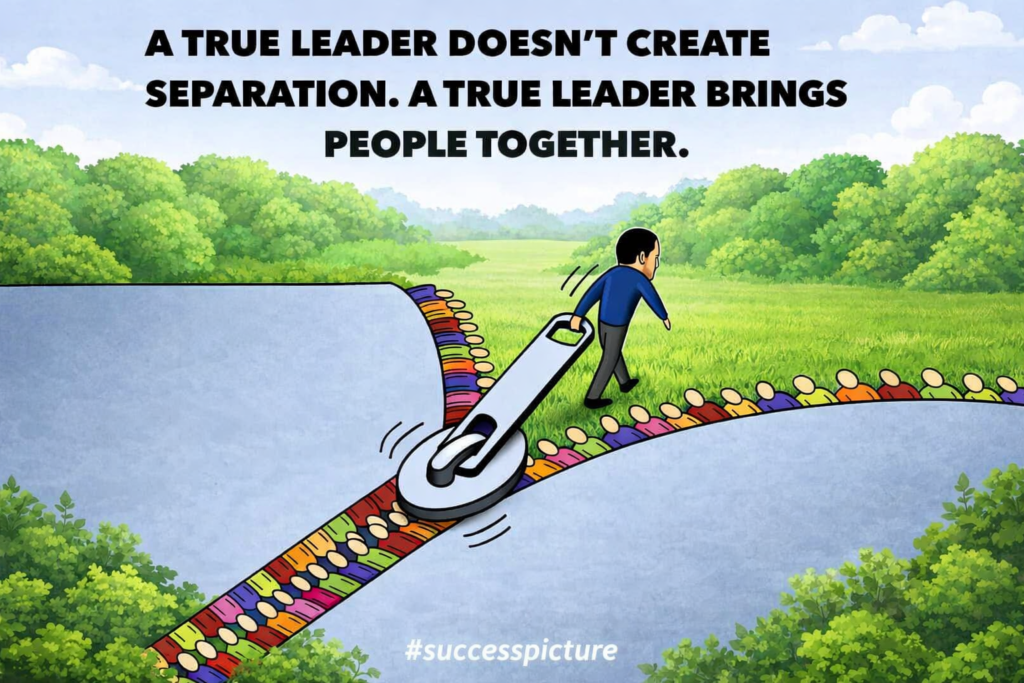
The message from the image above is simple yet powerful:
A true leader doesn’t create separation — a true leader brings people together.
This concept goes beyond management or authority. It reflects emotional intelligence, vision, and the ability to connect people despite differences. In this blog post, we’ll explore what true leadership really means, why unity matters, and how you can become a leader who inspires connection and success.
What Is True Leadership?
Leadership is often misunderstood as control, power, or dominance. However, real leadership is about influence, trust, and impact.
A true leader:
- Builds bridges, not walls
- Encourages collaboration over competition
- Listens more than they speak
- Values diversity and inclusion
- Inspires others to grow together
Leadership is not about being above others—it’s about lifting others up.
The Problem with Divisive Leadership
Divisive leadership creates silos, misunderstandings, and toxic environments. It often comes from insecurity, ego, or lack of vision.
Signs of Divisive Leadership
- Favoritism within teams
- Lack of transparency
- Encouraging unhealthy competition
- Ignoring different perspectives
- Creating “us vs. them” mentalities
This kind of leadership may bring short-term control but leads to long-term failure.
Impact of Division
- Decreased productivity
- Poor team morale
- High turnover rates
- Lack of innovation
- Broken trust
In contrast, unity-driven leadership creates environments where people thrive.
ALSO READ…
- 20 Life Quotes That Make You Think
- 20 Quotes That Teach the Value of Hard Work
- 30 Success Quotes for Ambitious People
- 15 Quotes About Success and Discipline
- 25 Hard Work Quotes That Prove Effort Pays Off
Why Unity Is the Core of Great Leadership
Unity doesn’t mean everyone is the same—it means everyone works together despite differences.
1. Stronger Teams
When people feel connected, they collaborate better. Unity strengthens communication and trust.
2. Increased Productivity
A unified team focuses on shared goals rather than internal conflicts.
3. Better Problem-Solving
Diverse perspectives lead to innovative solutions when people work together.
4. Emotional Safety
People perform best when they feel respected and valued.
5. Long-Term Success
Unity creates sustainable growth, not just temporary results.
Lessons from the Zipper Leadership Concept
The zipper in the image is a brilliant metaphor for leadership.
- The two separated sides represent division
- The zipper represents leadership action
- The people inside symbolize diversity
- The act of closing the zipper shows unity
A leader’s role is to bring both sides together smoothly, without forcing or damaging the structure.
Key Takeaways
- Leadership is a process, not a position
- Unity requires consistent effort
- Small actions can create big connections
Qualities of a Leader Who Brings People Together
To become a unifying leader, you need to develop specific traits.
1. Empathy
Understanding others’ feelings builds trust and connection.
2. Communication Skills
Clear and open communication prevents misunderstandings.
3. Inclusiveness
Everyone deserves a voice, regardless of background.
4. Vision
A shared goal brings people together naturally.
5. Integrity
Trust is the foundation of unity.
6. Patience
Building unity takes time and effort.
How to Become a Unifying Leader
You don’t need a title to be a leader. Anyone can practice leadership in daily life.
1. Listen Actively
Pay attention to what people say without interrupting.
2. Encourage Collaboration
Promote teamwork instead of individual competition.
3. Resolve Conflicts Early
Address issues before they grow into bigger problems.
4. Appreciate Differences
Diversity is strength, not weakness.
5. Lead by Example
Your actions set the tone for others.
6. Build a Shared Vision
Help people see the bigger picture.
Leadership in the Digital Age
In the era of social media and online communities, leadership has taken a new form.
Digital leaders:
- Influence through content
- Build communities across borders
- Inspire through storytelling
- Create engagement and connection
If you run a blog like Success Picture, your role is even more impactful. You are not just sharing content—you are shaping mindsets.
Real-Life Examples of Unifying Leaders
Throughout history, great leaders have focused on unity.
- They brought people together during crises
- They inspired hope during difficult times
- They focused on collective success rather than personal gain
You don’t need global recognition to make an impact. Even small acts of leadership can change lives.
Common Mistakes to Avoid as a Leader
❌ Ignoring Feedback
❌ Being Too Controlling
❌ Avoiding Difficult Conversations
❌ Playing Favorites
❌ Focusing Only on Results
Avoiding these mistakes helps maintain trust and unity.
The Psychological Power of Unity
Humans are naturally social beings. We thrive in connected environments.
Unity:
- Reduces stress
- Boosts motivation
- Improves mental health
- Enhances creativity
A leader who understands psychology can create a powerful and positive environment.
Final Thoughts
Leadership is not about authority—it’s about responsibility.
A true leader:
- Connects people
- Builds trust
- Encourages growth
- Creates a shared vision
The zipper concept reminds us that even when people are divided, the right leadership can bring them back together.
If you want to make a real impact—whether through your blog, business, or personal life—focus on unity. Because in the end, success is not about how far you go alone, but how many people you bring with you.
SHARING IS CARING 💖